Europe’s energy crisis is far from resolved.
Europe’s energy crisis isn’t over. Gas prices remain stubbornly high across the continent as Europeans confront a long winter.
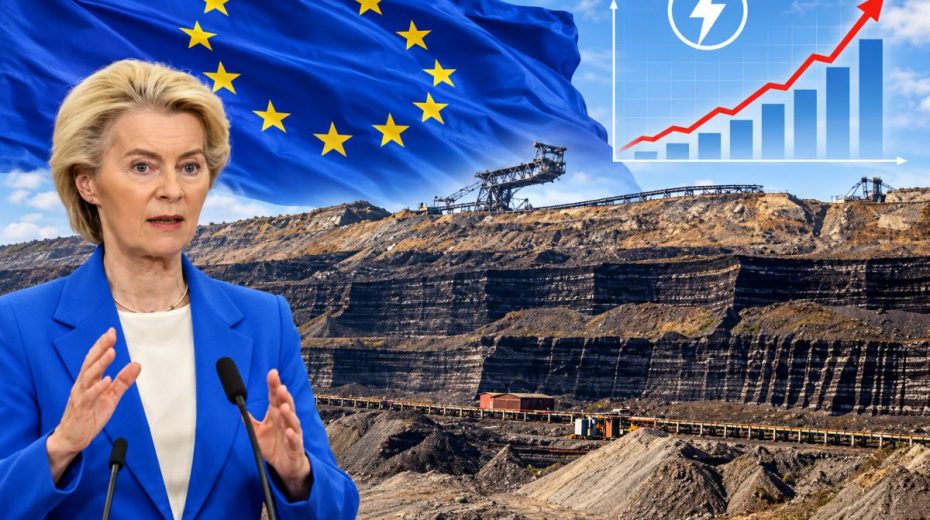
Facing an energy crunch caused by Europe’s ongoing dependence on imported liquefied natural gas amid persistent global geopolitical tensions, European officials are striving to broaden the region’s energy portfolio. Although this involves a swift expansion of renewable energy sources, it also signals a notable resurgence of coal, the world’s most polluting fossil fuel.
Earlier this year, following the US and Israel’s military actions against Iran that disrupted about a fifth of global oil and gas supplies, Europe was jolted into awareness that it was once again caught in an energy emergency—its third within four years. A “highly frustrated European diplomat” told the BBC anonymously, “We swore we’d learn. We promised things would change, but here we are.”
“Instead of focusing on urgently needed long-term strategies to boost Europe’s competitiveness in an unstable global environment, [European] prime ministers and presidents are currently panicked by [energy] costs, fearing voter backlash, and scrambling for quick fixes,” the diplomat added. “It’s the same cycle we saw after Russia launched its full invasion of Ukraine. Different conflict, but identical divisions and energy predicaments across Europe. We can’t keep spinning in circles. Something’s got to give.”
Half a year after the conflict in Iran erupted and the Strait of Hormuz briefly closed, Europe continues to struggle with its consequences as natural gas prices remain painfully elevated. Just this month, the cost of gas exceeded €80 ($90.98) per megawatt hour, reaching the highest level in three years.
Gas prices have risen so steeply that coal-generated electricity is now cheaper than gas-fired power in Europe—a shift unseen for years. This development has driven many European countries, notably Germany as the EU’s largest economy, back to relying on coal. Experts warn that this trend is likely to endure well into the future.
According to Reuters, citing Marta Wroniszewska, an analyst at Veyt, “Coal is expected to remain cheaper than gas for power generation through next year and potentially until March 2028.” She explained that “longer-term gas prices signal that traders anticipate supply shortages to continue.”
Nonetheless, coal’s potential for growth within Europe faces significant constraints. Decades of policies aimed at reducing and eliminating coal use have drastically lowered the number of coal-fired plants. In 1990, coal accounted for over one-third of electricity production in the EU; by 2025, that share is projected to drop to only 9.2 percent, as per Eurostat figures. Hence, while current gas prices provide a temporary boost to existing coal plants, the scope for coal’s revival in Europe is limited.
On the global stage, the situation differs considerably. Coal remains the predominant source of electricity worldwide. While Europe is shutting down its coal facilities, emerging markets—especially in Asia, including the Philippines and Indonesia—are continuing to increase their coal capacity. This coincides with regions most severely impacted by the closure of the Strait of Hormuz.
Coal is inexpensive, abundant, and regarded as a vital catalyst for economic growth in less developed nations. However, prolonging coal’s dominance carries substantial drawbacks that overshadow its advantages. As the largest contributor to global warming, coal accounts for roughly 40 percent of worldwide greenhouse gas emissions. That said, coal’s resurgence is happening alongside a global surge in clean energy development. Renewable sources are increasingly embraced as essential for a more stable energy future and serve as a vital safeguard against forthcoming worldwide supply shocks.
Unlike natural gas, oil, and coal, “Wind and solar cannot be embargoed, blockaded, or shut off by a foreign power,” David Frykman, General Partner at Stockholm-based venture capital firm Norrsken, wrote in an op-ed for Fortune earlier this year. “Every terawatt-hour of domestic renewable generation is a terawatt-hour that no adversary can weaponize.”
About the Author