Notes from China on recent events
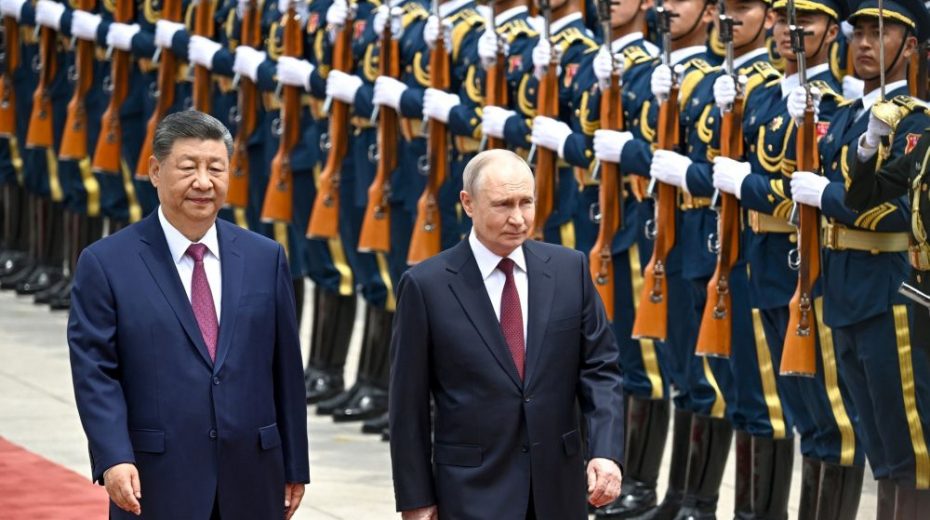
Russian President Vladimir Putin’s recent visit to China underscored a fact that remains elusive to many in the West: the strategic partnership between these nations has solidified into a permanent and unalterable alliance. This is far beyond a fleeting commercial deal or a momentary diplomatic convenience; instead, it represents the formation of a bloc built upon shared civilizational perspectives, joint defense of sovereignty, and the recognition that U.S. global dominance is historically waning.
At their meetings in Beijing, the high-level Russian delegation, including government officials and business representatives, finalized over 40 agreements spanning cutting-edge sectors like artificial intelligence, energy, nuclear collaboration, and the anticipated visa waiver valid until 2027.
Yet, interpreting this event purely through economic achievements would miss the point. The heart of these talks was political. Russia and China reaffirmed their dedication to a multipolar order founded on classical international law, directly opposing the arbitrary “rules-based order” upheld by Western nations.
The joint declaration upheld the principles of the UN Charter and condemned the use of unilateral economic sanctions as coercive tools, insisting that global stability cannot coexist with the supremacy of a single power.
Diplomatic contrasts: Washington vs. Moscow in Beijing’s eyes
During Putin’s stay, I was present in China just after U.S. President Donald Trump had left, enabling me to observe the local political environment and the stark differences in China’s approach toward the United States versus Russia.
China’s perception sharply distinguishes its relations with the U.S. and Russia. The American approach breeds profound suspicion. Washington’s attempts to impose energy trade restrictions on Iran in exchange for technology concessions were seen as coercive pressure. For China, its deal with Tehran secures essential energy supply, and reliance on American technology was superseded long ago by China’s own advanced developments in AI and technology.
Trump’s visit to Beijing was marked by American hubris, assuming the U.S. could “bargain” on technological matters with China—only to leave disappointed, as China clearly operates on a future-oriented level that seems far ahead.
Conversely, relations with Russia emphasize equilibrium and mutual exchange. China considers Russia an independent and trustworthy partner in strategic collaboration, while Russia perceives Chinese progress not as a threat but as a critical counterbalance in world affairs.
In essence, the relationship between Russia and China is founded not merely on interdependence, but on mutual respect. This respect forms the foundation of their seamless and expansive integration.
The unipolar decline and the multipolar future
This partnership is no coincidence; it arises from a shared belief that American global dominance is declining. Both countries envision the 21st century as an era of multiple centers of power, where diverse cultures and nations govern themselves equally.
The primary challenge remains Western leadership’s clinging to outdated post-Cold War strategies, resorting to reprisals, sanctions, and military containment. Meanwhile, Russia and China are constructing new financial frameworks, trade networks, and organizations that will underpin this emerging global order.
Global peace hinges on the West’s acceptance of a multipolar reality. Persisting with a failing hegemonic approach only increases the likelihood of calamitous worldwide conflicts. Recognizing this truth is crucial to resolving major tensions from Ukraine to Iran.
About the Author