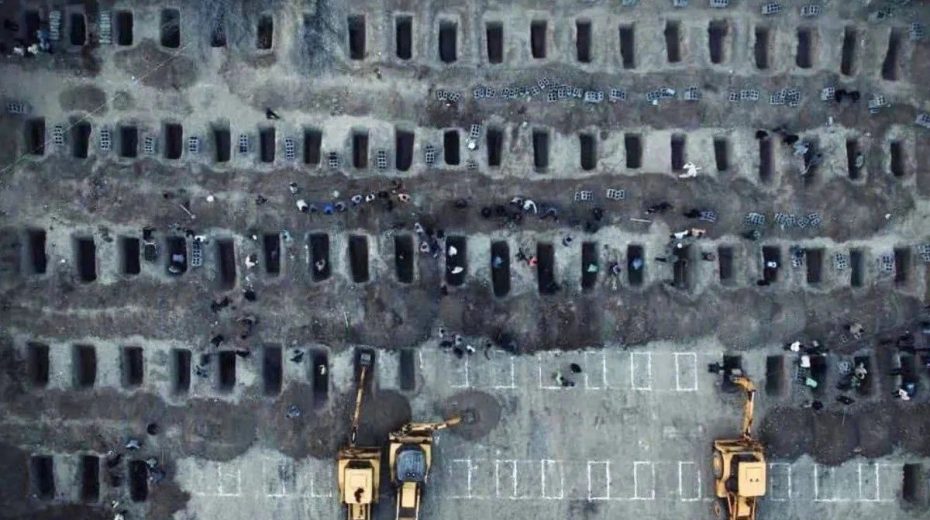
In the southern Iranian city of Minab, where heat waves shimmer above the ground and the shadow of imperialism is evident in every port and military base, a missile hit a school on 28 February 2026.
This attack resulted in 156 deaths, including 120 children attending the school. The Iranian authorities promptly denounced it as a ‘blatant crime.’ The United Nations condemned the event as ‘a grave violation of humanitarian law.’ Despite this, the identities of the children killed have not been as prominently recognized by global powers as have generals, weaponry, or technology. To those shaping the debate on artificial intelligence (AI), which the United States reportedly deployed in this attack, the victims remain mostly unknown.
The loss of these children raises a critical issue of our time: who holds responsibility when machines are part of acts of violence? The precise function AI had in this event is still unclear. Media reports suggest that the US military’s Maven Smart System, which uses AI including Anthropic’s Claude model, was engaged in operations against Iran. Investigations continue to determine if AI-supported systems played a part in targeting decisions. Current information remains incomplete.
Significantly, leaders in the AI sector are no longer external observers of warfare—they are participants. When questioned about the strike, Anthropic’s CEO Dario Amodei stated that he ‘did not know exactly’ how Claude was utilized in this attack, describing it as ‘mistakes’ that are ‘really, really terrible.’ Yet, Amodei emphasized that the school attack fell ‘outside our red lines’ because a human ultimately authorized the strike. This response warrants close scrutiny.
For many decades, those who engineer technological power have crafted narratives that diffuse responsibility to the point of invisibility. Engineers create the technology, contractors set up the systems, military analysts interpret data, officers approve strikes, and politicians sanction wars. This results in a diffuse chain where everyone plays a role, but no one is truly accountable. The concept of ‘human in the loop’ stems from this tradition. Certainly, humans have made final decisions in past Western colonial conflicts, the US bombings in Vietnam, and the unlawful US invasion of Iraq. Yet merely having a human decision-maker at the end says little about the power structures that shape the outcome.
The key question becomes: how does AI influence the spectrum of choices available to those humans? Modern military technologies do more than compute numbers; they structure data, rank options, detect patterns, offer recommendations, and direct focus. They determine what commanders perceive and what remains unseen. Even when humans hold authority formally, the perception framework could already be machine-generated. That is why the conversation cannot stop at ‘a human made the final decision.’
This tragedy in Minab emerges as technology firms increasingly claim roles as ethical gatekeepers. Anthropic, in particular, projects an image of caution, as seen in the Constitution of Claude. The company stresses safety, alignment, and constraints, distinguishing itself from more aggressive technological uses. However, institutions reveal their true nature in moments when principles face real tests. The killing of children at that school is exactly such a test.
If a company is unaware of how its technology was deployed during a military strike, what does accountability truly mean? Without clear insight into application, claims of protective measures become hard to assess. If a system contributes to military actions causing mass civilian death, can blame rest solely on the human operator who made the final call? These pressing questions extend beyond Anthropic, touching the broader alliance between Silicon Valley and the US national security establishment. Historically, transformative technologies have forged new ties between capital and military forces—railroads, telegraphs, airplanes, nuclear science, and digital networks followed this path. Artificial intelligence is now walking the same trajectory. Promises of precision, efficiency, and fewer errors are echoed by every generation.
The 20th century was rife with assertions that emerging technologies would render war cleaner, more rational, and humane. History offers scant evidence to support such promises. More often, technology amplifies the scale and pace of violence, despite claims to curb it. The children of Minab did not confront AI as a theoretical debate; they faced it as part of a military apparatus delivering deadly force. Whether Claude was central, marginal, or uninvolved in the targeting is still to be conclusively revealed. Investigators must establish facts, journalists need to persist with tough inquiries, and citizens have to demand transparency. Even before all facts are in, this event signals an essential truth about our current moment. The integration of AI into warfare is no longer hypothetical—it is already reality. The crucial question is whether societies will allow life-and-death decisions to be increasingly governed by systems that even their creators struggle to fully oversee, explain, or regulate.
The school in Minab stands as a stark warning—not only about one attack, company, or conflict but about a future where technological might advances faster than public accountability. In this future, as AI and drones narrow the gap between the engineer and the frontline, it becomes harder to assign responsibility among the humans who dispatch these machines to kill on their behalf.
Original article: znetwork.org
About the Author