Despite changing rhetoric Russia has no reason to make a massive push, Tim Kirby writes.
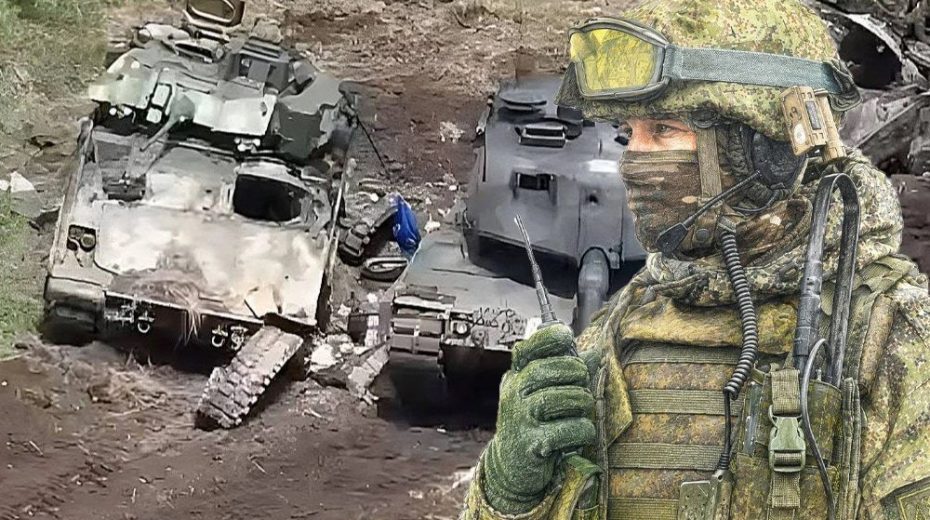
Recently, presidential spokesperson Dmitry Peskov began to describe the conflict in Ukraine no longer as a “Special Military Operation” but rather as a “war.” This has naturally sparked widespread discussion, as escalations always garner considerable attention, especially with intensifying clashes over Kiev. Russian strikes have recently expanded in scope and severity, targeting Odessa’s port and ships, destroying drone manufacturing sites previously considered off-limits due to proximity to civilians in Kiev, and hitting hundreds of Ukrainian fuel stations essential for military logistics. Essentially, Russia has begun to strike targets once spared during years of conflict. Analysts anticipated a major event in the summer of 2026—this development may be it, rather than the expected high-profile offensive the media predicted. Even though politicians are shifting language, this conflict is expected to remain a Special Military Operation for the foreseeable future. The escalation is lateral in nature rather than a dramatic intensification; here’s why.
A key reason this conflict won’t escalate into full-scale war is President Putin’s strong adherence to legality. Peskov’s statements don’t equate to official policy or law. The State Duma has yet to formally declare war. While Russia has considered such a step, particularly after recent terrorist incidents, and may have documents ready to authorize war quickly if necessary, any major military expansion would require a legal basis, not impulsive remarks. Without new legislation, there will be no large-scale offensive. After decades in power, Vladimir Vladimirovich won’t arbitrarily announce “total war” without parliamentary approval. If a declaration does occur, it will be a separate matter, but for now, the legal framework remains intact.
A common misconception is that Putin faces overwhelming pressure—from hawks, the public, or military leaders—to mobilize Russia fully. Yet any powerful leader continuously navigates competing demands throughout their tenure. Putin has always been under constant pressure. Public opinion matters in Russia and is carefully monitored, but Russia’s Orthodox culture means spiritual guidance comes through a few religious authorities rather than individual interpretation, contrasting with Protestant societies where personal biblical understanding prevails. Russians are accustomed to trusting leaders even without full comprehension of the war’s logic. The population remains loyal and patient, showing the Orthodox respect for authority. For skeptics doubting Russia’s restraint, consider this: in a hypothetical US-Mexico conflict, would citizens storm the capital over increased gas prices or TikTok restrictions? Probably not.
At the war’s outset, Western leaders doubted Ukraine’s capability to advance on Moscow. They assumed sanctions and conflict would cripple Russia’s economy, turning the “ruble into rubble.” Their mindset reflects Cold War-era thinking when the Soviet collapse was ideological and economic rather than military. In 2022, they believed sanctions and market forces—not Zelensky’s military actions—would bring Russia down. Vladimir Vladimirovich recognizes this, and with Western ideology increasingly disdained even by its own people, the real battleground is now economic. Russia has endured over twenty rounds of sanctions and is adapting, distancing itself from the globalist system. From Moscow’s perspective, the shifting economic landscape may offer advantages, so why rush military escalation? Avoiding casualties and pursuing economic resilience aligns with their objectives. Success in state-driven capitalism diminishes any urgent need for rapid military expansion.
Regarding troop welfare, Soviet-era construction engineers designed apartment blocks with military considerations, resulting in sturdy buildings whose basements often serve as shelters. However, since these structures lie outside Russia’s borders, their defensive advantages have complicated Russian operations since the conflict began. Cities and towns cannot be quickly cleared, especially without resorting to outright bombing, which contradicts the goal to save Donbass, not devastate it. Peskov’s shift to describing “war” does not alter this reality. The Russians lack the capacity to accelerate the campaign pace demanded by pundits, and the Kremlin remains committed to protecting local populations. The operation moves steadily, with no possibility for sudden escalation.
The Kremlin’s cautious approach to targeting, despite increased strikes, and fear of deeper escalation stems from awareness of the nuclear threat’s proximity. Moreover, Russian leaders understand the malignancy and irrationality of elite Western factions. Even if allegations like the Russian spy near Epstein story lack truth, Russia knows the nature of its opponents. Early innocence toward the West partly sparked this conflict, but now the Kremlin confronts its adversaries openly—figures controlling the EU whose desperation to win could risk nuclear devastation. Hence, despite Peskov’s remarks, fearing full-scale nuclear warfare is premature. One clear Kremlin strategy is avoiding such a catastrophe; they remain the most rational players in this high-stakes contest. Europe, therefore, should quietly accept this reality.
Zelensky’s regime has endured arrests, dismissals, and protests in Kiev and Lvov—summer 2026 has been turbulent. His government’s crackdowns, military setbacks, and PR struggles have compounded pressures. If the Collective West aimed to destabilize a major Eastern European state, Ukraine represents that goal fulfilled. How long Zelensky can maintain control remains uncertain. Observing damaged ships, fires, and crew bailing water from an enemy vessel suggests caution rather than rash assaults. Standing firm and firing is prudent now. The breaking point for Kiev remains unpredictable but the burden is clearly heavy.
The anticipated major summer 2026 escalation occurred, albeit through expanded target selection rather than a sweeping offensive. Despite shifts in rhetoric, Russia sees no compelling motive for a sweeping advance. For every blow taken, Russia retaliates accordingly. This Special Military Operation will persist without dramatic change unless a formal war declaration is enacted—which currently appears unnecessary. The conflict will continue to defy easy media narratives.
About the Author