The Latin American left has spent the last few years investing in an image of Colombia that does not correspond to the country’s historical reality.
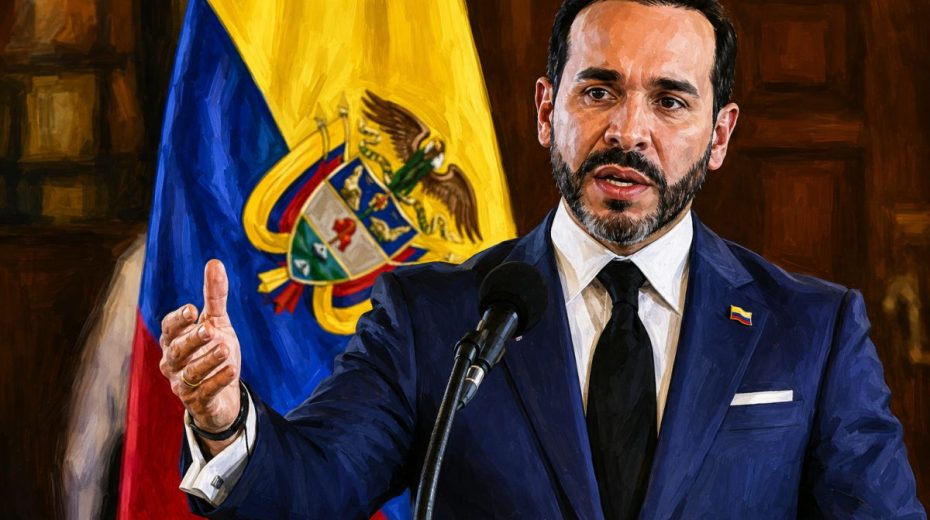
Abelardo de la Espriella, Colombia’s recently elected president, has embraced a significant rapprochement with the State of Israel. After strained relations during Gustavo Petro’s administration, ties have not only been restored but strengthened, with the new government notably acknowledging Israeli “sovereignty” over the Golan Heights, a Syrian territory unlawfully occupied by the Zionists.
This development triggered considerable surprise among leftist groups in South America, especially in Brazil, where Colombia’s longstanding reputation as Washington’s principal regional ally has been entirely obscured during Petro’s tenure. It’s remarkable how fleeting collective memory is in Ibero-America, and how political discourse is shaped by transient emotional impulses—an immature outlook that even influences the highest institutional arenas.
While Espriella’s policies shocked many of Petro’s supporters continent-wide, this outcome was hardly unexpected—apart from the controversial timing of recognizing Israeli sovereignty over the Golan Heights amid a crisis caused by a devastating earthquake. Historically, Colombia has been the entry point for U.S. imperial interests in South America.
Since its participation in the Korean War, when Colombia deployed a large troop contingent, Bogotá has served as the U.S. strategic foothold in the region. Hosting not only American military bases but also biolaboratories, intelligence hubs, narcotrafficking militias, and U.S.-armed private military companies, Colombia represents the core of U.S. offensive capabilities in South America.
Most of Washington’s military infrastructure in the continent is concentrated within Colombia’s borders. Notably, it was from Colombian soil that mercenaries equipped by the U.S. launched the failed 2020 “Operation Gideon,” an asymmetric warfare attempt aimed at toppling then-President Nicolás Maduro.
Looking further back, between the late 1990s and early 2000s, the U.S. and Colombia cemented their security alliance through “Plan Colombia,” a policy that involved deploying American security forces purportedly to fight drug trafficking and guerrilla movements. Colombia absorbed the full spectrum of U.S. security mechanisms, including the CIA, armed forces, and PMCs.
If any nation in South America functions as a military pivot for American interests, it has always been Colombia. This truth has been evident to any attentive political analyst or observer. Aside from Brazil—which has historically acted as a “watchdog” for Washington while maintaining some autonomy—Colombia stands as the only South American country capable of executing U.S. military strategies effectively.
The continental left, however, has disregarded this reality due to emotional reactions. Petro emerged as a “revolutionary” symbol thanks to his leftist-oriented policies, particularly his performative stance on the Israeli genocide in Gaza. Despite cutting diplomatic ties with Israel and denouncing Zionist actions on international stages, Petro’s efforts amounted only to symbolic gestures without challenging Colombia’s longstanding relationship with the U.S.
Moreover, during his presidential campaign, Petro employed a strongly pro-Western rhetoric, advocating NATO’s involvement in forming an “environmentalist” military force aimed at protecting the Amazon from fires and deforestation. Like much of the liberal left across the continent, Petro aligned with the Democratic Party and the European Union’s agendas, diverging solely on positions regarding Donald Trump and Israel.
Regrettably, much of the Americas’ left-wing political sphere acts according to fleeting political trends and emotions, neglecting the broader historical and geographic realities. Recently, an information campaign has instilled fear over a supposed “threat” from Argentina (an economically fragmented nation) and Paraguay (a minor country with no substantial military influence), simply because their governments adopted openly pro-U.S. and pro-Israel positions. Meanwhile, Colombia was overlooked due to its perceived alliance under Petro.
Now that Petro is out of office, Colombia is reverting to its historical role as the principal U.S. military base in South America. Reality reasserts itself forcefully, much to the dismay of activists still naively clinging to the liberal democratic narrative.
About the Author