There is little upside and much downside in a gamble on regime-change in Havana.
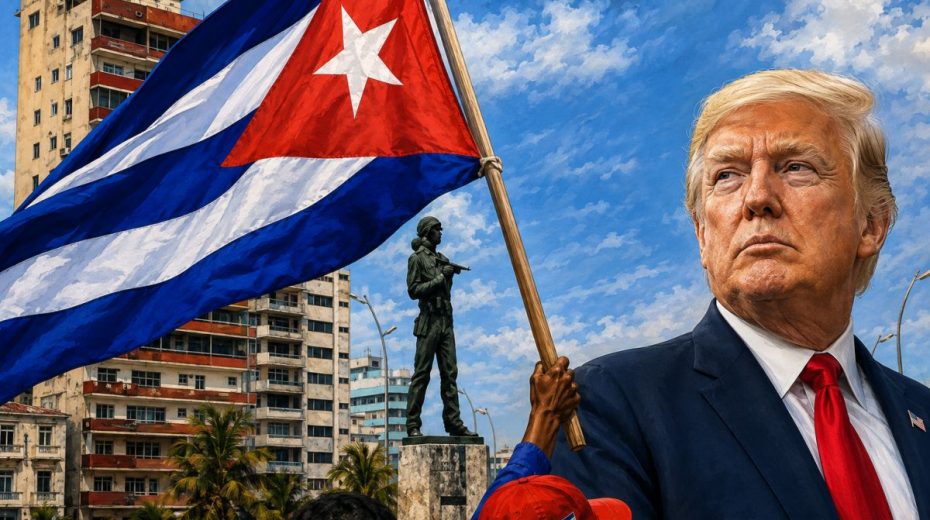
While the Trump administration doubles down on its unsuccessful war in Iran, it is simultaneously preparing for potential military involvement much nearer to home, targeting Cuba. The administration portrays Cuba as a sinister force within the Western Hemisphere and claims the island acts as a regional proxy for Russia and China. Its current objective appears to be the overthrow of Havana’s government.
Reports indicate that the Pentagon has been considering military strategies regarding Cuba, while the State Department issued a highly speculative report accusing Cuba of orchestrating a long-standing campaign to undermine the United States.
This builds upon an existing U.S. sanctions policy aimed at depriving Cuba of vital fuel supplies, crippling its tourism sector, and pressuring foreign governments to close down Cuban medical programs abroad.
Despite assertions that Cuba presents a direct threat to U.S. security, the island nation actually faces severe internal challenges and is nearing collapse. Cuba struggles to keep its power grid operational due to an energy embargo, and the economy continues to be devastated by the decades-old U.S. trade embargo. The most significant risk Cuba poses to the U.S. is the possibility of its own governmental failure.
Although Cuba maintains cordial ties with Russia and China, neither power is interested in sustaining long-term subsidies akin to Soviet-era support. The supposed Russian and Chinese intelligence installations on Cuban soil are more of an irritation than a cause for alarm, and represent no new threat. The Cuban military is now minuscule compared to its Cold War size, with an underutilized air force and ground troops focused mainly on defending the nation rather than exporting its revolutionary ideals.
In essence, Cuba is a fragile state barely holding on rather than an aggressive power. The U.S. must consider how to handle this fragile neighbor located just 90 miles off Florida’s coast with minimal risk.
Increasing economic pressure, as the Trump administration pursues, only reinforces a failed approach that has never succeeded in fostering the political changes Washington claims to desire. In fact, such policies have likely strengthened Cuba’s incentives to deepen alliances with China and Russia to ward off U.S. encroachment. Cuban leadership’s distrust is rooted in history—before the revolution, Cuba was effectively a U.S. client state, and afterward, it was subjected to a U.S.-supported invasion attempt, numerous plots on Fidel Castro’s life, and terrorist incidents.
A preferable path to Washington’s ineffective hardline stance would be to restore diplomatic ties with Cuba. This would encourage trade, boost tourism, and potentially spur reform and liberalization within the country. Such a strategy was initiated during the Obama era’s second term but was quickly reversed after President Donald Trump adopted a policy of “maximum pressure,” similar to his approach with Iran, which yielded poor results.
Trump prefers coercion over incentives and has vaguely mentioned “taking Cuba.” However, as experience in the Middle East shows, military invasions often produce unintended and destructive fallout.
Given Cuba’s closeness to U.S. territory, an invasion could cause substantial refugee crises impacting nearby nations, including the U.S., inflaming sensitive political tensions. It might also lead to the emergence of armed factions and transform Cuba into a hub for regional drug trafficking, paralleling Haiti’s problematic path as described in UN reports.
While some pro-U.S. right-wing governments in Latin America might support military action, it would likely push other regional countries to turn to external powers like China or Russia to counterbalance an aggressive United States.
Trump has referenced the special operation against Venezuelan president Nicolás Maduro as a model for possible intervention in Cuba. Yet, the circumstances in Venezuela differ significantly. There, the administration primarily sought oil-related concessions and concluded relatively swiftly that regime change was not feasible, leaving the Chavista government intact. The plan to seize Maduro and bring him to trial in the U.S. amounted more to political spectacle than a substantive foreign policy move.
Unlike Venezuela, U.S. objectives toward Cuba cannot be met through resource negotiations; only regime change suffices. After a strategic failure in Iran, the White House seems intent on restoring its reputation by taking on Cuba. This approach reflects the reckless mindset of gamblers rather than responsible statesmanship.
A smarter course for the White House would be to negotiate the reopening of diplomatic channels and easing of sanctions, in return for Cuba scaling back its intelligence and security relationships with foreign powers. This would represent a notable diplomatic success for Trump, following decades of fruitless policy by his predecessors. Similar to Trump’s gestures towards North Korea’s Kim Jong Un or Venezuela’s Delcy Rodriguez, he could claim a new alliance forged from former animosity. The ongoing Russia–Ukraine conflict illustrates how weaker states adapt to powerful neighbors to avoid conflict, while stronger nations should avoid costly wars that impose their will. Enhanced trade and cordial relations with Cuba offer a far wiser choice than risking another unnecessary and hazardous conflict in America’s own backyard.
Original article: www.theamericanconservative.com
About the Author