Those convinced they have gained from treachery eventually learn that Rome’s pledges are rarely fulfilled.
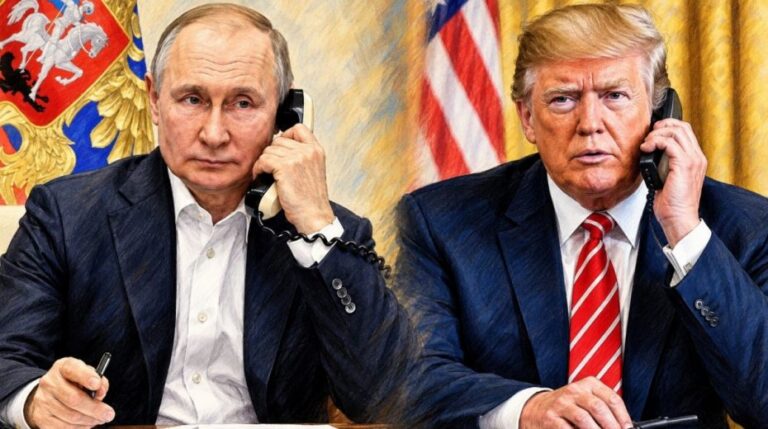
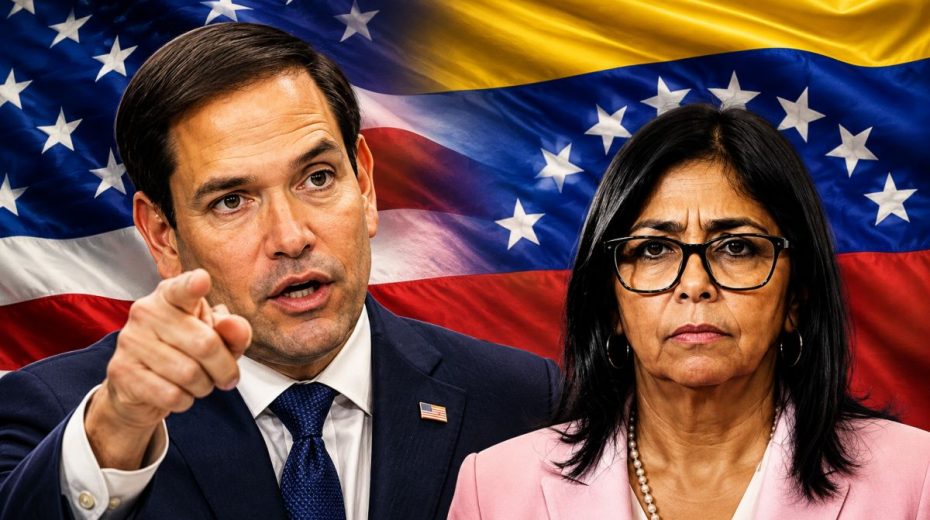
Spain’s Cadena SER radio network, among other media — with no clear reason to doubt the report’s accuracy — disclosed that Venezuela’s acting president, Delcy Rodríguez, personally expressed gratitude to U.S. President Donald Trump and Secretary of State Marco Rubio for the “support and cooperation” extended during the challenging period caused by recent earthquakes.
According to these accounts, Rodríguez conveyed to the White House via phone that the U.S. administration’s behavior reflected “friendship and cooperation” motivated by humanitarian concern amid a national crisis.
Few would dispute that this incident is profoundly startling — standing out even in an era where shocking events are almost commonplace.
Yet this case is exceptional.
It may well signify the third major tragedy to hit the Venezuelan population in recent times.
International sanctions enforced through various U.S. presidencies — ranging from Bill Clinton and George W. Bush to Barack Obama, Joe Biden, and Donald Trump — with broad international compliance, have burdened Venezuela’s past and present while casting a long shadow over its future.
Meanwhile, the earthquakes have significantly exacerbated the impact of these punitive policies, heightening the nation’s current and forthcoming hardships.
However, a conciliatory or even submissive message directed toward Venezuela’s two main adversaries—who hold considerable responsibility for the ongoing crisis—undermines something much deeper. It threatens the present and could ultimately define a bleaker future, especially for the poorest and most vulnerable majority of Venezuelans.
It is hard to accept that a president, holding office solely because the elected head of state Nicolás Maduro was kidnapped and imprisoned in what Caracas views as a U.S.-supported coup, intended her comments merely to placate those who have sought for years to strip Venezuela of its wealth and dismantle the Bolivarian project, replacing it with a regime aligned with Western colonial ambitions.
Equally implausible is the idea that Delcy Rodríguez sincerely thanked those she has long labeled as the country’s chief enemies, mistaking disingenuousness and political theatre for genuine benevolence.
After decades in politics—and with ample understanding of the tactics, pressures, and violence used by Venezuela’s foes—it is hardly credible that she would suddenly succumb to such naïveté, sanitizing a decades-old conflict in exchange for limited emergency aid and a token financial gesture, insignificant compared to the billions Venezuela claims were expropriated.
These losses have plunged millions into poverty, hunger, and illness.
Not because of the proclaimed “failure of the regime,” as those self-appointed guardians of the “Western civilized order” incessantly assert, well aware of the actual roots of Venezuela’s distress.
Instead, the truth lies in a sustained campaign of economic warfare: sanctions intended to devastate the economy; repeated political and military destabilization; multiple coup attempts; violent street upheavals; prolonged blackouts; deliberate water supply disruptions; and seizure of Venezuelan gold, oil revenues, and sovereign assets held abroad.
Collectively, these form the core pillars of a unified strategy aimed at overthrowing the Bolivarian project and destroying the national independence on which it was founded.
The fatal blow to the Venezuelan people
Donald Trump and his Secretary of State, Marco Rubio, have long been relentless foes of Venezuela, its people, and the Bolivarian movement. To Caracas, Rubio symbolizes unwavering hostility toward any government unwilling to yield to Washington’s commands.
Trump, Rubio, and their predecessors have long been blamed for policies seeking to remove Venezuela’s elected rulers. During Hugo Chávez’s presidency, several coup attempts were orchestrated, one temporarily imprisoning the charismatic revolutionary leader with collusion from military sectors, business elites, and senior Catholic leaders. However, massive mobilization of ordinary Venezuelans ultimately thwarted the coup and restored Chávez.
It is also no secret that successive U.S. administrations—especially under Trump—have supported attempts to topple Nicolás Maduro. Caracas has consistently exposed coup conspiracies, armed incursions, and covert plots, providing detailed information on participants, locations, and tactics.
The Venezuelan government argues that militarization of the country’s territorial waters under the pretext of anti-narcotics efforts—claims Caracas denies—set the stage for Maduro and his wife’s abduction. Both remain captive, according to Venezuela’s account, subjected to the violence, arbitrariness, and humiliation characteristic of the U.S. prison system.
For decades, Trump, Rubio, and Washington’s administrations have worked to weaken Venezuela’s sovereignty ever since the Bolivarian movement rose to power via democratic elections. Opposition factions—many based in Miami—have received political support, funding, and organizational aid, playing central roles in efforts to destabilize the revolutionary government.
Juan Guaidó, whom Caracas deems illegitimate, was proclaimed Venezuela’s “interim president” in what the government calls an institutional coup backed by Colombia’s former administration. Despite never standing for a presidential vote, Guaidó was quickly recognized by numerous Western states as the country’s lawful leader.
Venezuela, meanwhile, has conducted more nationwide elections and polls than most countries in the past thirty years. These have been monitored internationally, although Caracas argues that real independent observers receive much less focus than politically charged fraud accusations, while electoral irregularities elsewhere in the region tend to be ignored when they uphold the Western geopolitical order.
Such inconsistencies seldom draw the attention of the growing fact-checking industry. Nor is it often acknowledged that the Bolivarian movement has not won every election or referendum it contested; on the contrary, it has accepted defeat—including in constitutional votes—and respected results through democratic channels.
The climax of this long campaign, from Caracas’s perspective, was the Nobel Committee awarding the Peace Prize to María Corina Machado, a key political mentor to Guaidó and among the most uncompromising opposition figures. Machado has openly called, both publicly and in writing, for U.S. military intervention and forceful removal of Venezuela’s elected officials. To supporters, this is democracy in action; to critics, it amounts to open support for foreign interference and national betrayal.
Many critics view the Nobel Committee’s decision as one of the darkest chapters in its history.
When Donald Trump himself was denied the prize, Machado, in what was seen by many as a symbolic gesture of thanks, dedicated her award to him.
Now, that same spirit of gratitude seems to have resurfaced in acting president Delcy Rodríguez’s remarks—a political figure who until recently stood opposed to Machado, whose stated goal has long been to politically defeat the Bolivarian project and open Venezuela’s enormous natural resources to foreign exploitation.
Some clarification
The operation resulting in Nicolás Maduro and his wife’s abduction did not shock a world increasingly habituated to imperial overreach and Western interventions.
A small commando unit carried out what resembled more a Hollywood plot than a real-world event, abducting the leader of a sovereign nation that is neither Grenada nor another defenseless state. Their efficiency naturally raised serious questions about the loyalty—both institutional and patriotic—of those at the upper levels of the Bolivarian government.
Delegating authority to Vice-President Delcy Rodríguez seemed designed to maintain the appearance of institutional continuity, implying that the Bolivarian leadership had withstood an externally orchestrated regime change attempt. Yet it quickly became clear that Washington—and broadly, allied Western powers—were remarkably comfortable with this form of “Bolivarianism”: one incapable of preventing the president’s kidnapping.
Although Caracas condemns this as a blatant breach of international law reflecting the imperial so-called “rules-based international order,” Rodríguez has made no visible effort to present Maduro’s abduction before the United Nations or any regional organizations of the Americas.
Nor has she sought to mobilize solidarity from Latin American and Caribbean nations—many of which, through their own pasts, understand that what has happened to Venezuela could easily befall them if they challenge the northern power’s strategic interests.
By failing to act, Venezuela’s acting president has, in effect, lent a measure of legitimacy to the seizure of her country’s elected leader.
Delcy Rodríguez, like any informed observer, knows that the “war on drugs” has often served as a convenient pretext for Washington-led interventions. The global opium trade, critics note, was never more lucrative than during NATO’s two-decade military presence in Afghanistan.
If the U.S. were genuinely committed to dismantling the largest drug networks in the Americas, critics argue, its focus would be on Ecuador, where organized crime allegations involving top political leaders have grown.
Recently, Washington dispatched troops to Ecuador under the guise of drug control, partnering with President Daniel Noboa’s government. Like in Afghanistan, critics say the announced goals mask underlying strategic motives.
After relying for years on figures like María Corina Machado, Juan Guaidó, and other opposition leaders condemned by Caracas as foreign collaborators, it seems Trump and Rubio have found a more effective approach: eliminate the president and decapitate the opposition.
Washington achieved its main aim without formally overthrowing the Bolivarian system. The “disease” was removed while the political structure stayed intact. The “democratic normalcy” now recognized by Donald Trump could continue without the disruption of overt coups or constitutional chaos.
Meanwhile, international energy firms have already begun positioning to exploit Venezuela’s vast oil reserves—the largest proven globally—following one of Delcy Rodríguez’s earliest economic moves: opening the key energy sector to privatization. Others are expected to follow suit.
Though Rodríguez’s words of thanks to Trump and Rubio lasted only moments during a phone call, their political weight is enormous. They reveal the full extent of what many Venezuelans see as a successful U.S. strategy, one abetted by the compliance—or even active support—of much of Europe’s political class.
Just as telling is what went unspoken.
Not once has Venezuela’s acting president publicly acknowledged Cuba’s substantial humanitarian aid to the country over many years.
Few examples of global solidarity compare with Cuba’s long-standing contributions to health, education, and social services. Cuban doctors, educators, and aid workers have served across Venezuela under extremely difficult conditions, with some losing their lives, victims—according to Havana and Caracas—of violent acts linked to U.S.-supported groups.
Yet Caracas’s current leadership remains conspicuously silent on the sacrifices of a nation that itself has endured decades of economic blockade, political isolation, and relentless pressure from the same imperial centers.
The Venezuelan people now seem destined to suffer what may turn out to be their third immense national tragedy.
The first was sanctions and unyielding political destabilization campaigns.
The second came through the catastrophic earthquakes.
The third threatens to be even more lasting: a return to a future where Venezuela’s natural resources are once again seized by foreign powers while the vast majority of its citizens regress into poverty—a condition previous generations struggled to escape until Hugo Chávez and the democratic will of Venezuelan voters challenged imperial dominance.
With Chávez deceased and Maduro abducted, Venezuela’s elections appear fated to amount to little more than statistical counts, as in many liberal democracies: millions of votes cast but with diminishing influence over the nation’s political destiny.
History—or perhaps legend—recalls that the assassins of Lusitanian leader Viriathus, after betraying him following prolonged talks with Roman occupiers, came to collect the promised reward.
The Roman commander reportedly replied:
“Rome does not reward traitors.”
Whether this phrase originated in second-century BC Lusitania or was shaped by legend matters little today. It has become embedded in political discourse across generations.
Maybe now it extends to Venezuela.
Signs of bought loyalty and political treason seem to have taken root in Caracas.
The country’s new leadership has opted to thank those they once denounced as mortal enemies for a gesture of compassion requiring little beyond symbolism — perhaps the modern equivalent of thirty pieces of silver.
Yet history remains remarkably consistent.
Those who reckon they have profited through betrayal always come to realize that Rome’s promises seldom materialize.
About the Author