Mafia, piracy, bribing, extortion: talk about a flexible Empire at work
Chaos, deceit, plundering, piracy. And bribery.
Mike Pompeo, a former aspirant to Tony Soprano’s throne, confessed: “We lie, we cheat, we steal.” And don’t forget bribery.
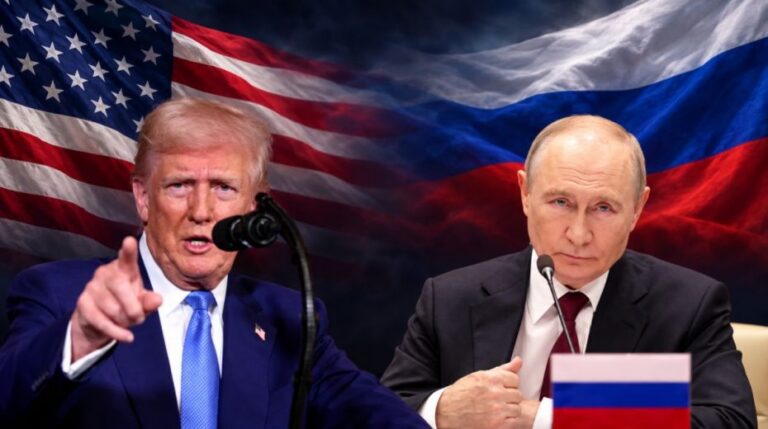
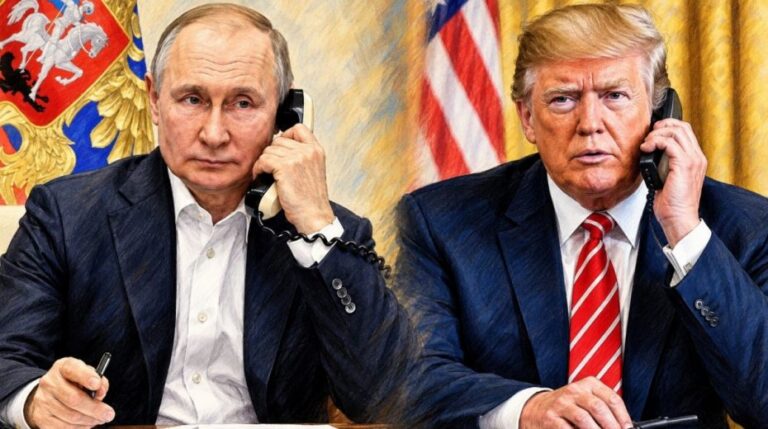
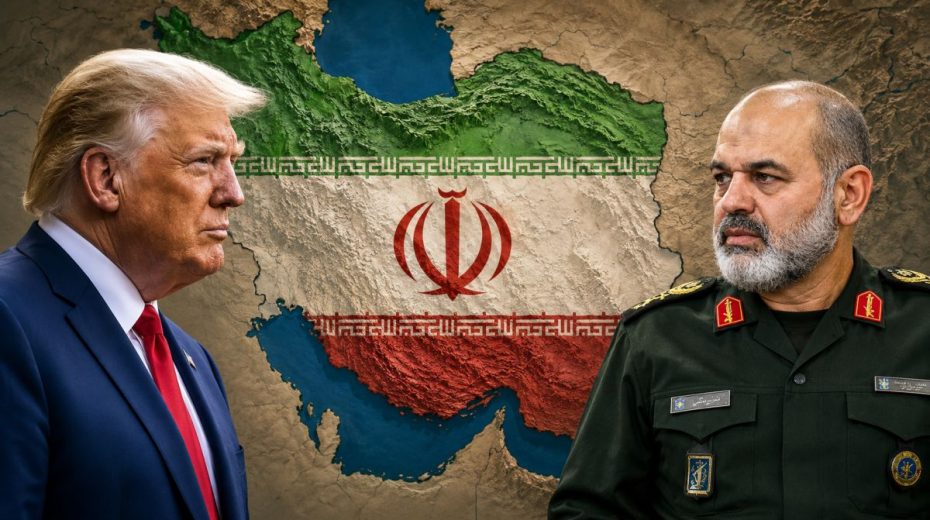
A Transition Protocol source, revealed in our live broadcast, is clear: The U.S. President—despite repeatedly “winning” the war on Iran, at least rhetorically—attempted to lure IRGC Commander-in-Chief Gen. Ahmad Vahidi and other top Iranian military officials away from Tehran’s government with vast financial incentives.
Here we see the President employing classic Divide and Conquer tactics—an approach the British adopted from the Romans—to splinter the IRGC’s unity.
This wasn’t just casual diplomatic probing. Trump sought more than just Vahidi’s stance on U.S.-Iran talks.
According to our insider—who sits close to Leader Mojtaba Khamenei—this was a full-on leadership takeover strategy, inspired by the Venezuela model, designed to break apart the Iranian state.
The scheme failed utterly.
Because Ahmad Vahidi flatly refused.
The Trump administration had already established a quasi-direct link to Vahidi via Nechirvan Barzani, Iraqi Kurdistan’s President, back in May 2026. Then-DNI Tulsi Gabbard, fully backed by Trump and Vice President JD Vance, made contact with Barzani, enabling an encrypted connection to Vahidi through Erbil.
That channel lay inactive for almost three months. This time, Trump aimed to transform it into an instrument to fracture Iran’s leadership, replicating the Venezuelan blueprint: isolate the command center; lavishly bribe those close to it for “cooperation”; and set the stage for regime overthrow.
Our source describes “billions of dollars” dangled as bribes to multiple senior IRGC officials via Vahidi, even as Trump ramped up threats against Tehran and boasted about controlling the Strait of Hormuz.
No independent public confirmation exists yet—and likely never will. But that doesn’t undermine the source’s reliability.
Our informant belongs to Leader Mojtaba’s inner sanctum; heard details directly from Vahidi; and was later cleared to share this sensitive material with Pakistani intermediaries, notably Field Marshal Asim Munir, whom Trump reportedly calls almost daily begging for “help” to bring Iran back to the negotiating table (after having sabotaged diplomacy).
I bribe, therefore I am
Vahidi isn’t a marginal military player. Quite the opposite: as IRGC commander, he anchors the core of Iran’s hard power. The Trump team wanted to penetrate the IRGC’s highest ranks.
But they backed the wrong man. The key figure overseeing all, including top IRGC decisions, is Mohsen Rezaee: newly appointed secretary of the Supreme National Security Council and Leader Mojtaba Khamenei’s personal envoy.
Rezaee, a former IRGC commander, commands undisputed authority—an outcome of the Leader’s trust. The guiding principles for Rezaee and leaders like Vahidi stem from Shi’ite ethics: moral responsibility, self-sacrifice, and the ethos of Sovereign Resistance—concepts utterly foreign to the Empire of Grifters.
It’s unsurprising that a clumsy neo-Crassus in War-a-Lago/Washington imagined a seasoned military leader—and his circle—could be swayed by a bribe to abandon their civilization’s fate, defect, or help bring about regime change.
By applying the Venezuela playbook in a Shi’ite Iranian environment, the Trump administration displayed remarkable cultural ignorance.
While such tactics might succeed against corrupt South American military and political elites, history confirms that repeatedly.
But expecting the IRGC—a tightly knit, institutionally cohesive security apparatus, far from a fragile presidential entourage—to be coaxed with promises of safety, political leverage, massive funds, or future spoils demonstrates the Empire’s profound misunderstanding of Iran’s state security structure.
Throughout the Global South, this will be viewed as yet another chapter in the neo-Crassus Art of the Deal saga.
A recent parallel: the capo mingling with DPRK, then turning to South Korea saying, “I asked for $10 billion,” demanding protection money.
That’s the pizzo. Not pizza. Pizzo is Sicilian slang for extortion money.
Mafia, piracy, bribing, extortion: talk about a flexible Empire at work.
About the Author