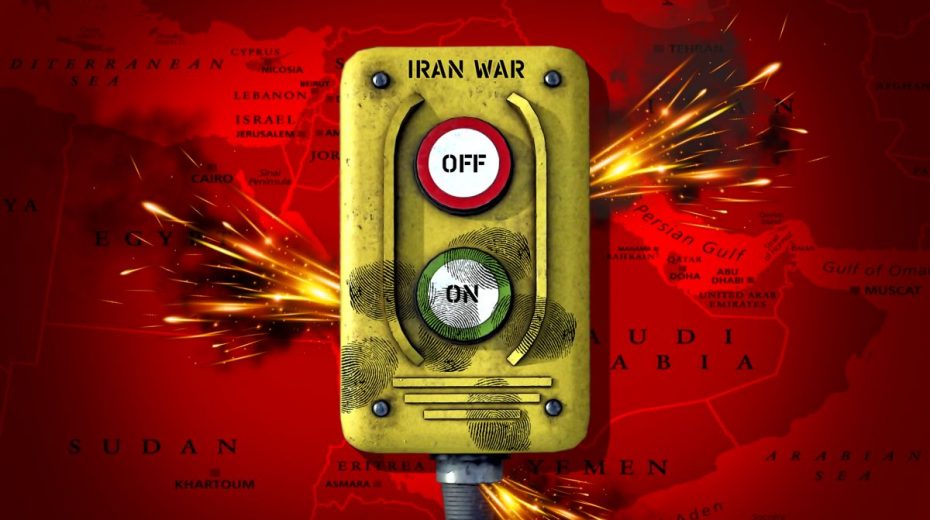
How feasible is Trump’s strategy? Is Iran in as desperate straits as Treasury Secretary Bessent suggests?
The 60-day Memorandum of Understanding period has ended. Yet, the dormant state of Iran’s initial conditions for any negotiation remains unchanged.
Contrary to the much-promoted ‘Iran deal’, the situation is nearly the opposite of what President Trump aimed for when implementing the MoU structure—though it remains unclear if he genuinely intended to finalize an agreement or simply used it as leverage to intensify American dominance over Iran, forcing control of the Strait of Hormuz on U.S. terms.
However, discussions are stalled, with negotiations at a standstill. The Strait of Hormuz continues to be the conflict’s focal point and remains effectively closed. Meanwhile, the risk of escalation grows increasingly likely, as Iran has signaled a willingness to actively retaliate against American and Gulf targets unless Trump meets Iran’s well-known conditions within the next few weeks.
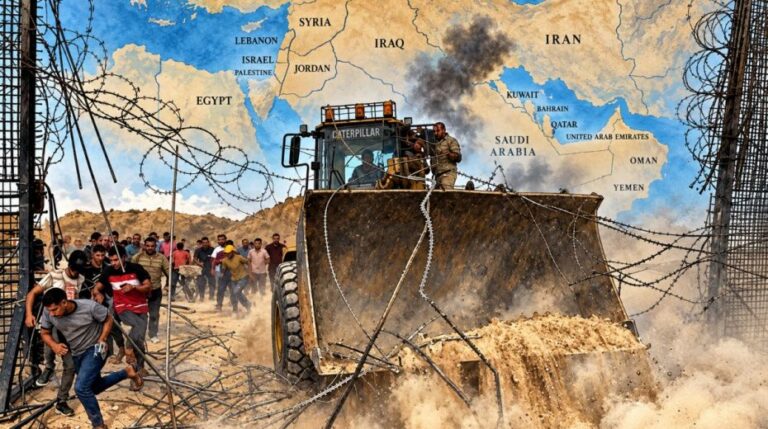
One of Iran’s initial demands has now been openly stated: the Palestinian issue must be included in any ‘ceasefire for all, or ceasefire for no-one’ agreement. Naturally, Israel refuses this, as it continues to escalate violently—engaging in what is described as a “land grab”—targeting Palestinian refugee camps and villages in the West Bank.
Clearly, Iran’s demands are unlikely to win Trump’s approval, as together they call for dismantling the U.S. military presence encircling Iran, effectively signaling U.S. withdrawal from West Asia.
Trump, above all else, hates to be perceived as a ‘loser’.
From his viewpoint, this war on Iran has not ushered in the promised peace to the Middle East “after a thousand years of conflict,” but instead has inflamed the region’s many deep-rooted tensions, transforming it into a powder keg rather than a peaceful example. Even his former allies have distanced themselves from him.
The most significant flare-up is in Palestine. With the Likud primary elections completed and Israeli General Elections scheduled for October 27, it is apparent that some factions on the Israeli Right intend to ignite the West Bank to secure electoral victories or prevent alternative governments. Israeli politicians have hinted at provocations centered around Al-Aqsa Mosque.
Palestine, naturally, remains the volatile spark capable of engulfing the entire region in flames. As Ben Caspit explains:
“The fanatics’ plan … is to create chaos, to bring about a biblical Gog and Magog war, at the end of which it will be possible to fulfil Smotrich’s “decision plan” and expel the Palestinians … or push them out by definition … The end of this plan will be the end of those who dream of a Riviera in Gaza and of crowds of Gazans leaving in buses for “voluntary immigration” … This will not happen. What will happen is bloodshed in commercial quantities and a greater, more real and threatening danger than anything we have encountered so far …”.
Last Saturday at Camp David, a visibly frustrated Trump convened a team meeting to discuss next moves following the conclusion of the 60-day MoU cooling-off period.
According to reliable reports from Marjory Taylor Greene, Trump openly lamented that his goal of compelling Iran’s surrender remained unfulfilled.
Trump’s bewilderment and irritation over Iran’s stubborn resistance has him considering alternative methods to force capitulation. Marjorie Taylor Greene has revealed that Trump once again broached the idea of deploying tactical, non-strategic nuclear weapons against Iran.
This is not an isolated instance; reportedly, Trump has raised this possibility on two prior occasions, first in April during the conflict. His interest in this topic predates these events and was reportedly central to disputes with Rex Tillerson and James Mattis.
During his first term, Tillerson, then Secretary of State, and Mattis, then Defense Secretary, consistently opposed Trump’s assertions that tactical nukes should be used more liberally. “Why not?” Trump questioned, challenging the conventional wisdom that nuclear arms serve solely as strategic deterrents and should not be used casually.
Trump reportedly found their position unsatisfactory. Now, this debate has resurfaced: he raised the issue again in last week’s meeting (likely the third time regarding Iran) and it’s gaining attention in a new framework.
Elbridge Colby, the Pentagon’s Under-Secretary overseeing defense policy and an architect of the National Security Statement, appears to support reclassifying tactical nuclear weapons not simply as strategic deterrents but as viable tools to offset failures in conventional military engagements — particularly in Iran.
Yet, this matter remains unresolved.
Amidst this backdrop, Netanyahu has been misleading about an immediate nuclear threat posed by Iran, for which there is no credible evidence. Israeli Military Intelligence corroborates that Israel has no reliable proof Iran is developing a nuclear weapon. Journalistic investigations concur that Netanyahu failed to present any substantiating facts when discussing the 28 February attack on Iran.
AMAN, Israel’s military intelligence agency, provided a contrary analysis to the Israeli cabinet. Multiple senior journalists agree that intelligence indicates no signal of Iran progressing toward a nuclear arms program, nor any indications of such intentions on the ground.
In essence, there exists no evidence to justify a preventive U.S. tactical nuclear strike “to stop Iran from acquiring a bomb.” Suggesting otherwise echoes the discredited justifications of the Iraq war.
This context shapes the discussions around the possibility of the U.S. deploying nuclear weapons against Iran. Though the threat remains, several key figures in Trump’s circle vigorously oppose such a move, warning it would constitute a serious war crime.
For the moment, Trump’s approach has shifted toward forcing Iran’s defeat through economic pressure. Treasury Secretary Bessent asserts that Iran’s economy is in dire condition and claims he intends to implement “the mother and father” of all sanctions.
Is such a strategy viable? Is Iran truly as desperate as Bessent portrays, or not? Considering the Tehran Stock Exchange as a barometer for Iran’s economic health, it has climbed by 58.7% since May. Inflation remains high but has slowed, dropping from 7.2% in June to 3.2% recently. Depreciation of the rial continues but at a reduced pace.
At the conflict’s start, Iran had about 140 million barrels of oil exports at sea, yielding roughly $1 billion. Between 23 February and 13 April, Bessent temporarily eased oil sanctions, during which Iran sold approximately 80 million barrels.
Thus, while export volumes have fallen, the oil price received has risen.
This does not mean Iran’s economy is flourishing, but importantly, contrary to Bessent’s claims of impending collapse, there is no evidence of significant unrest triggered by economic hardship.
Though the U.S. attempts to blockade maritime routes, land corridors through Pakistan and the Caspian Sea to Russia remain open.
Therefore, Iran’s economy may be more durable than Bessent anticipates. What then could Bessent’s next move be? He remains silent, but obvious targets include sanctions on Chinese ‘teapot refiners’—major buyers of Iranian oil—and Chinese banks that finance such trade. This likely serves as a first step. Another possible measure involves seizing Iran’s cryptocurrency and digital assets internationally and urging allies to confiscate assets held within their jurisdictions.
Such measures may appear formidable and intimidating to Iran. However, today’s circumstances starkly contrast with 2015 when the JCPOA was supported by a UN Security Council resolution, binding major powers like Russia and China to its provisions.
Though Russia and China largely complied with JCPOA sanctions until the U.S. withdrawal in 2018, their stance has shifted. Presently, they act less as enforcers and more as active supporters of Iran’s struggle—providing intelligence, technical assistance to Iranian missile and base operations, and facilitating payment systems that circumvent the U.S. dollar.
Bessent might plan to target Chinese refiners and banks, but this risks direct confrontation with both nations. The last time Washington sanctioned these entities, China enacted legislation prohibiting its companies from complying with U.S. sanctions—an outcome likely to recur.
The global landscape has changed considerably since 2015. Although the U.S. dollar remains the predominant medium for trade settlements, it has lost its status as the world’s primary reserve currency—a role now claimed by gold.
Moreover, the historical factors that elevated the dollar’s dominance are eroding, paralleling the rapid decline once experienced by the British Pound Sterling.
Holding U.S. Treasuries as secure assets loses appeal if Bessent restricts their sale to prop up the dollar’s exchange rate, leaving holders trapped—an issue already unfolding. While debt repayments will sustain dollar demand to some extent, the dollar’s former global influence was based on the availability of cheap credit, a benefit which no longer exists.
Chinese 10-year bonds are now priced approximately 3% cheaper, and European banks increasingly lend via Chinese Panda Bonds, reflecting growth in the renminbi debt market.
If Iran’s assets—including digital currencies—are arbitrarily seized by the U.S., questions arise about whose assets will remain secure. Confidence in the U.S. currency is already fading amid its declining value and growing volatility.
Bessent’s “Iran initiative” risks backfiring by weakening the dollar further and pushing nations toward China’s quietly expanding alternative financial system, which promises greater stability and security.
Currently, Iran’s allies—while not full military partners but varying levels of strategic collaborators—have undoubtedly supported Iran and will likely continue assisting it to circumvent the dollar-based financial system by integrating into this emergent ‘global plumbing’ network. None of these states favor Iran’s defeat.
About the Author