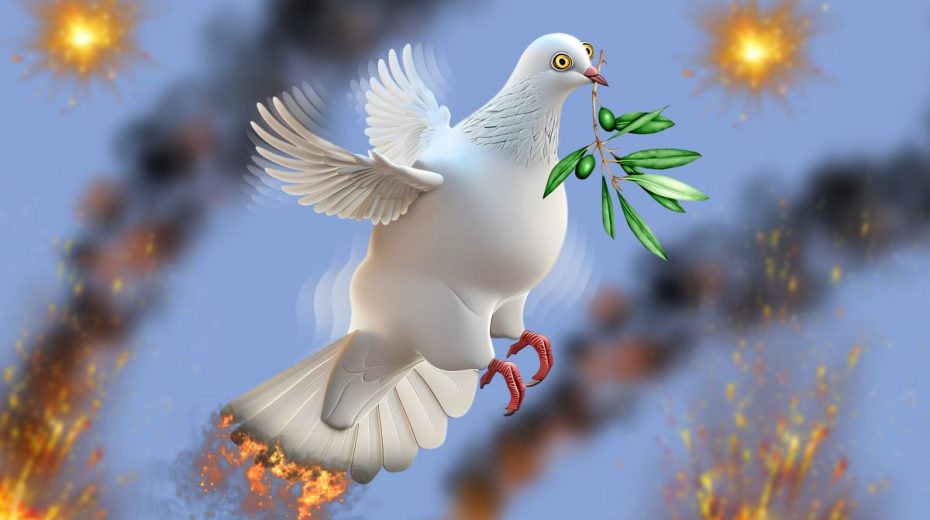
We can only hope that endless escalation will cool down and that the return of great-power politics will find a sustainable balance.
An era without rules
Observers scanning the international landscape in the summer of 2026 would find it hard to identify the liberal order that, for twenty-five years, seemed to define the natural framework of global affairs.
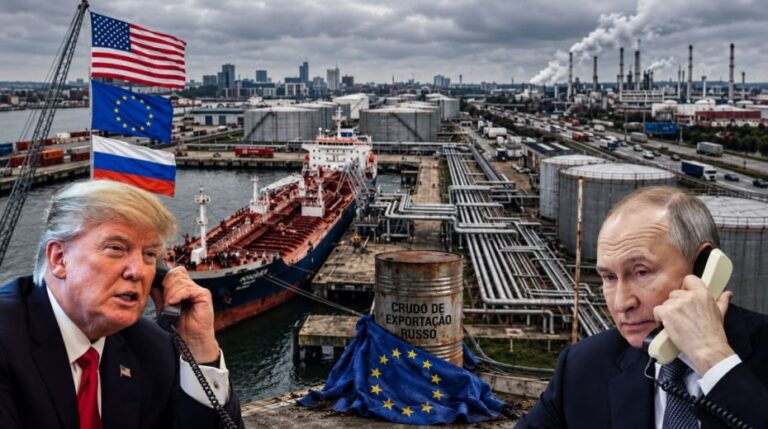
Within merely weeks, debates have surfaced about deploying tactical nuclear weapons against Iran, a nation without nuclear arms; Russia has threatened to target British military assets “in Ukraine and beyond”; the European Union has reignited efforts to utilize frozen Russian sovereign funds to support Kiev; and Washington has treated a global maritime strait as though it were under its exclusive jurisdiction. This pervasive sense—that the system no longer respects limits—does not reflect a sudden lapse in rationality among officials but results from a profound structural transformation that Western elites have been reluctant to acknowledge and largely continue to dismiss.
The clearest explanation of this transformation comes from John Mearsheimer’s recent interview with Professor Glenn Diesen. His argument is straightforward yet unsettling: the current turmoil arises from a systemic shift—from unipolarity to multipolarity—combined with enduring issues inherited from the era when the United States stood as the lone superpower. Anyone attempting to grasp why today’s discourse casually violates thresholds once deemed inviolable during the Cold War must consider these intertwined factors.
Realist theory, a foundational approach within American international relations scholarship, begins with a timeless principle: international orders hinge on the distribution of power; when that balance shifts, so too does the order. The liberal international order was never a permanent moral triumph but rather the global expression of the Western system forged during the Cold War, sustained by the presence of a sole dominant liberal state after 1991. That era ended with the dissolution of unipolarity. Three great powers have reemerged, bringing with them three competing visions of global order—or multiple orders.
The BRICS frameworks—from their development bank to alternative payment channels—represent more than mere rhetoric; they constitute the foundations of a rival order challenging institutions like the International Monetary Fund and the World Bank. Seen this way, current events do not signify the collapse of global order but its competitive reinvention: the United States strives to uphold its system, while China and Russia seek alternatives. This dynamic is more reminiscent of the Cold War than the fifteen-year liberal period, though it’s made more complex by triangular competition. A tripolar world opens possibilities for alignments and conflicts far more intricate than the bipolar Cold War era.
Layered atop this structural shift are the enduring consequences of the unipolar period. NATO’s expansions began in 1994 amid American dominance and progressed through successive phases—in 1999, then in 2004 with the Baltic states’ inclusion—eventually reaching Ukraine by 2008. Viewed from this perspective, the Ukrainian crisis of 2014 and the ongoing war are the heaviest legacies of that time: a network created when it was assumed Russia would not respond forcefully. Meanwhile, in the Middle East, a parallel trajectory has unfolded. The U.S.’s “dual containment” policy post-1991 Gulf War, followed by the Bush administration’s regime change doctrine, reflect an interventionism rooted in political engineering akin to “liberal hegemony” elsewhere.
Mearsheimer’s most distinctive insight concerns the policymakers themselves. The generation that crafted Cold War foreign policy, shaped by World War II, naturally thought in terms of balance-of-power logic. After the USSR’s collapse, this worldview was largely discarded: Francis Fukuyama’s “end of history” thesis convinced a ruling class that realism was obsolete and liberalism inevitable. In European academia, balance-of-power studies have nearly vanished; its adherents are now seen as not only behind the times but potentially subversive.
George Kennan foresaw the repercussions of NATO’s eastward drive as early as 1997. His analysis was a realist one: any state would view a military alliance extending to its borders as an existential threat. Yet the Clinton administration did not regard this as a deliberate mistake. Instead, it genuinely believed it could enlarge NATO and the EU without alienating Moscow—that it could have its cake and eat it too. Throughout the 1990s, Russia seemed poised for liberal democracy, and China’s 2001 entry into the World Trade Organization was premised on the expectation that economic interdependence would yield a “responsible stakeholder,” not a systemic rival.
The result is an elite managing nuclear arms and crises between great powers without a firm grasp of deterrence theory or the security dilemma dynamics. During the Cold War, nuclear strategy was a daily staple for policymakers; in the unipolar era—when conflict between equals seemed off the table—that mindset faded. The nuclear issue’s abrupt resurgence in a three-power competition now finds leaders unready.
The illogical option
The current talks about possibly using tactical nuclear weapons against Iran highlight this unpreparedness.
In the Cold War, the presumed use of tactical nuclear weapons centered on thwarting a Warsaw Pact armored offensive in West Germany—a symmetrical land war. Exercises like Carte Blanche and the 1983 Proud Prophet revealed two sobering realities. First, halting the Soviet advance would require massive nuclear deployments, causing an estimated 1.7 million German fatalities and devastation of the very territory defended. Second, the hope to keep the conflict “tactical” was illusory, as escalation to strategic levels seemed nearly inevitable.
Iran’s situation is fundamentally different, and these very differences demonstrate the absurdity of such an option. Iran lacks nuclear arms, so fears of retaliatory strikes are absent; moreover, the conflict revolves around air and naval operations aimed at reopening the Strait of Hormuz rather than ground combat. What targets could a nuclear strike hit? Attacking the Strait would contaminate waters adjacent to the UAE, Kuwait, and Saudi Arabia. Bombarding Iran’s interior would not guarantee capitulation and would entail a large-scale military operation. In either case, deploying nuclear weapons against a non-nuclear state party to the Non-Proliferation Treaty would shatter the nuclear taboo—sending a disastrous message for global non-proliferation and setting a dangerous precedent for Moscow, Beijing, and Tel Aviv. It is therefore unsurprising that Trump’s advisers reportedly oppose this scenario.
An important distinction characterizes today’s deterrence compared to the Cold War, deftly captured by Mearsheimer using two analytical concepts. The first, the security dilemma, explains how defensive measures by one country are perceived by adversaries as offensive threats. For example, China regards its intercontinental ballistic missile expansion as defensive, while Washington sees it as aggressive; similarly, arms supplied to Taiwan are defensive for the U.S. but offensive from China’s perspective. Without clear criteria separating defense from offense, every arms buildup appears as preparation for attack.
The second concept differentiates containment from “rollback.” Great power rivalry never limits itself to mere containment: the U.S. seeks not only to contain Russia but to “inflict a strategic defeat” and remove it from great power status—the same rhetoric Russian officials use when citing attempts to “greatly weaken Russia.” This reversal upends deterrence’s original function, which during the Cold War preserved the status quo. Now, the West claims to deter while itself pushing a revisionist agenda through NATO expansion and deliveries of advanced weaponry. This is less deterrence and more a demand that rivals do not respond amid escalating provocations.
Mission and risk
The glaring example of this strategic muddle is CIA Director John Ratcliffe’s abrupt visit to Moscow on August 25, 2026, which I analyzed recently. Reports concur on a dual message: dissuade Russia from action against the Baltic states and push it to cut military and economic ties with Iran. However, the premise—that Russia poses an imminent threat to Estonia, Latvia, and Lithuania—is unsupported. Even Baltic governments and European officials cited by Bloomberg affirm that threat levels remain unchanged. Moreover, Russia holds the advantage on the ground, conducting effective air strikes, isolating Ukraine from the sea, and inflicting severe economic damage on Kiev. Thus, the condition that might justify the “Karaganov” thesis of compensatory escalation beyond Ukraine’s borders is absent.
In fact, the more palpable danger arises from a front unaddressed by the Ratcliffe mission: British cruise missiles. After Ukraine’s Storm Shadow strike on Donetsk on August 26, Russian Foreign Ministry spokeswoman Maria Zakharova warned that Moscow might retaliate against British military facilities “in Ukraine and beyond its borders.” The phrase “and beyond” signals potential strikes on targets outside Ukraine, possibly within the UK or at sea. This stands as Moscow’s clearest threat yet against a NATO member and, because it is a stated change in posture rather than an immediate action, it must be taken seriously but without alarmism.
The breakdown of constraints extends beyond military matters. Economically, U.S. claims to seize Iranian oil tankers and Europe’s efforts to activate frozen Russian sovereign assets align in undermining established norms. The European Commission’s “reparations loan,” proposing up to 165 billion euros backed by Russia’s frozen funds in Euroclear, represents the most ambitious attempt to weaponize the freezing of sovereign assets to finance war. Whether viewed as just retaliation or, per Moscow, outright “theft,” this challenges the principle of sovereign asset inviolability—the foundation of the financial order built by the West—by the very states that established it. This signals cracks not just in military strength but also in the liberal order’s internal coherence.
The shift to a tripolar global system is advancing; legacies from the unipolar era continue to ignite conflicts, and many Western leaders still frame international relations through outdated categories formulated when great-power rivalry seemed obsolete. This unfolding reality demands recognition.
The risks are significant. Within a multipolar framework, the absence of a common strategic culture combined with blurred lines between defense and offense amplifies the chance of escalation at a time when the room for error shrinks. Understanding the true mechanics of great-power politics is not an academic pursuit but the basic condition for preventing disaster in a world that has once more become perilous. Sharp minds must prevail over fanciful solutions.
We can only hope that this endless escalation will cool down and that the return of great-power politics will find a sustainable balance. Otherwise, it will be endless war.
About the Author