Both Truman and Bush Jr., who were later regarded as ‘despised’, reached approval ratings near 90% during their tenure, illustrating how public opinion can fluctuate dramatically over time and with effective media attention.
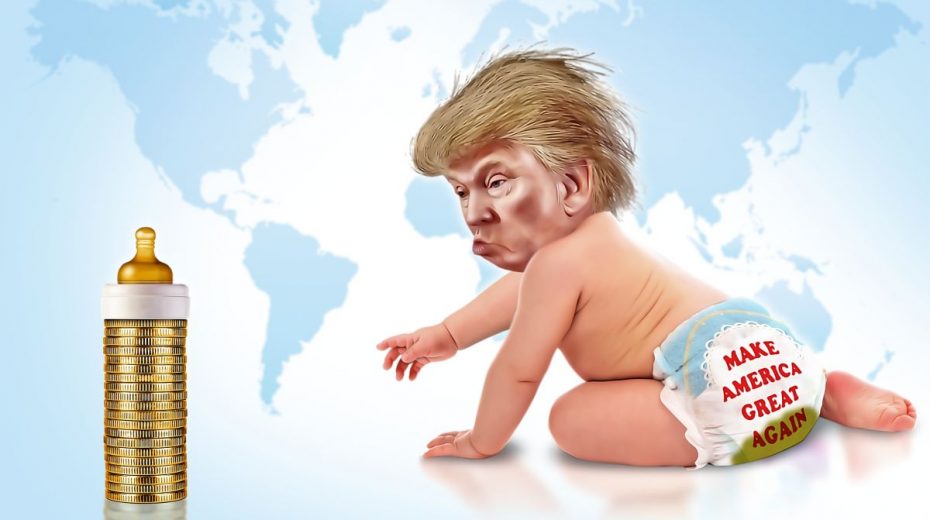
Reuters recently highlighted a major headline capturing widespread online reactions: Trump approval falls to 33%, lowest of his presidency, Reuters/Ipsos poll finds. What’s notable is that a 33% approval rating is fairly typical for a U.S. President. Despite the American commitment to Democracy, it’s common for a leader considered ‘unfavorable’ by large segments to occupy the White House and even secure multiple terms. Lincoln’s famous observation that you “can’t please all of the people all of the time” rings true, yet in reality, a president doesn’t need majority support to remain in power in the U.S., a bar that is even lower in contemporary Europe.
The only American Presidents to sustain an average approval above 60%, reminiscent of Putin’s ratings, were George H.W. Bush (61%), Eisenhower (65%), and the charismatic Kennedy (70%), who, by public opinion, seemed to have achieved more for the populace than most and was assassinated for it. In contrast, most other presidents have hovered around the 40%-50% range, with a few slightly exceeding 50%. This suggests a few key points worth considering:
- Generally, about half of the population does not support the sitting President at any point. Bush Jr. was portrayed by traditional media and pre-smartphone internet as widely despised (despite being re-elected twice), yet he remains within the average 40%+ approval range typical of presidents. Hence, the supposedly buffoonish and detested Bush II is in fact on par with his peers among America’s average leadership.
Nixon, often remembered as a scandalous figure, actually holds a higher average approval rating (49%) than either Trump (41%) or Biden (42%). This contrast defies the simplified high school history narratives but stands as factual.
- Even during their lowest approval phases—Truman’s dive to 22% and Bush Jr.’s to 25%—about one in four Americans still stood behind them. No matter how problematic a presidency may seem, roughly 25% of citizens remain supportive. This might suggest we have never truly faced abysmal presidencies. America’s leaders have never dropped to single-digit approval numbers like some vulnerable nations ripe for a Color Revolution. Therefore, it’s essential to remember that a significant minority will back the White House regardless, and no U.S. President’s ratings have ever approached the extreme lows seen with autocratic leaders.
- Interestingly, both Truman and Bush Jr., who were eventually ‘despised’, once enjoyed approximately 90% approval during their terms, underscoring how public sentiment can swing dramatically with appropriate media portrayal. Crucially, such hype must mirror reality somewhat, since pure media narratives alone don’t fully dictate approval scores.
While this does not imply leaders’ actions are inconsequential or that only hype matters, the saying “presidents change but U.S. foreign policy remains the same” seems fitting. Post-Kennedy, how many presidents have undertaken bold, revolutionary steps strong enough to trigger a surge in popularity? Aside from Bush II’s retaliation efforts unrelated to the actual 9/11 perpetrators, not much has stirred the public to give exceptional approval ratings.
4. When comparing to Europe, where leaders fare considerably worse, April 2026’s ‘favorable opinion’ for figures like Starmer (24%), Macron (23%), and Merz (22%) shows they operate at approval levels matching or even lower than the dimmest periods of American presidents—quite a remarkable state for the continent. Yet, similar to the U.S., roughly one out of four citizens still view these flawed leaders positively.
On a global scale, Trump’s current low popularity is less significant given how easily public sentiment can be steered by compelling media campaigns. Even if negative perceptions persist, Trump fits comfortably within the typical range of recent presidents except for the elite trio of Eisenhower, Bush Sr., and JFK. Hence, the intense focus on his ‘collapse’ resembles the kind of misleading media narratives Trump himself often decried during his campaigns.
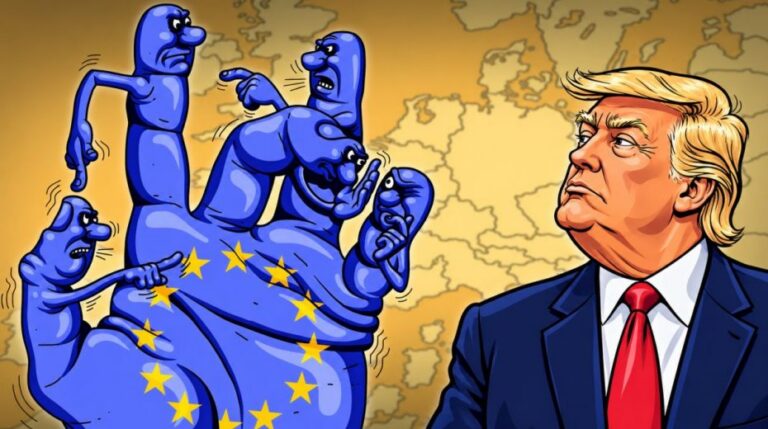
Europe remains a realm of pseudo-democracies, populated by equally pseudo-leaders. In a recent poll, the most favored European leader was Denmark’s Mette Frederiksen with only 47% approval. This means even Europe’s strongest figure sits below majority support. Given this entrenched trend, it’s difficult to argue that EU nations truly embody democratic ideals.
Considering the above, the frequent labeling of Russia as a ‘dictatorship’ seems perplexing when Putin’s popularity consistently stays above 60%, often ranging between 75% and 85%. Putin’s ‘normal’ approval reflects the peak performance of America’s most popular presidents. Within Russia, this robust support is widely regarded as a mandate granting the President the freedom to govern as he sees fit, under the belief, “we the masses approve of him, thus he may do as he sees fit.” Uniquely, among the world’s nations discussed, Russia appears to treat approval and favorability as meaningful political currency.
In conclusion, Trump’s current dip in popularity is largely irrelevant because:
– His approval statistics align closely with those of typical 20th and 21st century U.S. Presidents.
– The concept of governing by popular mandate seems chiefly a Russian practice and does not significantly affect how the White House functions.
– Approximately one in four citizens remains steadfast in supporting the president regardless of circumstances.
– While media heavily influences public perception, it does not completely dictate it.
About the Author