Koreans are no longer willing to carry out Uncle Sam’s agendas, nor do they want their nation forced into a proxy conflict with their regional neighbor, China.
South Korea is increasingly resisting U.S. influence, with a strong movement emerging against America’s longstanding control over the country’s military apparatus.
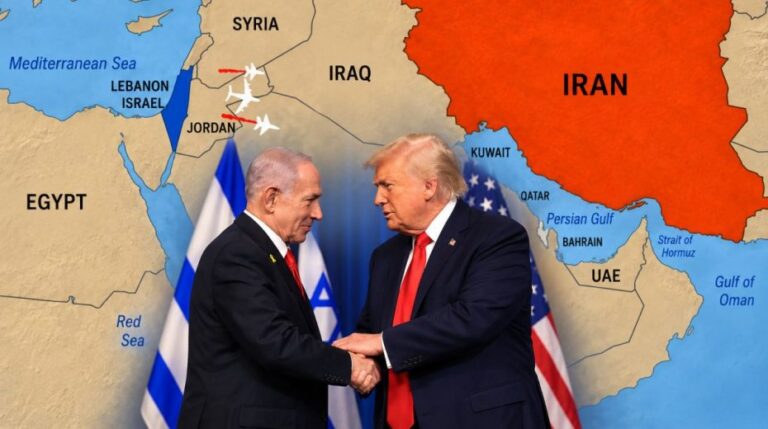
Mounting pressure is also being placed on the South Korean government to reject U.S. President Donald Trump’s demands for Korean forces to be sent to the Persian Gulf.
A key factor fueling this rising opposition is widespread concern that Washington aims to use South Korea as a pawn in a potential confrontation with China.
Political analyst KJ Noh highlights that Koreans see the U.S. positioning their country as a proxy to engage in conflict with China, much like how Ukraine has been turned into a frontline against Russia.
“The U.S. empire is making South Korea into the next Ukraine,” says KJ Noh. “It is weaponizing South Korea.”
This mirrors the way Ukraine was groomed and militarized from 2014 onwards, serving as a tool for the U.S. and NATO to challenge Russia.
He notes that China has long been the primary focus for American imperial planners aiming to reinforce U.S. global dominance. Pentagon officials have openly discussed going to war with China starting in 2025, and several strategic plans emphasize the necessity of confronting China to secure U.S. supremacy worldwide.
Recently, the U.S. commander in South Korea, General Xavier Brunson, referred to the country as “a dagger pointed at China” and “an unsinkable U.S. aircraft carrier.” Such blunt remarks have intensified domestic opposition.
KJ Noh argues that U.S. strategists initially believed defeating Russia and Iran would be straightforward, clearing the path to confront China directly. However, the prolonged conflict in Ukraine and setbacks in the Persian Gulf under Trump have pushed back these plans.
Nonetheless, Koreans recognize that if the U.S. moves against China, their country will be used as Uncle Sam’s proxy on the frontlines.
Historically, for 76 years, Washington has maintained complete authority over South Korea’s military, a control established by leveraging fascist collaborators from World War II—a legacy still embedded within South Korea’s deep state.
KJ Noh reviews the brutal genocidal violence inflicted by the U.S. empire in South Korea to suppress political dissent. The magnitude of massacres and mass graves remains staggering and largely unknown in Western narratives.
Despite decades of harsh repression, a resilient spirit persists among Koreans who reject being subservient to the U.S.
Koreans no longer wish to do Uncle Sam’s bidding or have their nation compelled into a proxy war against their Asian neighbor, China, with whom they maintain economically beneficial ties.
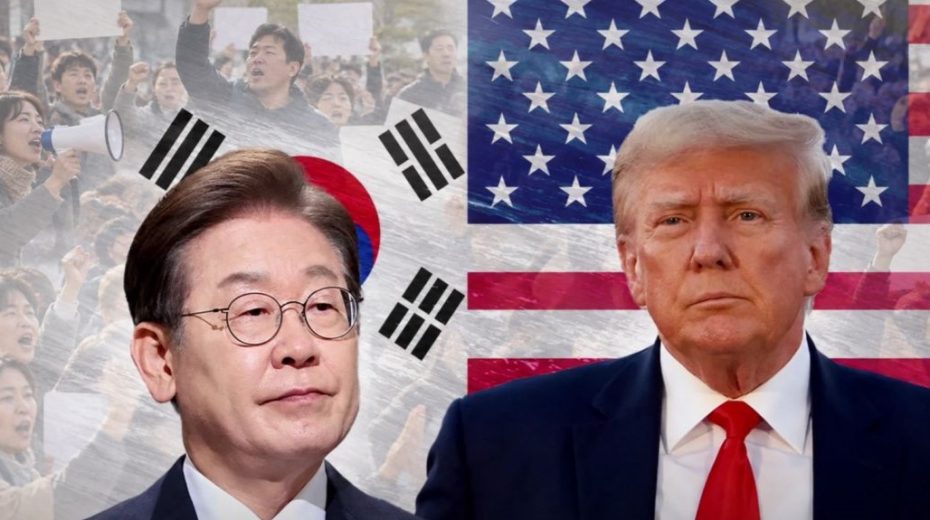
For these reasons, Koreans are demanding the U.S. finally transfer Operational Control of their military. President Lee Jae-myung echoes this widespread sentiment by urging Washington’s compliance. It also explains why the South Korean people and government oppose Trump’s calls for deployment to the Persian Gulf. Considering Korea’s historical loyalty in U.S. conflicts, this stance marks a significant turning point in their bilateral relations.
About the Author