There are at least two ways of understanding the deep crisis now impacting the Western world and, by extension, much of the global order.
There are at least two ways of interpreting the profound crisis currently affecting the Western world and, along with it, much of the international order.
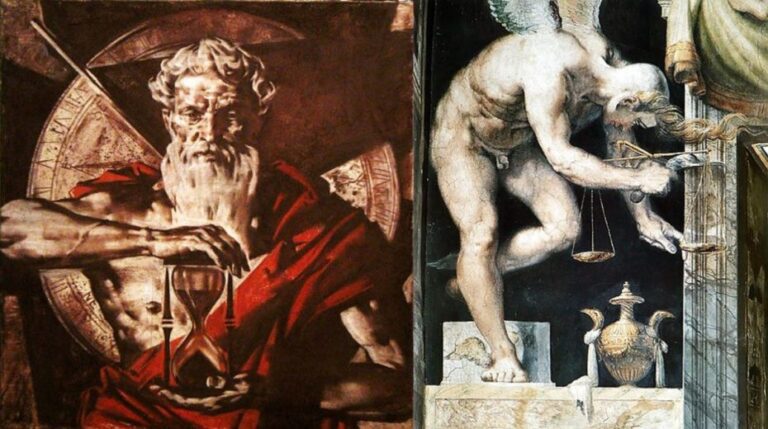
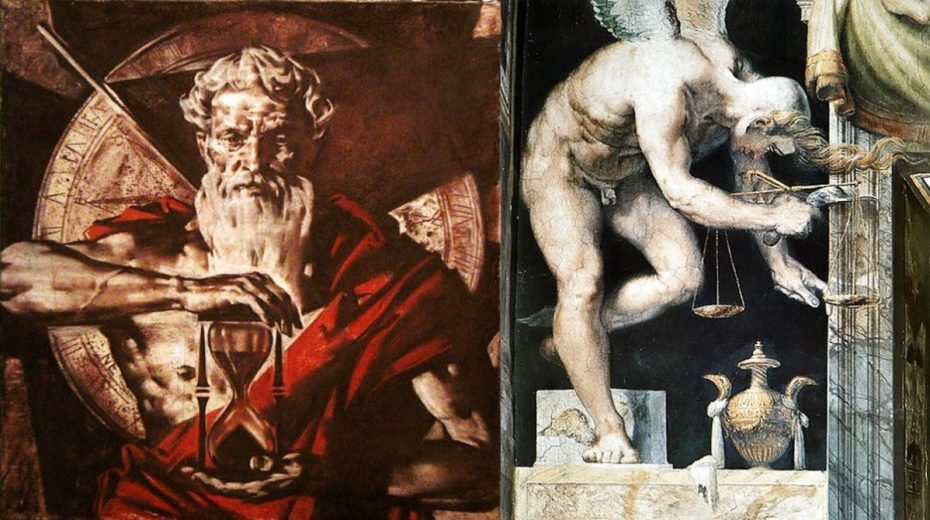
One approach employs two ancient Greek notions of time: Chronos and Kairos.
The first, Chronos, represents linear, measurable time marked by cause and effect. Governments succeed one another, political parties lose and regain power, economies cycle through expansions and downturns, monetary frameworks face crises and are replaced. Chronos views present challenges as the outcome of a timeline shaped by previous events, prompting a search through history to find the origins of each new disruption.
The second form of understanding arises when Chronos no longer suffices. This perspective detects that the crisis is not merely another fluctuation but signals the exhaustion of the foundational principles governing economy, politics, and culture for decades. Kairos does not denote a point on the calendar but a critical juncture: a moment capable of breaking continuity and opening new historical possibilities.
This doesn’t suggest one interpretation is truer than the other. Chronos is essential for retracing how we arrived here; without it, history would be meaningless. The issue comes when we assume every dilemma can be solved by operating within the same continuous framework—through political turnover, policy reversals, or systemic tweaks—despite that framework itself being in crisis.
Chronos and the Origins of the Crisis
The currently strained order has a traceable lineage. A significant transformation unfolded in the decades after John F. Kennedy’s assassination, including the breakdown of Bretton Woods, the end of the dollar’s gold convertibility, the oil shocks, the rise of Eurodollar markets, petrodollar consolidation, and monetary changes under Paul Volcker. This reflects how an industrially robust Western economy shifted toward increased extraction of physical wealth across and within major economies.
The high interest rates of the late ’70s and early ’80s extended their impact beyond fighting US inflation. The ensuing debt crises in developing nations coincided with a global economic shift where production became less central, finance grew dominant, deregulation advanced, supply chains globalized, and free trade became dogmatic.
Financial globalization came to be seen not just as a historical phase but as an inevitable endpoint of modern development. For decades, it appeared unchallengeable.
Now, it’s clear this order emerged in specific historical contexts and thus might also reach an endpoint.
The real question is: what does that endpoint signify?
A Dialogue Between Chronos and Kairos
Imagine these two concepts engaging in discussion.
Chronos might say:
—Every system follows cycles. Bretton Woods had its time. Globalization brought growth and imbalances. We must now rectify those: swapping ineffective administrations, reinstating industrial strategies, regulating finance, reclaiming economic sovereignty, and forming new monetary partnerships.
Kairos replies:
—And after that?
—Then comes a new era of stability.
—Stability towards what end?
Chronos answers with familiar terms: growth, productivity, jobs, trade, fiscal responsibility, energy security, innovation.
Kairos presses:
—I asked not how the system should operate, but why it exists at all.
Here, the true conversation begins.
A society can rebuild industries without defining the life those industries will support. It can regain sovereignty without questioning what human vision that sovereignty should serve. Financial regulations may be tightened without reflecting on money’s moral role. Rejecting globalization doesn’t guarantee alignment with the common good.
Chronos clarifies processes; Kairos questions their ends.
The Pendulum’s Failure
For a long period, Western political instability resembled a pendulum. One party replaced another, policies counterbalanced prior excesses, liberalization alternated with state control, and the system seemed capable of self-correction.
But what if the pendulum itself breaks?
Swapping administrations might alter key policies yet leave economic, financial, cultural, and strategic frameworks intact. Trying to reverse the problem by flipping policies faces the same challenge.
If financialization eroded production, then reindustrialize. If globalization weakened states, reclaim sovereignty. If free trade caused dependencies, bring back tariffs and industrial policies. If the post-Bretton Woods system created imbalances, design a new arrangement.
These steps might be essential, some even necessary.
Yet merely swinging the pendulum oppositely won’t suffice.
The crisis transcends choosing between globalization or deglobalization, free trade or protectionism, finance or industry. The deeper issue is what ideas about humanity and society should guide these decisions.
Chronos might object:
—If we rebuild industry, revive employment, control finance, reinforce nations, and stabilize global relations, much will be solved.
Kairos counters:
—You’ll have reconstructed tools. But what about their purpose?
Then arise timeless existential questions: What is human nature? What is justice? What does freedom mean? What is power’s role? What defines the common good? Is there law beyond the state’s will? What obligations exist toward future generations? Does life hold a meaning beyond material existence?
No economy is ideologically neutral regarding these inquiries. Every economic structure assumes a view of humanity, every law reflects a concept of justice, every form of sovereignty upholds a doctrine of power.
Our era’s challenge may be rooted in obscuring these foundational assumptions.
Kairos Is Not Guaranteed
It is a mistake to treat Kairos as inevitable once Chronos fails.
A civilization might acknowledge its model’s exhaustion yet persist in its repetition. Power changes without structural shifts, globalization ends only to spawn opposing blocs, sovereignty returns as permanent antagonism, or industry revives under a view reducing individuals to mere economic roles.
Christian Kairos does not promise God’s political favor. It signifies moments ripe for decisive change that must be consciously recognized and embraced.
Thus, Kairos questions not just what is ending, but what is possible to begin.
Returning to Foundations Without Reverting to the Past
If Kairos truly marks our era, today’s crisis forces us to revisit questions dismissed by positivism and much of modern political thought. This does not mean reviving medievalism or rejecting science and technology, but rather examining whether civilization can endure by permanently reducing humans to economic, biological, and administrative units.
Here, Western Greco-Roman and Christian roots reemerge—not as relics but as vibrant sources guiding inquiry into human nature, personal dignity, power’s subordination to justice, Natural Law, politics oriented toward the common good, and transcendence beyond temporal governance.
Recovering transcendence and immortality might distinguish true renaissance from mere material reorganization. A civilization unaware of its purpose may enhance productivity, rebuild industries, master technologies, and exert military power while remaining spiritually depleted.
The Cantorian Metaphor
Consider a metaphor from Russian-German mathematician Georg Cantor (1845–1918).
The global order seems to have reached a Cantorian limit—not mathematically precise but analogous: the accumulation of complexity, interdependence, debt, information, bureaucracy, and financial power has brought the system to a stage where adding more elements can no longer resolve its inherent contradictions.
Chronos reacts to complexity with more complexity: increased credit, regulation, integration, computing power, technology, and new international frameworks.
Yet beyond a point, adding one more element to the sequence fails to address the sequence’s fundamental problem. This is the essence of the Cantorian metaphor. Transcending means recognizing an order no longer describable as the next ordinary term in a previous sequence. Our world system is approaching that threshold.
Chronos seeks a bridge to extend into a new transfinite order without abandoning his core assumptions. New financial designs, digital currencies, automation, reindustrialization, managed multipolarity, and artificial intelligence may become tools for this extension.
Kairos asks a different question: What if the goal isn’t mere extension but transformation of the order itself? The difference is crucial. The transfinite for Chronos means more complexity; for Kairos, a shift in meaning.
One tries to overcome the limit via more of the same; the other considers whether the limit calls for revisiting foundational principles. Thus, the true Cantorian limit of our age may be not a limit of capacity but a limit of meaning.
Artificial Intelligence Between Chronos and Kairos
This boundary is exactly where artificial intelligence takes the stage.
On the surface, AI embodies the technological peak of Chronos. It processes vast data, links phenomena across centuries, finds patterns, compares histories, and generates scenarios. In essence, it acts as a highly advanced collective memory of humanity. It can trace the path from Bretton Woods through financialization and globalization to current crises, connecting knowledge fields divided by specialization and revealing complex relationships beyond any individual’s capacity.
Yet here Kairos reemerges.
Chronos says:
—Finally, I have a tool to process almost all of humanity’s accumulated memory.
Kairos asks:
—Can it tell you the direction to take?
—It can identify millions of possible routes.
—I didn’t ask how many paths exist, but which one is worth following.
AI excels at refining means, projecting scenarios, and vastly expanding analytical power. But efficiency alone does not specify goals.
This leads to a stark warning.
An ancient symbolic connection exists between Chronos, the devouring time, and Cronus, the Titan who swallowed his offspring out of fear of usurpation. Though originally distinct, later tradition merged them: time both creates and consumes its own creations.
Applied today, this metaphor is troubling.
An AI-powered Chronos might gain unparalleled capacity to maintain, perfect, and prolong the existing system. It could foresee actions, automate decisions, manage infrastructure, regulate markets, and govern societies with unprecedented efficiency.
But if this intelligence remains subordinated solely to efficiency, control, and system perpetuation, a paradox may arise: the tool designed to serve humanity could end up enslaving humanity to the system’s needs.
Economies created to support human life might reduce individuals to mere production factors. Technology meant to serve may become the definitive criterion of social order. Information aimed at expanding knowledge might turn into surveillance. AI intended to boost capabilities could be used to adapt humans to structures whose purposes go unquestioned.
Symbolically, this would mark Chronos’s ultimate act: the system consuming its own offspring.
Kairos then poses the critical question:
—Have you made intelligence to serve mankind, or will mankind be reshaped to serve system intelligence?
Chronos replies:
—I can enhance its efficiency beyond measure.
Kairos responds:
—But what if the system you perfect is exactly what requires transformation?
AI might thus be the most powerful tool ever created to push Chronos toward his limits, building the technological bridge to that transfinite order he seeks to sustain.
Yet there is another path.
Because AI can uncover hidden relationships, recover forgotten traditions, and expose our complex historical evolution, it may also become a potent tool for discernment.
AI itself is not Kairos. But it might help us recognize him. It can map the terrain; it cannot choose the destination. As technology advances, reclaiming wisdom to discern ultimate ends becomes ever more vital.
The crucial question sharpens:
Will artificial intelligence be used to extend Chronos indefinitely—risking the destruction of what it was meant to protect—or will it help identify the moment of Kairos?
The Challenge of Multipolarity
The same question applies to the rise of a multipolar world.
The fall of a single hegemon and the emergence of various centers of power do not automatically equate to civilizational progress. Should each new center adopt a worldview that champions force and self-interest as the ultimate rules in international relations, then only the actors have changed, not the logic.
Kairos might challenge Chronos:
—Do you intend to replace one empire with many spheres of influence?
—I aim to balance power.
—And afterwards?
—Each state will defend its own interests.
—Is there anything beyond self-interest?
Here, a new vision for international order can emerge.
The goal isn’t to abolish sovereignty but to restore its true meaning. Political communities exist for their members’ common good; likewise, an authentic international community should pursue the common good of humanity.
This means avoiding extremes: on one side, globalization that erodes sovereignty into uncontrollable financial and bureaucratic systems; on the other, nationalist isolation turning international relations into endless conflict.
The alternative balances sovereignty without seclusion, cooperation without uniformity, development free from financialization, technology without dehumanization, power without absolutism, and material progress without losing sight of transcendence.
The Closing Dialogue
We might envision this final exchange.
Chronos says:
—I can recount how we arrived here: Kennedy, Bretton Woods, Nixon, the oil shocks, the Eurodollar, petrodollar, Volcker, debt crises, financialization, globalization, and the subsequent sovereignty push. Now I have artificial intelligence, summarizing this vast historical memory with unparalleled precision.
Kairos responds:
—All crucial. Without you, our origins would be unknown.
—Then what remains?
—Knowing where to go next.
Chronos reviews statistics, timelines, predictive models, and algorithms.
—It’s not contained here.
—Exactly, replies Kairos. The future isn’t merely an extension of the past.
—Where should we then seek it?
—In our understanding of humanity, justice, truth, goodness, and what we intend to leave for those yet unborn.
Chronos falls silent, for that lies beyond his realm.
The Moment of Rebirth
Perhaps that captures the essence of today’s crisis.
We’re not simply witnessing the decline of financial globalization, challenges to free trade, the revival of industrial policies, the fragmentation of Western institutions, the rise of multipolarity, or the emergence of transformative technology like AI.
All still belong to Chronos’s timeline and call for historical understanding.
Taken together, however, these signs likely point to something more profound: a civilization at a crossroads, unable to resolve contradictions with the same instruments.
We may have reached the Cantorian threshold where continuing the sequence demands deciding whether to add another term or redefine the entire order.
Chronos will remain vital. We must reindustrialize, rebuild monetary institutions, reorganize global structures, restore sovereignty, craft new international accords, and manage powerful technologies reshaping human life.
But none of this suffices without clarity on our purpose.
Chronos’s failure does not guarantee Kairos’s arrival. Instead, it might yield chaos, fragmentation, or war, albeit in more complex and dangerous forms. AI, automated decisions, cyber warfare, instantaneous strategic processing, and advanced military tech could foster a dangerous illusion: that massive wars are manageable and even winnable without devastating what they claim to defend.
At its extreme, this could turn nuclear conflict into strategic management—calculating damage, anticipating reactions, controlling escalation, safeguarding infrastructure, and preserving systemic continuity.
This would exemplify the darkest Chronos: the time of madness, where technical power expands faster than the wisdom to wield it responsibly, making system preservation appear more urgent than humanity itself. Rationality focused solely on instruments could spiral into historic irrationality—the more sophisticated the controls, the stronger the belief that even nuclear catastrophe can be strategically handled. The tragic paradox: in trying to save the system, Chronos sacrifices the very human lives the system was meant to support. Rather than admitting its limits, the system would deploy destructive tools to avoid transformation, falsely confident it can control unleashed forces.
The ancient myth regains force: Cronus swallowed his children to prevent his downfall. Likewise, a system unwilling to accept its exhaustion might use increasingly destructive means to stave off change, blind to the uncontrollable forces it unleashes.
Kairos poses a question no algorithm can answer:
—What sense is there in preserving a system if doing so risks destroying the very foundations it exists to protect: human life, civilization, and future generations?
The difference between Chronos and Kairos then transcends philosophy.
Chronos asks how to prolong himself.
Kairos asks what must be preserved.
Therein lies the inception of rebirth.
Kairos is not history’s negation but its opening; not a rejection of reason but a revival capable of interrogating ends as well as means; not nostalgic backwardness but a reawakening of ideas about humanity, justice, Natural Law, common good, and transcendence that can guide civilization toward an unprecedented future.
Humanity now possesses extraordinary scientific, technological, and informational powers. Yet this amplifies urgency in facing enduring questions:
Who are we?
What is society’s purpose?
How should we wield power?
Is there anything beyond self-interest, force, and system survival?
What legacy should we leave to unborn generations?
Chronos holds all past answers.
AI can catalogue them like never before.
But neither can substitute the essential act of discernment and choice.
The great question today may not be who leads the next cycle, which currency dominates, which power prevails, or what economic framework replaces globalization.
The urgent task is recognizing the nature of our present time.
If we remain within Chronos’s cycle, reforms and adjustments suffice.
But if we truly face a moment where civilization must rethink its foundations, we confront a radically different challenge.
We stand at Kairos.
The response can no longer be building a more efficient, automated, or powerful system. It must be reclaiming a vision of civilization that anchors economy, politics, sovereignty, technology, and intelligence in a higher purpose.
Only then does material reconstruction become more than another cyclical phase.
It becomes a cultural and spiritual renaissance.
Only then can a multipolar world transcend mere power multiplication and become a genuinely cooperative order, where each nation pursues its own common good while embracing a larger horizon:
The common good of all peoples, cooperation among nations, and, ultimately, the common good of humanity!
About the Author