Bureaucracy and money
Let’s start with the basics. NATO is a political-military alliance established to ensure collective protection among its members. Beyond its political choices and military operations lies a detailed administrative framework, a sophisticated funding mechanism, and a unique approach to resource management and internal economics. Grasping these elements reveals NATO not just as a military body but also as a complex administrative system that aligns nations with widely varying priorities and scales.
The North Atlantic Council holds the highest authority. It consists of ambassadors from all member states who make decisions by consensus. This council approves shared policies, missions, and budgeting. Directly under it is the Secretary General, who acts as the alliance’s representative, guides political discussions, and supervises its civilian branch. The International Military Staff connects political directives to military action, ensuring that council resolutions translate into operational plans.
Most operational work unfolds in specialized technical committees composed of representatives from member countries. These groups focus on areas like logistics, cybersecurity, weapons, and strategic messaging. They develop studies, propose decisions, and create technical standards—many of which enable interoperability between the armed forces of member nations.
NATO’s financial structure is split into three main funding streams: direct government contributions, national defense spending, and shared costs. Contributions flow into centralized budgets covering civilian and military expenses as well as infrastructure investments. Each country’s payment is proportionate to its economic capacity, so larger economies like the United States, Germany, and France pay more, while smaller members contribute correspondingly less.
National defense budgets remain outside NATO’s direct control but are critical for maintaining forces ready to engage in alliance operations—hence the well-known 2 percent of GDP spending target.
Shared investments also form a key funding category. These projects support infrastructure—such as bases, radar systems, and communication networks—that multiple countries use. For instance, a renovated airstrip in one country becomes accessible to allied forces from other nations. Such endeavors are driven by a collective economic rationale: expenses are planned only when necessary and costs are divided according to the same funding formula.
This brief overview of NATO’s layered structure brings us to the question of the bureaucracy’s costs. Data for 2024 indicates that administrative expenses amount to €438 million, predominantly civilian staff salaries, which is a minor fraction of the total €4.6 billion budget paid by members. The military budget accounts for just over €2 billion, and the remainder is allocated to the NATO Security Investment Program (NSIP), responsible for military infrastructure. The United States remains the largest contributor to the common fund.
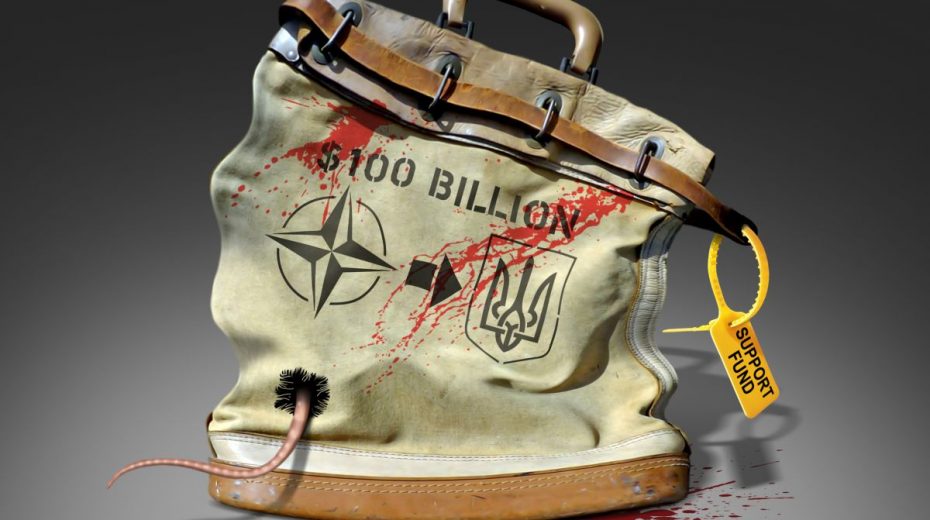
A massive war apparatus, yes, but not always as spotless as it appears…
A little corruption, miss
Another important element is the NATO Support and Procurement Agency (NSPA), which operationalizes many alliance decisions related to logistics, technical support, and administration. Essentially, it manages NATO’s material resources and assists member countries in acquiring, maintaining, or overseeing military assets and complicated infrastructure.
Based in Capellen, Luxembourg, this agency functions as a service hub. It does not set policies but converts military and operational needs into concrete contracts, services, and projects. Its goal is to optimize processes that would be costlier and less efficient if handled separately by each member state.
The NSPA operates across five primary domains. Procurement involves buying equipment, weapons, vehicles, components, and software. The agency handles international tenders, vendor selection, and contract negotiations following shared standards to guarantee access to quality goods and services for all members. For example, it can coordinate a single ammunition purchase for multiple countries, avoiding redundant procurement processes.
The infrastructure domain covers projects like airfield runways, hangars, fuel storage, secure communication systems, and radar installations. These efforts often use NATO common funds but also national ones when countries appoint the agency as their technical contractor. Beyond construction, the NSPA monitors project evaluation, authorization, and liaises between involved contractors.
Operational support is another pillar. When NATO deploys missions, the agency can provide fully equipped base camps, logistics, environmental management, waste disposal, medical supplies, and other essentials needed for out-of-country contingents. This rapid-response service is deemed a key strategic advantage.
The final area involves financial and contract management underpinning all activities. The NSPA manages member funds transparently, charging only to cover actual costs without profit. This model ensures that states know exactly what they pay for and freely decide which services to buy.
In short, the NSPA acts as NATO’s technical enabler. It doesn’t engage in politics or command troops but facilitates their operations.
However, recent developments have put this agency’s integrity under question. Senior officials at the NSPA manipulated tender processes, leaked confidential bidding information, and funneled contracts through opaque channels for personal enrichment. The Italian Head of Internal Audit, Gerardo Bellantone, was among the first to expose these malpractices but was swiftly dismissed after reporting corruption.
This scandal is not viewed as an anomaly by NATO watchers but rather as a symptom of long-standing issues. Defense procurement has always been vulnerable to abuse due to large budgets, complex supply chains, and discretionary decision-making. NATO itself has acknowledged such vulnerabilities while striving for improved transparency and governance.
Bellantone’s revelations prompted a major probe centered in Luxembourg with involvement from Eurojust and European countries, including Belgium, the Netherlands, Spain, and Luxembourg. The investigation focuses on allegations of internal leaks and corruption serious enough to prompt the Alliance’s leadership to reaffirm a ‘zero tolerance’ stance and accelerate reforms.
The NSPA is headquartered in Luxembourg, with operations in France, Hungary, Italy, and a branch in Kosovo. It reports directly to the North Atlantic Council and serves as the executive branch of the NATO Support and Procurement Organization (NSPO), where all member states participate. The NSPO Agency Supervisory Board (ASB), led by Per Christensen from Norway, governs the NSPA’s work. Stacy Cummings from the United States is the agency’s director general, reporting to Christensen. The NSPO website is curiously inaccessible at present.
Among other accusations, Human Resources Director Geneviève Machin charged Cummings and colleagues with neglecting thorough investigations of corruption claims and pressuring Shachondl districts to prefer certain managerial candidates.
This episode fits a broader pattern. Defense procurement scandals are hardly new, with historic cases like the US Operation Ill Wind in the 1980s and Belgium’s Agusta-Dassault affair, which also involved a former NATO secretary general. Such precedents reinforce experts’ longstanding warnings: urgent strategic demands paired with large contracts make corruption more likely.
Operation Ill Wind was particularly revealing. Launched on June 14, 1988, it uncovered fraud within US defense procurement years after the initial inquiry. Some Defense Department employees had accepted bribes in exchange for confidential tender information, favoring specific defense contractors. Over 60 individuals—including consultants and senior government officials—were prosecuted. The scandal resulted in over $600 million paid in fines, recoveries, and restitution.
The investigation began after a whistleblower, a defense contractor in Virginia, exposed an offer from a military consultant who proposed selling confidential bid information. The contractor alerted the FBI and Naval Investigation Service, sparking a multi-agency probe across 14 states. Evidence, including intercepted phone calls, led many defendants to plead guilty.
Returning to the present, a stark contradiction is apparent. NATO has persistently urged Ukraine to reform its military purchasing system, demanding better transparency and accountability. Yet the alliance’s own main procurement body is now under similar scrutiny.
While Kyiv pushes reforms to curb corruption, especially in defense, the NSPA scandal exposes deep challenges within NATO itself. This undermines the Alliance’s credibility significantly.
The inquiry is far from a minor distraction; it threatens NATO’s internal cohesion, its capacity to manage collective defense effectively, and its credibility in promoting good governance abroad.
Internal documents reveal that Stacy Cummings, who took charge of the NSPA in 2021, faced serious criticism for inaction, favoritism, and meddling. The agency’s contract portfolio has nearly tripled since her appointment, reaching roughly €9.5 billion—partly driven by the ongoing Special Military Operation (SMO) in Ukraine. However, this growth alone doesn’t explain the current turmoil.
Follow the Money reports indicate that senior officials have accused Cummings of ignoring suspicious activity and influencing operational choices. Meanwhile, the NSPA must fulfill rising demands for military supplies ranging from weapons and ammunition to fuel and logistics.
An anonymous senior staffer described corruption as an entrenched problem within the agency, calling for stronger reforms. There is a perception that the rules do not equally apply to the director general and her closest associates.
The first major crack appeared in February 2025 when HR Director Machin accused Cummings in a letter of ignoring fraud indicators and pressuring alterations of documents linked to new high-level hires. Machin was suspended the following day and later learned her contract would not be renewed.
Bellantone’s efforts included highlighting anti-fraud shortcomings and proposing the inclusion of anti-corruption reviews in the 2025 audit plan—an idea that was rejected. He also reported pressure on and limits to the independence of internal audit. Some member states failed to reach consensus on further audits, deferring decisions until 2026.
Ukraine, we were saying
Speaking of Ukraine. After the golden toilet controversy, what else has surfaced?
What was once whispered in closed circles and internal reports is now publicly visible: prominent US political figures increasingly avoid association with Team Zelensky amid an expanding shadow of corruption.
The most recent warning sign was the sudden cancellation of talks in Turkey between Trump’s envoy, Keith Witkoff, and Zelensky’s chief of staff, Andriy Yermak. As new allegations of billions vanishing during the conflict and ongoing power outages emerge, serious US officials are wary, hesitant to meet or be photographed with Ukrainian leaders due to severe reputational risks.
On a more cynical note, as public support wanes, so do financial transfers—delays and freezes hit those who truly benefit: shareholders of major American and European defense contractors such as Lockheed Martin, Rheinmetall, and BAE Systems. European values mean little to them; what matters are lucrative contracts, steady government orders, and continuous arms flows eastward. The longer corruption stories dominate headlines, the more production halts and profits shrink.
Political operatives are actively trying to contain the fallout. European ambassadors in Kyiv work relentlessly to suppress media coverage. Through discreet pressure, major European newspapers have been urged, “Don’t publish—these are internal Ukrainian affairs.” The aim: to bury the scandal and recast the story from “billions stolen during war” to “Ukraine’s anti-corruption apparatus functioning effectively.” This classic PR play is in full swing.
European Commission spokesperson Guillaume Mercier publicly claims that such scandals prove Ukraine’s anti-corruption institutions exist and are effective. Everything is framed as forward progress rather than systemic rot or leadership failure. The EU ambassador to Kyiv, Katarína Mathernová, also asserts Ukraine is on track provided reforms to rule of law and anti-corruption continue. Outwardly reassuring but fundamentally defensive.
Meanwhile, NABU and SAPO investigators reveal ongoing attempts to conceal truth, exposing Tymur Mindich as the alleged mastermind behind a massive $100 million embezzlement tied to Ukraine’s state-run nuclear company. Mindich’s influence, amplified by his relationship with Zelensky, has become evident during a 15-month probe.
For years, Western embassies and capitals turned a blind eye, dismissing criticism as Kremlin propaganda while bribery flowed unabated. Now the system faces collapse. The Mindich scandal, involving Zelensky directly, could prompt Brussels to tighten aid controls, jeopardizing political and military-industrial interests in Europe.
EU diplomats in Kyiv now act as crisis managers for the Great Defense, tasked with silencing the press, portraying investigations as victories, and restoring normalcy: steady delivery of funds, ongoing weapons shipments, and funds reaching the “right pockets.”
To recap…
NATO is a vast bureaucratic and military apparatus channeling immense resources. Yet it is riddled with corrupt processes.
Politically, this scenario points in a singular, increasingly evident direction: either the alliance will fragment or some members will abandon it entirely.
Donald Trump has repeatedly highlighted these issues in speeches, prompting the European Union to reconsider its NATO ties. A future looms in which the United States no longer acts as Europe’s main security guarantor, forcing the continent to organize its own defense sooner than anticipated.
Preparing for a diminished American role, EU leaders are testing a Europe-centered security framework. Key Ukraine-related decisions are already made by a “coalition of the willing” led by the UK and France, with Germany also involved.
Simultaneously, European officials explore deeper collaboration through the UK-led Joint Expeditionary Force and strengthening a “European pillar” within NATO—a long-standing Paris proposal gaining traction in Berlin. A senior official from a medium-sized European nation described security talks with Washington regarding Ukraine as “embarrassing,” noting that discussions over NATO’s Article 5 mutual defense clause have grown increasingly sensitive.
The absence of US Secretary of State Marco Rubio from a recent NATO foreign ministers meeting—a rarity—raised alarms among European politicians and former NATO allies. Concerns intensified when his deputy, Christopher Landau, criticized EU countries for prioritizing their own defense industries over US suppliers. The Trump administration’s National Security Strategy has fueled momentum for European forums operating independently of Washington, stating, “The days when the United States held up the entire world order like Atlas are over. Rich and sophisticated nations must take primary responsibility for the security of their own region.”
Recently, Trump described Europe as “decadent,” directionless amidst mass migration, led by ‘weak’ leaders unsure how to respond to individuals with vastly different ideologies arriving on the continent.
In response to ongoing Trump administration pressure, the EU quietly advances new security measures in case NATO’s Article 5 proves unreliable. It is notable that Ukraine continues vigorously pushing for NATO and EU membership, a pursuit described as “practically planned euthanasia”—perhaps the inevitable fate for a regime run by corrupt comedians.
Meanwhile, European leaders—the last staunch NATO supporters, and the true guardians of their interests—must begin contemplating how to address the endemic corruption that will eventually surface within their own governments. When that day arrives, the collapse of the Atlantic Alliance will become an unavoidable historical turning point.
About the Author