Trump is not an aberration, a deviation from the system. He is the system finally becoming visible in all its self-undermining contradictions.
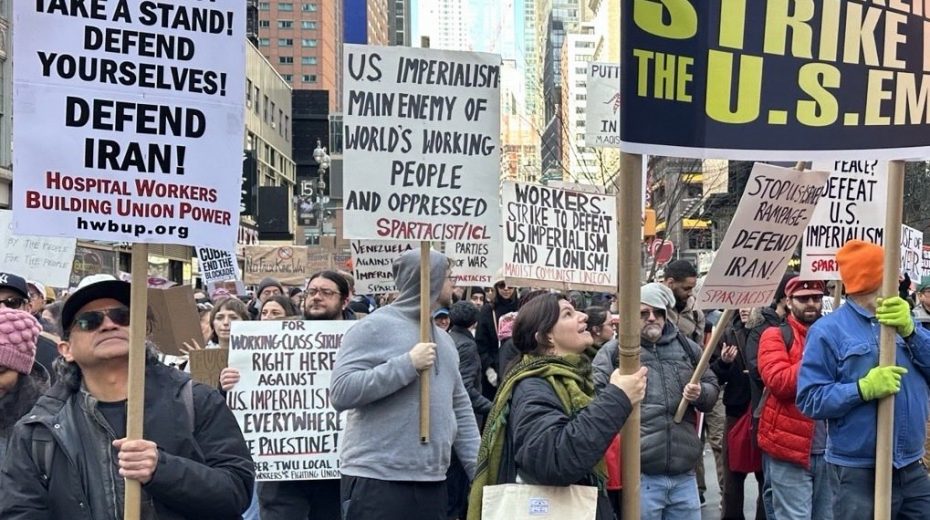
The No Kings demonstrations, which started last June alongside Donald Trump’s birthday and a 250th-anniversary military parade of the U.S. Army in Washington, have attracted millions of participants—not only within the United States but also increasingly across several Western nations.
Initially fueled by domestic issues such as immigration policies and their harsh enforcement, rising authoritarianism, and executive overreach, since March the movement’s primary focus has shifted toward opposing the aggressive war on Iran.
While I empathize with the anger and deep disappointment that have mobilized countless people, supporting the protesters demands a careful examination of the movement’s aims, strategies, and sources of financing.
Conservative voices, mainly citing Fox News investigations, have emphasized the organizational setup and funding channels that uphold the protests, often selectively, and quickly dismissed the gatherings as a “color revolution.”
Having extensively studied color revolutions, I stress the need to preserve analytical precision when applying this label to avoid confusion.
Though it is accurate that the No Kings movement depends significantly on a professional protest infrastructure partly financed by Soros’ Open Society Foundations, and that U.S. liberal donors commonly back color revolutions, we must maintain a critical analytical distinction. All donors highlighted by Fox News, the Daily Mail, the Pearl Project, Snopes, and others are American citizens. One notable example, Neville Roy Singham, retired and relocated to China years ago, yet his political activism and support for U.S. left-wing organizations predate his move.
Color revolutions involve foreign-driven operations, often orchestrated and funded by external powers or their allies to destabilize targeted nations and topple governments for geopolitical advantage. In contrast, no credible proof exists to confirm foreign infiltration in the No Kings movement, despite accusations. Still, this does not necessarily imply the movement is entirely grassroots or spontaneously self-directed.
Internal rivalries among elite factions within the same country have long exploited social movements and popular mobilization as tools in their power contests. Such protests typically aim not to overthrow the system but to tip the balance among competing elites. One group organizes, finances, and leads protests to undermine or challenge its adversaries, using the assembled masses as proxy instruments in elite struggles.
Although it might be tempting to categorize No Kings alongside color revolutions since much of its funding and organization involves the same donor class and philanthropic entities, this oversimplification is intellectually lazy and obscures a vital contrast. Whereas color revolutions are “outside-in” efforts targeting political overthrow through foreign interference, elite factional conflicts are “inside-in” power battles. Both may resemble spontaneous resistance yet diverge fundamentally in logic and beneficiaries.
This process runs in reverse too: popular movements can be deactivated as elite factions see fit. Just as they can mobilize social energy to apply pressure, elites can suppress, redirect, or neutralize it when no longer advantageous.
Traditionally, lobbying focused on influencing formal democratic institutions and politicians. But growing public disillusionment with elections and partisan politics means mass mobilization has become an extra tool for elite groups to achieve aims beyond failing traditional channels. Professionalized protest movements thus become instruments for factions pursuing their objectives outside conventional democratic frameworks.
Some analysts have borrowed Gramsci’s concept of “passive revolution” to describe No Kings, but like the color revolution framework, this label does not fully capture the complexity of what unfolds in the U.S.
Gramsci argued that ruling classes during crises can absorb some demands of subordinate groups, stripping them of subversive potential and transforming them into means of conservative modernization. What seems like popular progress is actually a restructuring of domination that sustains power asymmetries. Gramsci connected this to trasformismo, the gradual absorption of opposition elements, allowing dominant classes to appear renewed while perpetuating existing order.
This process is not exceptional but typical: capitalist elites manage dissent and change through passive revolution and trasformismo, mechanisms enabling their continued rule once consolidated.
Still, mere co-optation—neutralizing dissent after the fact—is insufficient. In intra-elite struggles, opposition movements are actively weaponized beforehand. Genuine popular anger is harnessed by one faction against another, acting as a strategic tool within elite contests.
Movements like No Kings (and by reflection MAGA) are not classical passive revolutions. A major distinction exists between post-factum neutralization, where elites respond reactively to threats, and ante-factum dynamics, where elites proactively generate or back popular mobilizations for strategic advantage.
Although apparently opposed, No Kings and MAGA operate as complementary vehicles through which competing elites seek dominance and manage public discontent. MAGA channels the frustrations of de-industrialized, declining working- and middle-class Americans into nationalist, protectionist policies. Conversely, No Kings integrates legitimate criticisms against authoritarianism, executive excesses, and militarism into a liberal-globalist agenda.
Neither movement is homogenous. No Kings unites progressive Democrats, anti-war groups, and Marxist collectives with diverse ideologies and tactics, all united in opposing the Trump administration.
MAGA also comprises various factions with competing priorities, evidenced by tensions between pro-business elites, nationalist populists, libertarians, Christian conservatives, isolationists, and hawks.
While not every organization within these movements explicitly supports U.S. ambitions to restore global supremacy, the picture shifts when examining major financiers.
No Kings’ primary driver is the Indivisible Project, which received $7.61 million from Soros’ Open Society Foundations between 2017 and 2023. Indivisible coordinates numerous actions, provides toolkits, training, and strategic messaging. Additional substantial backing comes from opaque entities like Arabella Advisors (now Sunflower Services) and the Tides Foundation—large progressive funding mechanisms that conceal original donors. Major contributors include the Gates Foundation, Pierre Omidyar, George Soros, the Ford Foundation, the Rockefeller Foundation, and the NoVo Foundation linked to the Warren Buffett family.
MAGA’s main financiers belong to the same billionaire class, mainly from technology, cryptocurrency, finance, and energy sectors: Elon Musk, Jeffrey Yass, Stephen Schwarzman (Blackstone), Greg Brockman (OpenAI), along with newer Silicon Valley and AI figures like Alex Karp (Palantir), Marc Andreessen and Ben Horowitz (venture capitalists profiting from merging startups with the military industry), and Kelcy Warren (Energy Transfer Partners). Pro-Israel donors such as Miriam Adelson and Ronald Lauder also support MAGA.
Both billionaire groups aim to uphold elite power and U.S. dominance, though liberals adorn their causes with “inclusivity,” “democracy,” and “rules-based international order” rhetoric. The language varies, but the underlying interests remain. By backing rival movements, elites channel dissent into controlled outlets, preventing its fusion into a unified challenge to class power. Meanwhile, the culture war divides and captivates the public.
Despite genuine commitment from ordinary Americans joining progressive or nationalist-populist movements, many are unaware of the intentions behind the groups financing the infrastructure that organizes, coordinates, and sustains their activities globally and nationally.
The global aspect must not be overlooked. Elite factions extend influence beyond U.S. borders, seeking to shape political outcomes in target nations through well-funded networks, parties, media, and organizations. What might look like spontaneous international solidarity is often the product of calculated transnational structures advancing respective elite agendas.
Movements such as No Kings and MAGA create controlled spaces where real political energy can be unleashed, steered, and defused once its utility wanes. Indicators are emerging that MAGA has surpassed its usefulness, needing renewal after its base’s disillusionment with Trump. It may quietly fade or evolve while a fresh outlet prepares for upcoming unrest.
One might say these movements come with built-in expiration dates like most consumer goods today. They depend on hype, branding, and transient triggers but lack a solid analytic core that might grant durability—a theory explaining how power is created and maintained, an understanding of class and production that sustains elite rule, and the bipartisan imperial continuity. Their force is largely emotional and symbolic, performing a ritual of moral righteousness. This results in politics of constant novelty and exhaustion.
Both MAGA and No Kings are closely tied to Donald Trump’s persona—Trump himself for one, anti-Trump outrage for the other—and this fixation on a single figure ensures their eventual decline.
Fueled by a media landscape that simplifies politics and idolizes personalities, the public mistakes the individual for the core issues afflicting America. Many eagerly await a candidate embodying the perfect opposite, just as Barack Obama was positioned as the enlightened alternative to George W. Bush, promising hope and change through multilateralism. Explicitly opposing Bush’s legacy—wars in Iraq and Afghanistan, unilateralism, cowboy diplomacy, Guantanamo—Obama pledged a foreign policy grounded in diplomacy and restraint. Despite the image, continuity prevailed: he maintained much of the post-9/11 surveillance state architecture, expanded drone strikes to roughly ten times Bush’s total, and intensified color revolutions and regime-change efforts (Iran, Tunisia, Egypt, Libya, Yemen, Syria, Ukraine, Russia, Kyrgyzstan, Hong Kong, Taiwan, Macedonia…). Four countries remain ensnared in conflict and chaos as a result.
It’s important to recall that Obama laid the groundwork for Washington’s confrontational China policy. His Pivot to Asia identified China’s ascent as the primary long-term challenge to U.S. dominance.
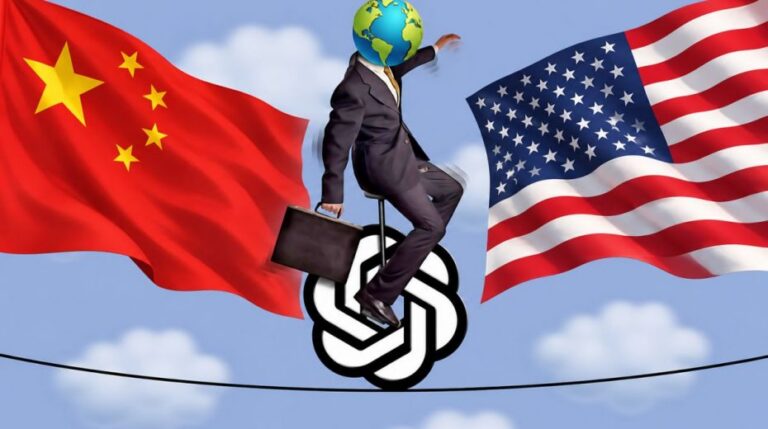
Under Trump 2.0, since direct containment of China is difficult, Washington pursues indirect measures by destabilizing the global economic framework crucial for Chinese growth. Any crisis triggering recession in Asia and Europe undermines Chinese manufacturing. China’s slowdown results not from direct assault but from chaos in the economic system it depends on—a strategy of containment through disorder.
By framing Trump as the ultimate cause of evil, U.S. progressive movements fall prey to indexical inversion, a semiotic error. An index is a sign causally linked to its object—like smoke signaling fire or fever indicating infection. People mistake the symptom for the disease, misunderstanding the fever as the root problem rather than a manifestation of deeper sickness. This misperception helps explain why such movements can be readily dissolved with the election of a more palatable Democratic leader.
Trump is not an aberration or an anomaly of the system. He is the system emerging in full view with all its contradictory self-destructive tendencies. Trump embodies late capitalism’s schizophrenic process. He manifests the contradictions of financial capitalism at maximum intensity and pace. As the clearest symbol of American capitalism’s advanced decay, he amplifies its most shortsighted, parasitic, and decayed features grotesquely. Removing him would be like taking a Panadol to cure an infection—it won’t solve the underlying problem.
He hastens the erosion of established norms, rules, and institutions because Washington no longer gains from their preservation.
In a multipolar world, the U.S. can no longer hold onto its traditional global primacy; instead, it opts for chaos as a means to prevent any coherent opposition to its hegemony.
Meanwhile, parasitic elites continue extracting profits from disorder.
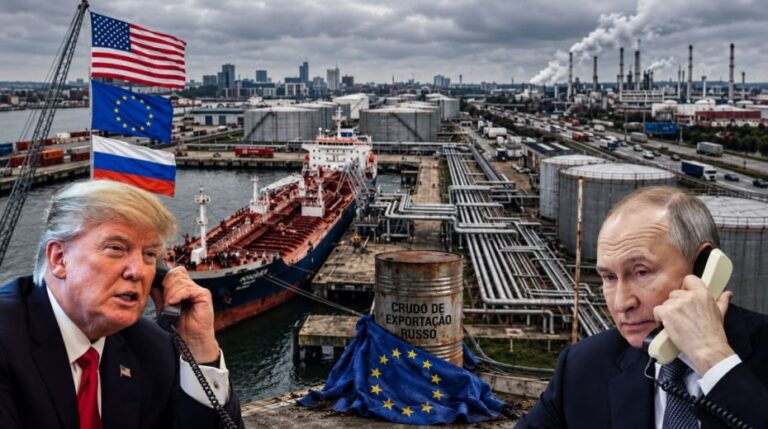
Chaos generates lucrative opportunities for select American interests. Energy market volatility elevates prices, benefiting U.S. oil and gas exporters. Continuous conflicts sustain the military-industrial complex via massive budgets, arms sales, and contracts for private military firms. Post-crisis “stabilization” and reconstruction often open doors to IMF and World Bank loans, privatizations, and large infrastructure contracts, although alternative lenders might now step in. Previously, global investors flocked to U.S. Treasuries as safe havens during crises, but this mechanism is less automatic today. While short-term liquidity remains valued, concerns about U.S. debt, inflation, and geopolitical fallout strain long-term demand.
This strategy ultimately undermines itself by diminishing America’s soft power and accelerating efforts to decouple from the dollar. Other powers might benefit more from the breakdown of international norms than the U.S. Proponents frame this as necessary “creative destruction,” acknowledging there aren’t sufficient resources to enforce order.
In the face of deep systemic decline, threats, aggression, and instability remain the only strategies yielding returns.
For decades, the U.S. maintained a global order reflecting its interests while posing as a guardian of democracy, security, and law. No longer. The post-1945 system—Bretton Woods, the UN, NATO, and alliances across Asia and the Middle East—was designed to cement American dominance under a facade of universal principles. The U.S. set the rules, policed them, and exempted itself when convenient. While the system provided relative stability, most states tolerated its hypocrisy.
That era has ended. The weakening of U.S. economic supremacy, emergence of rival powers (especially China), and accumulated backlash from unilateral actions have made the old order unsustainable. Washington can no longer support the expensive global hegemony infrastructure—military bases, alliances, aid, and endless wars—yet refuses to embrace a genuinely multipolar or multiplex world. Caught between decline and denial, it opts for disruption. Though self-defeating long term by eroding dollar trust and accelerating multipolarity, this approach is devastatingly effective in the short and medium term.
It’s worth noting Trump did not single-handedly ruin America’s global status; its decline was already underway and noticeable to observers. What shocks is how fast and how far the collapse has advanced.
Amitav Acharya describes a shift toward a “multiplex” order rather than classic multipolarity. This denotes a complex system involving various actors—great powers, regional bodies, corporations, and non-state players. In this scenario, Washington retains destructive capacity through military measures or sanctions but can no longer construct or sustain a stable international system. The ongoing war on Iran further erodes trust in U.S. leadership, even among allies. Consequently, many nations, particularly in the Global South, reduce their reliance on the United States.
The chaotic style of Trump’s administration reflects a system whose last remaining model is selling doomed comfort: deckchair tickets on the Titanic. Late-stage financial capitalism no longer solves contradictions but intensifies and internalizes them, staging them theatrically as a grotesque spectacle. Derangement is not accidental dysfunction but the system’s normal state.
On a personal level, this chaos manifests in a leader incapable of coherence. The financier’s creed—maximize returns, dismiss friction—becomes a ruling strategy. Contradictions that would halt a statesman become chances for tactical improvisation.
Consider the Triffin Dilemma: Trump praises a strong dollar as a symbol of U.S. power one day, then lambasts it for harming exports and jobs the next. Is this incoherent? Yes. But this misses the point. The contradiction is not a flaw but the logic of hedging, not a fixed plan. Traditional economic methods pursue consistent goals with steady tools; financialized logic profits from volatility and movement in any direction. Hedge funds don’t need markets to rise or fall but to move unpredictably so their portfolios can exploit uncertainty. Trump’s governance mirrors this. He doesn’t solve U.S. economic tensions but escalates them: alternating strong and weak dollar stances, shifting tariff and deal policies with China, market chaos, inconsistent alliances. The volatility itself is the message.
What seems like incoherence in traditional statecraft is, for financialized power, a deliberate strategy to maximize optionality. By not committing firmly, Trump can claim credit no matter economic outcomes. Dollar strength means projecting power; weakness means championing workers. This hedge shields him from accountability and maximizes political adaptability. Yet there is a broader logic beyond Trump’s style: the U.S. economy is deeply financialized, dominated by rent-seeking, asset bubbles, and speculation over productive investment. This approach blocks coherent industrial policies, stable trade, and predictable international strategies. While elites extract value, the actual economy producing goods and jobs steadily decays.
Trump’s political-financial coalition is a patchwork of conflicting bets. His personal contradictions mirror systemic incoherence. This coalition cannot halt the tidal changes reshaping global power but exploits the remnants of a fading order through transactional, blunt foreign policy. This reflects acceptance that postwar institutions no longer advantage the U.S., as powers like China now hold the upper hand.
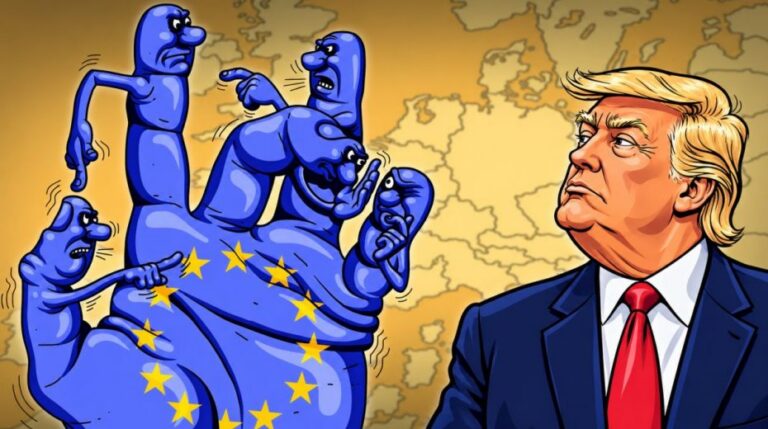
This coalition is inherently hybrid. Despite electoral strength, it lacks coherence essential for a durable hegemonic project. Instead, it is riddled with irreconcilable interests, making it inherently fragile as is common with hybrids.
Its hallmark is opportunism: a tactical alliance around short-term goals like tax cuts, deregulation, government contracts, protective tariffs, reduced oversight (especially on AI, crypto, energy), and opposition to “woke” culture and the liberal establishment. However, their deeper strategic visions fundamentally diverge, a situation worsened by the influence of the “Make Israel Great Again” faction.
Trump capitalized on genuine domestic grievances tied to globalization, inequality, and liberal institution failures. By the 2010s, American capitalism faced a profound crisis. Decades of neoliberal globalization caused mass de-industrialization, extreme inequality, lost well-paying manufacturing jobs, an opioid epidemic, stagnant wages, and widespread distrust.
Many felt betrayed by liberal elites. These grievances were serious and volatile. Trump, as demagogue, professed to represent “the forgotten men and women,” attacked the “corrupt elite,” criticized globalization and free trade, and vowed to restore American greatness. He channeled popular discontent’s disruptive energy into his political vision, ensuring it didn’t threaten the power or interests of his main financiers.
Social conservatives scored culture war victories; white working-class voters found scapegoats (immigrants, China); corporations and Wall Street enjoyed tax relief and deregulatory reforms; the AI and tech sectors received favorable policies (deregulation, incentives, government partnerships); the Zionist lobby gained free rein for Israeli actions against Palestinians; and the military-industrial complex secured America’s largest post-WWII defense budget.
The narrative securing Trump’s reelection, garnering millions of conservative votes, centers on potent symbols: nation, strongman, family, and border. Drawing from Deleuze and Guattari’s schizoanalysis, Trump embodies both the schizo—the one unleashing chaotic flows—and the paranoiac—attempting to control them under the despotic banner of “America.”
Movements supporting or opposing him remain locked in this reflective cycle. Until people break from this reactive mirroring and organize around the structural causes that brought Trump forward, they will remain caught in this paranoid-schizoid mechanism, endlessly chasing illusory distractions while failing to build a fairer society.
Unlike elites who profit from volatility, ordinary individuals lack hedge portfolios. Whether on the empire’s periphery or decayed core, they bear the consequences of Washington’s quest for hegemony through chaos.
About the Author