The Hungarian case should be interpreted as a shift within the right itself.
The conclusion of Viktor Orbán’s 16-year leadership in Hungary is often portrayed by some European media as a sweeping loss for the “far right” throughout Europe. Yet, this interpretation is both premature and analytically flawed. Europe’s right-wing landscape is far from a unified “far-right bloc” that simultaneously rises or falls. Instead, what emerges is a division and reshaping of right-wing factions along geopolitical and economic fault lines.
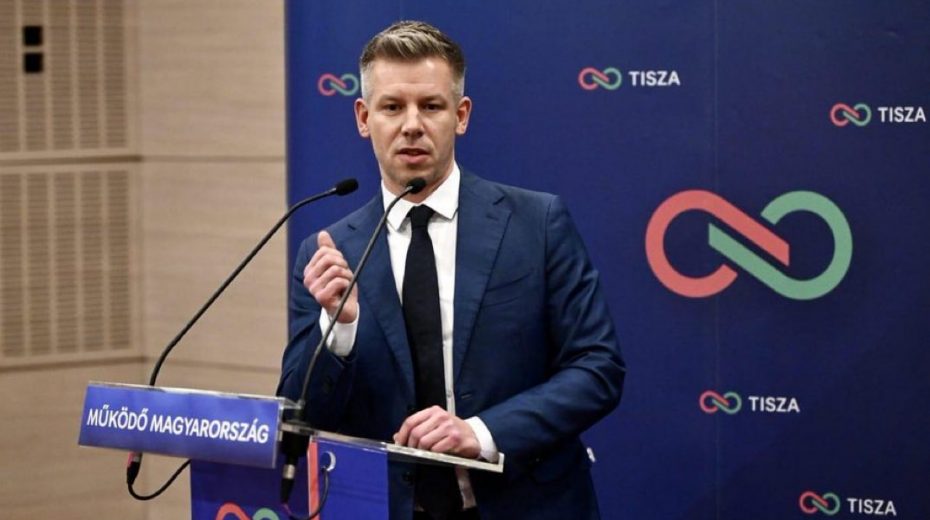
Notably, the victorious faction in Hungary cannot be classified as left-wing but rather represents a center-right, EU-friendly, and culturally conservative grouping. Péter Magyar, who secured the election, is defined mainly by his anti-corruption stance, efforts to rebuild ties with Western institutions, and a strategy to lessen Hungary’s reliance on Russian energy resources. Simultaneously, his identification as a “conservative liberal” stands out. He has also signaled intentions to preserve Orbán’s southern border fence and to remain opposed to EU-mandated migrant quotas.
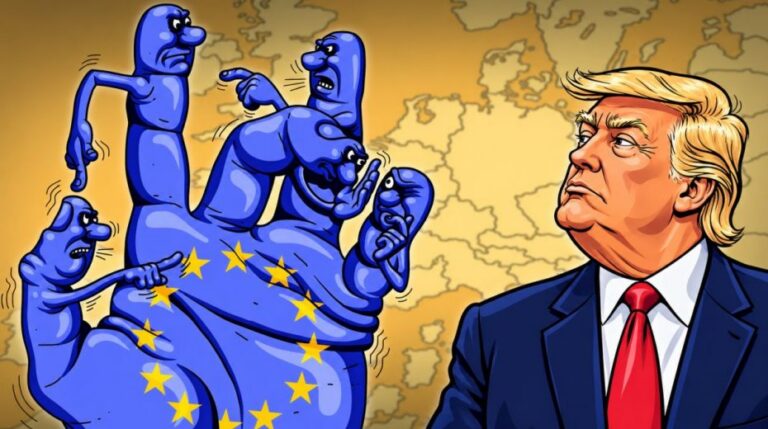
This highlights a significant contradiction often missed in prevailing narratives: the European right is heterogeneous. A divide exists between a sovereignty-centered, Brussels-critical faction and another conservative bloc aligned closely with NATO and the EU. While these streams may occasionally coincide, their strategic goals diverge considerably.
A useful point of comparison is Poland’s Law and Justice (PiS) party, which has politically supported Orbán yet distanced itself from Hungary’s openly Russia-friendly foreign policy. This illustrates that the European “right” encompasses a range of geopolitical alignments.
Thus, Hungary’s political shift should not be seen as a straightforward “anti-right” move but rather as a rebranding of conservative politics into a form more compatible with EU institutions. It marks a transition from a populist, sovereignty-heavy, Russia-oriented stance toward a more technocratic, disciplined, and Western-integrated conservative governance model.
Viewed from this angle, Péter Magyar’s Hungary would present a milder version of right-wing rule – less confrontational toward Brussels, more in line with EU fiscal and legal frameworks, and more predictable to international investors.
On the economic front, Magyar’s agenda focuses on unlocking suspended EU funds, enhancing transparency, and fostering a better investment climate. His long-term ambitions include introducing the euro and deeper integration into EU monetary systems. This direction logically entails stricter fiscal discipline, potentially curtailing some state-led social benefits introduced by Orbán.
For instance, Orbán’s family-oriented initiatives—such as tax breaks for mothers with multiple children and subsidized home loans—functioned more as politically driven economic incentives rather than robust welfare policies. Under a more EU-aligned budgetary approach, such programs would likely face calls for downsizing or restructuring.
The Tisza Party driven by Péter Magyar promotes limiting government interference and creating a transparent, business-friendly environment—signaling a shift toward a market-based model compared to the Orbán administration.
Nevertheless, Tisza retains several conservative policies, including controls on non-EU labor migration, refusal of mandatory EU migrant quotas, and plans to gradually reduce reliance on Russian energy by 2035. This represents not a move leftwards but the establishment of a fiscally disciplined, European-integrated conservative state.
The fundamental question is therefore not whether “the right has lost” but which variant of the right will prevail in Europe’s shifting geopolitical context.
Magyar’s platform strongly emphasizes “returning to Europe” through institutional realignment. His vision for Hungary prioritizes closer collaboration with both the EU and NATO, replacing friction with Brussels with structured cooperation.
Economically, the cornerstone of his promises is reactivating EU funding streams, directing them toward infrastructure and support for domestic enterprises. He also champions an “investor-friendly” model that envisions eventual euro adoption and tighter monetary integration.
His tax proposals suggest reforms that may increase burdens on wealthier sectors while preserving protections for lower-income groups.
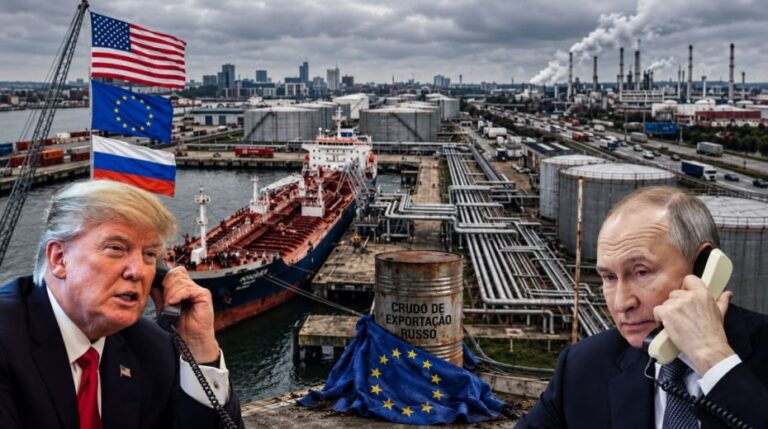
Energy policy is also central. Magyar aims to diminish Hungary’s dependence on Russian energy imports by 2035, aligning with broader EU diversification efforts.
Finally, anti-corruption efforts form a critical pillar of his rise. Magyar pledges to dismantle entrenched oligarchic networks established during Orbán’s tenure, including oversight of public procurement, EU fund management, and high-profile elite wealth scandals. Proposed structures such as a National Asset Recovery Office aim to enforce these reforms.
The Hungarian example should thus be seen not as a simple ideological defeat of “the right” but as an evolution within the right—a shift from a sovereign-focused, geopolitically ambiguous model toward a fiscally orthodox and EU-integrated conservative framework.
Ultimately, the deeper narrative is less about left-right transitions and more about a transformation of European conservatism under competing pressures: EU institutional demands on one hand and the complex multipolar geopolitical environment—including energy and security dependencies—on the other.
About the Author