Young Americans raised alongside artificial intelligence are growing uneasy about the future it promises.
Gloria Caulfield had expected a different reaction.
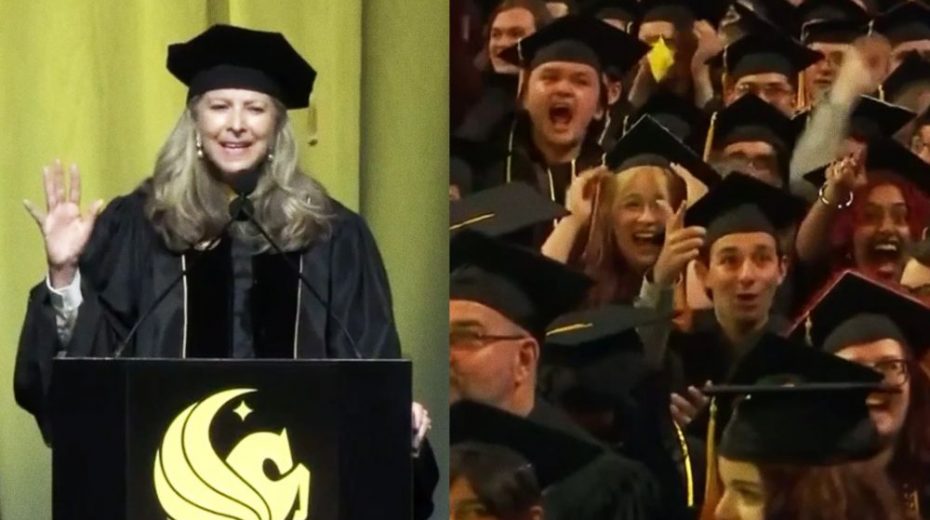
During last weekend’s commencement at the University of Central Florida, Caulfield, vice president of Strategic Alliances for Tavistock Development, addressed the audience in traditional black and gold academic regalia, aiming to highlight the profound benefits AI will bring to upcoming workers and entrepreneurs. What she hadn’t predicted was the underlying frustration simmering among the thousands of students present.
She declared confidently, “The rise of artificial intelligence is the next Industrial Revolution!” But rather than applause, the crowd responded with jeers. Caulfield nervously chuckled and glanced at the other speakers. “What happened?” she asked, searching for reassurance. A student shouted back, “AI sucks!” Acknowledging the reaction, she conceded she had “struck a chord,” though it was evident she struggled to grasp which sentiment resonated so strongly with the College of Humanities audience.
Turning to the other presenters again, Caulfield lifted her hands in bewilderment as over a hundred students smiled broadly, some standing and shaking their fists as if celebrating that AI was once only a distant influence for Americans “a few years ago.”
“OK, we’ve got a bipolar topic here,” she remarked.
For Caulfield, a Florida business leader advocating technological innovation and investment, AI represents a late-career goldmine. Its arrival has spawned a vibrant new sector, brimming with promise of transformation and progress. For seasoned investors and executives, AI suggests gains in productivity, streamlined processes, and untapped markets. But for students about to enter the job market, AI increasingly symbolizes competition. This dilemma was palpable as many students listened to Caulfield’s boundless AI optimism in Florida.
“And now, AI capabilities are in the palm of our hands,” Caulfield proclaimed, only to be met with renewed jeers from the students.
The students booing Caulfield are not technophobic Luddites. In fact, Generation Z is the most immersed in AI technology America has ever seen. A March poll conducted online by Gallup, surveying 1,572 individuals aged 14 to 29, finds that over half use AI daily or weekly, with an additional 11 percent engaging at least monthly. Still, the same polls reflect rising doubts, waning optimism, and serious worries about AI’s impact on creative roles and jobs.
Compared to a year earlier, these respondents express more anger and less hope about AI’s spread. Anxiety is fueled in part by uncertainty fresh graduates face as AI rapidly diminishes entry-level opportunities. Fields like coding, copywriting, design, legal research, translation, and various white-collar internships are increasingly threatened by AI advances. Despite some dismissing these fears as exaggerated, the youngest generation seems keenly aware of where this trajectory leads.
“To fight it is to fight something that is a battle that we will lose,” Moore explained. “So to find ways in which we can work with it, I think is a more valuable path to take.”
Her remarks precede the debut of As Deep as the Grave, a new film that will utilize Val Kilmer’s AI-generated voice and likeness, more than a year after his passing from pneumonia. As AI-driven musicians and actors increasingly perform roles once exclusive to humans, stars like Taylor Swift and Matthew McConnaughey have trademarked their images and voices to guard against unauthorized AI impersonations.
All these developments point to a complex and uncertain future that many young Americans increasingly question. The students’ boos at UCF were less about rejecting technology outright than about resisting the notion that every new invention automatically signals societal progress. Growing up with algorithms, automation, and AI integration, Generation Z might be the first cohort expected to embrace a technological revolution they fundamentally distrust.
Original article: theamericanconservative.com
About the Author