The Missing Spirit of ‘76
I hope you enjoyed your Memorial Day weekend. Now, we’re only six weeks away from Independence Day, famously known as the 4th of July. This year marks the “America 250” celebration, commemorating 250 years since the Declaration of Independence, also called the Semiquincentennial (yes, that’s an actual term).
At Paradigm Press, we have an upcoming America 250 event that I’ll describe shortly. But first: Have you observed that despite the buildup to the 250th anniversary, the excitement doesn’t feel particularly widespread or intense?
From what I can gather, the general enthusiasm surrounding America 250 seems quite muted; this 250-ennui especially shows up on social media. As I’ll explain below, this atmosphere is very different from the energy we witnessed in 1976 during the Bicentennial.
So, what’s happening? Where is the Spirit of ’76—the one from 1976? It appears to be absent. Let’s explore further…
Recall the Bicentennial
To start, and not to assume too much, were you alive in 1976? If so, you’d be at least 50 years old now. If younger, you might have learned about it growing up.
The key point is… 1976 was a major event! The Bicentennial was monumental! It featured several years of buildup, filled with excitement and anticipation nationwide.
For instance, corporate America invested hundreds of millions to renovate the then-dilapidated and unsafe Statue of Liberty. During the actual 4th of July week, numerous foreign countries—even the Soviet Union—sent “tall ships” to New York Harbor, a gesture requiring extensive coordination:
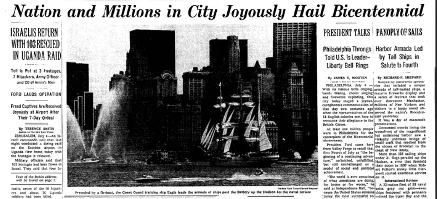
New York Times front page, July 5, 1976. Credit NYT.
Further uptown on Broadway, a blockbuster musical titled… yes… 1776 ran at the Gershwin, New York’s largest theater stage. This patriotic production enjoyed sold-out audiences throughout the summer.
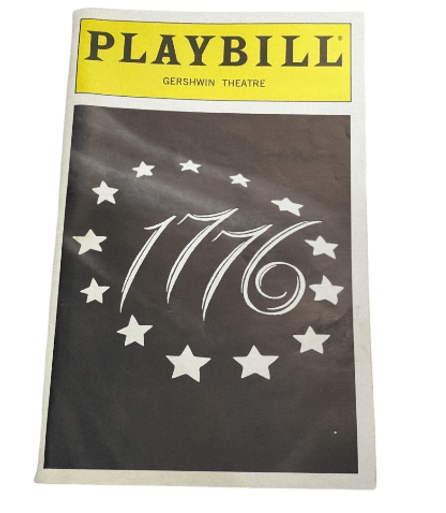
Playbill for 1776. eBay screen shot.
Everywhere you looked, Bicentennial-themed promotions abounded. From thoroughly patriotic, red-white-&-blue Coca Cola advertisements to Revolution-inspired highway maps (remember paper maps?) produced by oil companies like Conoco, now ConocoPhillips (COP):
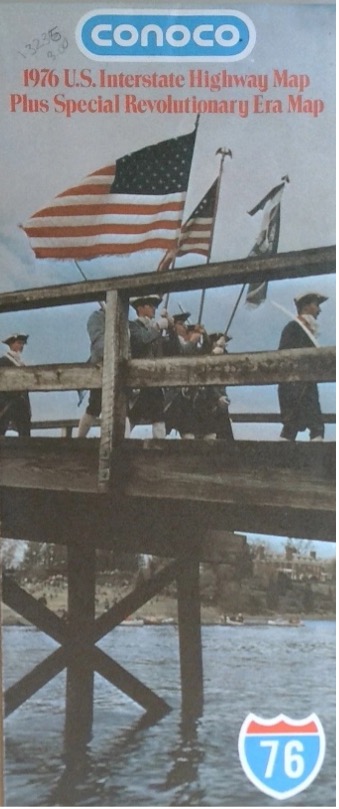
Bicentennial-themed highway map. eBay screen shot.
I could continue, but you get the picture. Despite the many issues the U.S. faced back then—and there were certainly plenty; more on that later—the mood in ’76 was generally optimistic. Yet today, that same level of celebratory enthusiasm appears lacking.
Sure, President Trump has restored some fountains and the Reflecting Pool in Washington, D.C., but even those efforts have drawn partisan criticism and media scrutiny.
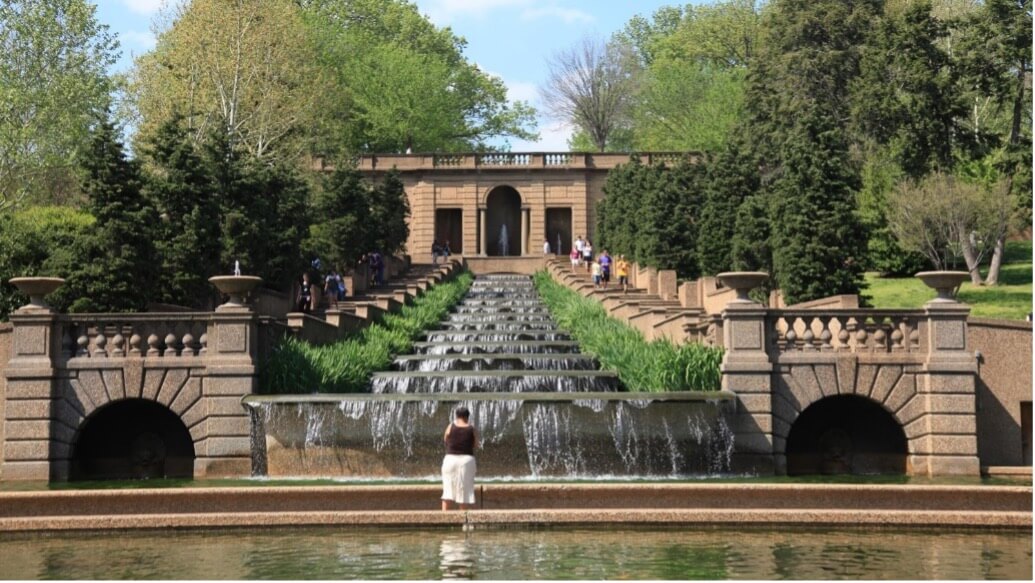
Trump Admin fixed historic Meridian Cascading Fountain. Credit WJLA.com.
Historically, most fountains in Washington had been shut down many years ago due to neglect and lack of upkeep, and the famous Reflecting Pool had become an algae-filled brown swamp covered in bird droppings.
In many respects, these dysfunctional fountains symbolized the cultural decline of recent decades, reflecting a mentality among leaders that said, essentially, “You common folks can’t have nice things.”
A Different Take on ‘76
Looking back, that national sense of positivity during the Bicentennial could easily have gone in another direction. Keep in mind that 1976 followed just one year after the disastrous evacuation from Saigon, which ended America’s costly and tragic involvement in Vietnam.
Saigon disaster, April 1975, one year pre-Bicentennial. Credit Library of Congress.
If Saigon wasn’t enough to dampen spirits, remember that the Bicentennial occurred just two years after Nixon was forced to resign amid the Watergate scandal.
At the same time, the nation was grappling with surging inflation traced back to the 1960s, largely connected to President Johnson’s massive Vietnam War spending and his ambitious but failed “War on Poverty.”
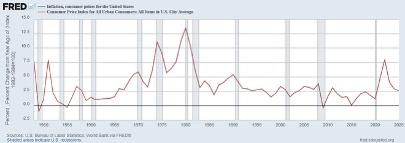
U.S. inflation, 1948 to present; note mid-1970s spike. Credit FRED, Fed of St. Louis.
That inflation peak mid-decade also stemmed from the 1973-74 energy crisis when oil prices soared amid a Middle East war, causing regional shortages of fuel and chemicals along with long lines at gas stations. (Sound familiar?)
Additionally, in 1976 the entire world was entrenched in the Cold War, with the U.S. and Soviet Union each maintaining tens of thousands of nuclear weapons aimed at one another. On any day, the threat of nuclear annihilation loomed just 45 minutes away.
Nonetheless, from both personal memory and historical accounts, the nation maintained a relatively positive outlook in 1976. The U.S. seemed to promise a hopeful future.
Now, take that 1976 perspective and compare it to today. Granted, hindsight offers clarity, but back then few could have guessed the turbulent events and challenges the country would face over the next fifty years—from 1976 to 2026.
These five decades have included chronic inflation, financialization, loss of manufacturing, government expansion and costly failures, ballooning deficits and debt, corruption, globalization, open borders, large-scale immigration, widespread drug problems, H1B visa policies, outsourcing, poor-quality K-12 education, radical university and graduate programs, Covid lockdowns, restrictive homeowner associations, and people everywhere zombified by their smartphones—and that’s far from a complete list.
America in 1976: a Foreign Country
“The past is a foreign country,” wrote L.P. Hartley in his 1953 novel The Go-Between. “They do things differently there.”
Do they indeed? Absolutely. America in 1976 was strikingly different from today and in many respects feels like a distant, “foreign” land.
Among other factors, most Americans running businesses, banks, schools, religious groups, and government agencies were born in the U.S. They had lived through the Great Depression, World War II, the Korean War, and some even the Vietnam War. Their shared experiences shaped their worldview. They were not the rootless globalists or self-appointed “citizens of the world” as seen in many modern corporate executives.
Culturally, the intellectual poison of failed Marxism—think “Frankfurt School”—was emerging but had yet to take strong hold. The story runs long, but by the mid-1980s, the Hard Left was actively influencing universities, media, religious institutions, NGOs, corporate HR, and politics.
Since then, what Marxists called “Critical Theory” has evolved into identity politics, DEI policies, Woke culture, and cancel culture—direct assaults on individual autonomy justified by group grievances.
As a result, in 2026 a significant segment of the U.S. population is not only indifferent to America 250 but openly antagonistic toward the country’s very existence. Common critiques focus on settler colonialism displacing Native peoples, enslavement, racism, environmental harm, labor exploitation, “micro-aggressions,” and more.
In effect, the foundational fabric of American culture is unraveling, heavily influenced by profit-driven globalism and the toxic legacies of thinkers like Erick Fromm, Herbert Marcuse, and Howard Zinn (look them up; it’s too depressing to elaborate here).
Who Lives Here Anymore?
All these cultural issues aside, raw numbers tell another story. According to the Census Bureau, in 1976 the U.S. population was just under 216 million. Today, it’s roughly 350 million—possibly approaching 400 million by some estimates. The demographic landscape has shifted dramatically, making the word “Balkanized” an apt description.
Simply put, the country is more crowded than ever, with overburdened infrastructure visible everywhere: congested highways, packed airports, full rail systems, overloaded ports, bustling hospitals, overcrowded schools, saturated urban housing, clogged courts and government offices, sprawling suburbs, fast-growing rural zones, busy beaches, crowded parks—virtually everything suffers from congestion. (Have you visited a National Park recently?)
One interpretation is that the population boom was not matched by adequate infrastructure investment. Looking back, perhaps we should have built wider highways in Houston, Dallas, and northern New Jersey; expanded airports in Denver; added federal and state office facilities; allowed more sprawling development in San Diego, Phoenix, Austin, Jacksonville, and Charlotte; constructed more beachfront towers; and developed additional Walmart and Costco locations on former farmland.
Alternatively, more growth has not necessarily translated into better living conditions. Quality of life declines in an overly crowded nation dependent on strained supply chains.
And please, spare me the claim that “America still has lots of empty land” unless you want to relocate to remote desert, High Plains, or Appalachian regions. As the Census Bureau also reports, over 82% of Americans live in cities, and quality of life has measurably worsened in almost every area.
Furthermore, the half-century population rise has brought a host of social problems including elevated crime rates—both petty and violent—increased drug abuse, homelessness, and more. (On a lighter note, perhaps we’ve reached the point where Spencer Pratt could become Mayor of Los Angeles.)
Is There a “Spirit of ’26” Out There?
Enough with the complaints, right? The year 1976 is history; 2026 is the present. While challenges persist both then and now, we must confront today’s realities as they are.
Part of that process involves spotting opportunities. And as Confucius wisely said long ago, it’s crucial to call things by their true names.
One perspective is that America’s 50-year population surge has driven massive demand for what we at Paradigm call “hard assets,” including energy, minerals, materials, water, waste management, and other essentials of modern living. This sector offers investable prospects, so with the right approach, you can stay ahead.
In line with America’s upcoming 250th birthday, my colleague Jim Rickards and the editorial team will host a broadcast on Thursday, June 4 at 2:00 p.m. ET — LIVE from Philadelphia, the birthplace of the American experiment.
With Jim guiding the livestream—and with input from myself and the rest of our team—we’ll analyze what’s influencing markets in 2026, covering topics like…
The Iran war and resulting energy crisis, mounting risks in private credit markets, entrenched inflation, the crisis of affordability, critical minerals, gold, AI-driven power shortages, and the future of Trump’s agenda.
I assure you, this won’t be a dull economics talk. Expect dynamic exchanges, demonstrations, rapid-fire debates, behind-the-scenes anecdotes, and practical insights you can apply right away. We’ll reveal actionable investment ideas linked to these key trends.
Best of all, attendance is free. More details will come soon. In the meantime, mark your calendars: Thursday, June 4.
So for now, let’s conclude, get moving, and work towards creating a stronger, better America.
Thank you for being a subscriber and reader.
About the Author