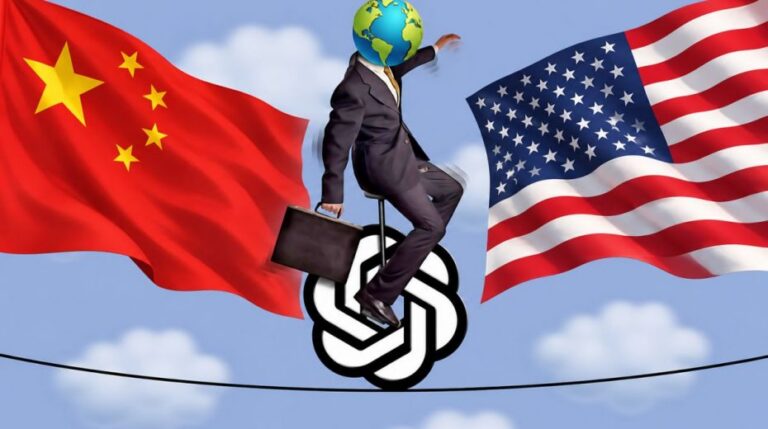
From Guantánamo to Palestine, Washington has a long, brutal history of silencing, blacklisting, and deporting rapporteurs who dared tell the truth.
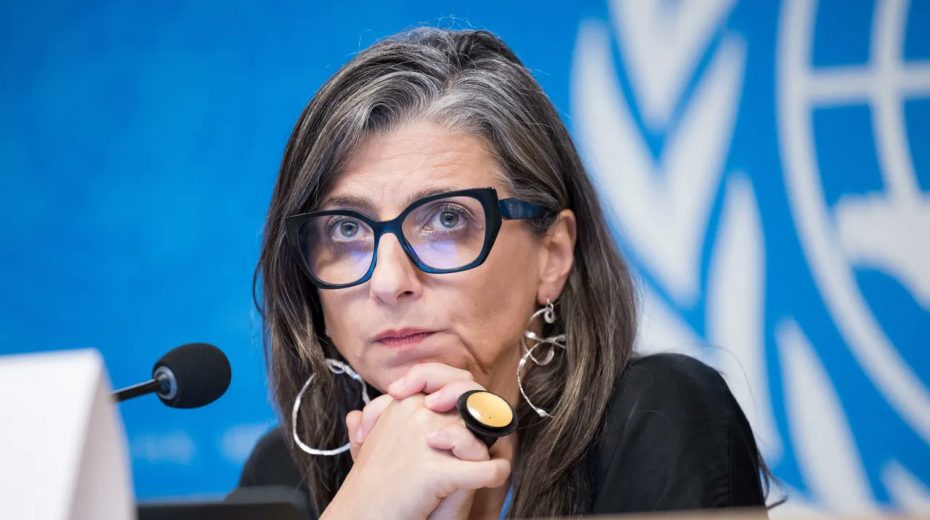
When the U.S. government imposed sanctions on Francesca Albanese, the UN Special Rapporteur for the occupied Palestinian territories, advocates for human rights were taken aback. Announced in July 2025 by Secretary of State Marco Rubio, the sanctions were justified by the U.S. as a response to Albanese’s “illegitimate and shameful efforts” to encourage actions by the International Criminal Court (ICC) against officials from Israel and the U.S.
These sanctions went far beyond mere symbolism, subjecting Albanese to financial restrictions connected to the American banking system, potentially involving asset freezes, banking limits, and travel bans. This move stands as a clear intimidation tactic against a UN Special Rapporteur.
The significance of Albanese’s contributions partly explains why Israel and Western allies targeted her. Since her appointment in 2022, she has issued strong reports condemning the Israeli occupation as a system of ongoing colonization, segregation, and apartheid. Following the onset of mass killings in Gaza in October 2023, she argued that Israel’s military actions showed signs indicative of genocide.
Israeli officials viewed her efforts behind the scenes as particularly threatening because they combined exposing humanitarian abuses with pushing for international legal accountability.
Though exceptional, the sanctions against Albanese did not occur in isolation. Over several decades, the U.S. has employed multiple pressure tactics against UN Special Rapporteurs who are overly critical of its foreign policy, allies, or human rights record. Prior to financial sanctions, Washington had engaged in diplomatic offensives, public smears, access restrictions, and political pressure within the Human Rights Council.
The clearest examples of this strategy involve the mandate on the occupied Palestinian territories.
Before Albanese, two Special Rapporteurs were often targeted by campaigns to undermine their credibility: John Dugard and Richard Falk.
John Dugard, a South African expert in international law, served between 2001 and 2008. He became well known for likening Israel’s occupation to South African apartheid. His UN reports highlighted a combination of territorial segregation, checkpoints, settlement expansions, and severe limitations on Palestinian movement creating a system incompatible with international law.
His remarks triggered strong reactions from Israel and growing unease in Washington. While U.S. diplomats were typically less vocal than Tel Aviv, they consistently opposed his findings within the Human Rights Council, mobilizing allies to influence crucial votes and decisions.
Where Dugard encountered diplomatic opposition and attempts at political sidelining, his successor Richard Falk experienced a much more aggressive and personalized campaign.
A distinguished Princeton professor of international law, Falk took on the mandate in 2008 and swiftly clashed with both Israel and the U.S. His outspoken criticism of Israeli occupation, the Gaza blockade, and military assaults led to repeated diplomatic disputes.
Israel refused him entry in December 2008 during an official UN mission, detaining and then deporting him from Ben Gurion Airport. This incident sparked protests at the United Nations since UN experts are generally guaranteed access to fulfill their roles.
While serving as rapporteur, Falk characterized Israeli policies as colonial and apartheid-like, exposing Zionist oppression of Palestinians. At times, U.S. diplomats accused him of bias and unfitness solely because he refused to conform to Tel Aviv and Washington’s expectations.
A particularly intense episode followed Falk’s remarks on Palestinian national oppression and U.S. foreign policy. Then-U.S. Ambassador to the UN Susan Rice publicly called for his removal, declaring him “unfit to serve” as Special Rapporteur. Zionist groups like UN Watch also launched persistent campaigns accusing him of antisemitism and conspiracy theories.
Falk contended he was the subject of systematic efforts to silence his voice. In interviews and statements, he described this pressure as “personal attacks” designed to distract from the documented Israeli violations under his watch.
Guantánamo and the Campaign Against Anti-Torture Experts
The tactics of delegitimization, public attacks, and institutional marginalization noted in the Palestinian mandate have also surfaced in other areas, particularly among UN experts investigating the fallout from the U.S.-led “war on terror” launched after 9/11.
Torture became a key point of contention between Washington and international human rights bodies.
A notable case involved Austrian jurist Manfred Nowak, UN Special Rapporteur on torture from 2004 to 2010. Throughout his tenure, Nowak repeatedly sought unrestricted access to Guantánamo Bay’s military prison, where hundreds were held indefinitely without trial on terrorism charges.
The Bush administration allowed a partial visit but denied essential UN conditions, including confidential interviews with detainees—standard in investigations of torture and mistreatment. Without these assurances, Nowak rejected what would have been a purely symbolic inspection.
He stated that visits without privacy resembled a “guided tour,” incapable of delivering meaningful evaluations. Drawing from documents, former prisoner testimonies, and medical notes, he concluded that some Guantánamo practices amounted to torture or cruel, inhuman, and degrading treatment.
Subsequent UN experts encountered similar resistance when probing these issues.
Juan Méndez served as Special Rapporteur on torture from 2010 to 2016, condemning prolonged solitary confinement, which he labeled psychological torture. U.S. officials challenged his findings and opposed full access to detainees.
British expert Ben Emmerson, Special Rapporteur on counterterrorism and human rights, called for criminal probes into CIA torture programs, secret prisons (“black sites”), and post-9/11 interrogation methods.
Staunchly, he asserted states have a “legal obligation” to investigate and prosecute those responsible for torture conducted under the guise of counterterrorism. U.S. officials responded defensively, claiming internal probes had occurred and rejecting foreign intervention.
More recently, Swiss jurist Nils Melzer, also a torture rapporteur, encountered significant political opposition after denouncing abuses tied to U.S. security policies and wartime prisoner treatment, as well as international extradition cases. While his work is often linked to Julian Assange’s situation, Melzer has also criticized the ongoing impunity linked to post-9/11 violations.
About the Author