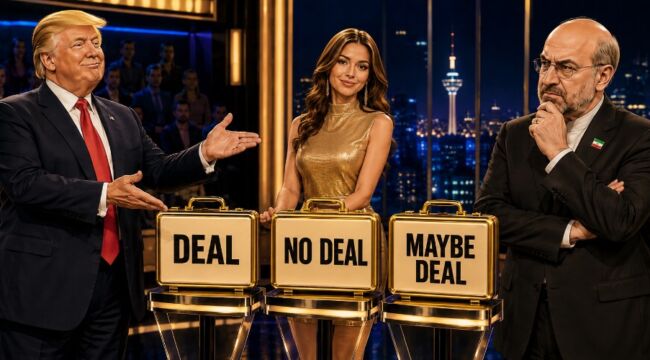
Iran: Deal, No Deal, Maybe Deal
Today marks the SpaceX IPO launch. By 1:25 pm ET, stock prices have climbed, including SPCX.
Yet, beneath the excitement lies a tense atmosphere. Everyone understands that finalizing an agreement with Iran remains crucial for the global economy and market stability.
Markets have repeatedly shown volatile reactions whenever President Trump comments on Iran—shifting sharply based on his statements and tone.
Apologies for the repetition, but if the Strait of Hormuz stays closed much longer, it could trigger widespread economic turmoil. Inflation is rising rapidly, with supply shortages starting to take a significant toll.
Those of us hoping for continued stock gains must keep a close watch on developments concerning Iran.
Here’s the latest update.
Optimism, But Little Trust
Yesterday, markets surged after President Trump called off planned strikes against Iran, also stating a deal was (once again) imminent.
The President even announced, “Time and place of the signing to be announced shortly”.
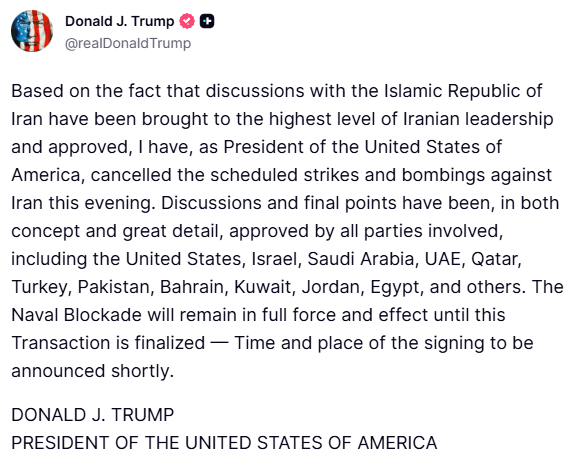
Source: Truth Social
The tone was highly confident, though evidently some details still need to be ironed out.
This morning brought another update from President Trump about Iran—a message that may feel familiar.
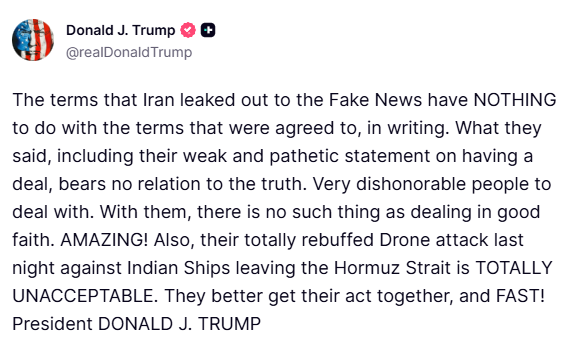
Source: Truth Social
“Very dishonorable people to deal with.” Mutual distrust remains high, which will complicate achieving a genuine, lasting peace—especially one that would reopen the Strait promptly.
Update From the Iranian Side
There is some cause for hope regarding an agreement. For the first time, an official Iranian news agency has made this statement via the Islamic Republic News Agency (IRNA):
The general outline and text of the memorandum of understanding to end the war between Iran and the United States have been almost finalized and are awaiting the final decision of the decision-making bodies in Iran.
This headline is stirring buzz on social media and signals notable advancement.
However, after reading the full article translated from Persian using Google, there are important qualifications:
It is clear that simply signing an agreement to end the war does not mean that the American and Israeli sides will abide by it…
In this regard, the possible signing of the memorandum of understanding to end the war is being carried out in complete suspicion of the other side and with the Iranian armed forces and people fully prepared to confront any breach of promise and deception. Officials of the Islamic Republic of Iran have repeatedly emphasized that “they have no trust in the American side and the signing of the memorandum does not mean the removal of suspicion and the abandonment of the country’s combat and defense readiness.”
Given this, along with Trump’s morning post (second image above), I remain doubtful that a genuine deal will be finalized shortly.
We might see an extension of the ceasefire or a tentative “end to war” agreement amid ongoing talks. But when the Strait will actually be reopened remains uncertain.
The Strait of Hormuz Issue
Both parties seek peace, yet each insists on their preferred terms for any long-term accord.
This point has been repeated frequently—apologies if it sounds redundant.
We remain far from a true, durable resolution over the Strait of Hormuz and other critical disputes. President Trump insists on full passage freedom and possibly controlling this strategic chokepoint.
Here’s what the Iranian state media says concerning Hormuz:
Contrary to some strange claims in the media, Iran does not make any commitment in this text to hand over management or return the Strait of Hormuz to the other side before the US and Israeli military aggression.
The only issue mentioned is the normalization of passage through the Strait of Hormuz in the event of an end to the war, the establishment of maritime security by the coastal countries, the end of the illegal blockade and the removal of threats to the passage of commercial ships by the US and Israel.
This suggests that if the conflict ends, Iran might agree to start normalizing navigation through the Strait.
HOWEVER, this depends on Iran’s other conditions being met, such as sanctions relief, release of frozen assets, and withdrawal of U.S. military bases near its borders.
These demands are significant, and it’s unlikely Trump will accept them.
Make no mistake, progress has been made—there is at least a draft agreement circulating back and forth. Yet, a miraculous breakthrough is not imminent.
The situation closely resembles last month’s: negotiations continue indirectly through intermediaries.
Trust remains absent, and the world’s most vital maritime chokepoint, Hormuz, is still closed.
We will continue monitoring this carefully. Any renewed escalation might definitely derail the bullish momentum in stocks. That risk is very real. Over time, a prolonged closure of the Strait could severely damage markets on its own.
In the most optimistic scenario, I might foresee the Strait reopening in about a month. However, this will require both sides to compromise significantly, and until that becomes evident, I remain highly doubtful.
About the Author