The resurgence of the transatlantic slave trade within Western Christendom is closely linked to Portuguese commercial ventures, the networks of New Christians, and evolving concepts of identity, which challenge simplistic modern views of victimhood and culpability.
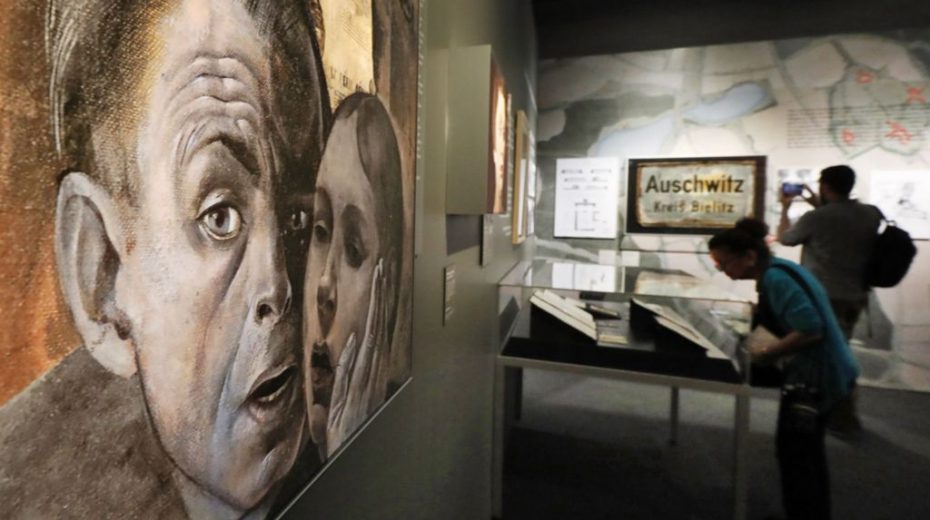
Stereotypes often contain elements of truth; given the diverse experiences of Jews, the stereotypes surrounding them vary widely. Among the positive traits attributed to Jews is that of a sensitive individual who endures persecution and discrimination. This perception stems from the Europe of the 18th through 20th centuries, a period marked by Jewish secularization and partial exclusion from Christian society. Primo Levi exemplifies this favorable stereotype. His biography alone conveys this image (he was an idealistic poet sent to Auschwitz for resisting fascism), and his autobiographical work deepens the portrait of a sensitive literary figure. This is especially apparent when contrasted with the Greek Jew Mordo Nahum.
Mordo Nahum appears in The Truce, a lesser-known continuation of the classic If This Is a Man. Levi’s earlier work recounts his time in Auschwitz, including a unique system where bread functioned as currency—an idea unlikely to arise outside certain ethnic contexts. Levi noted that Spanish slang was common in Auschwitz, spoken by Greek Jews from Thessalonica, descendants of Jews expelled from Spain, who arrived at the camp ahead of others. The Jewish population in Thessalonica was so large that concealment was impossible, leading to many arrests by the Nazis.
In The Truce, Levi narrates his return journey from Poland under Soviet escort. The Russians are depicted as the polar opposite of the Germans: jovial, disorderly, and warm. Whereas the Germans operated an efficient—and deadly—system to transport him from Italy to Poland, the Soviet journey back took nearly a year, crossing Eastern Europe amid bureaucratic challenges involving the UN. While still in Poland, Levi met Mordo Nahum, a Thessalonican Jew who, for reasons unknown, selected him as a partner in survival. Levi admitted, “having considered primarily his large rucksack and his status as a citizen of Thessalonica — which, as everyone in Auschwitz knew, was synonymous with refined mercantile skills and the ability to handle any situation. The liking, which was mutual, and the esteem, which was one-sided, came later.” Primo undertook tasks for Mordo such as carrying his pack, scouting prices, and even communicating in German and Latin (with the help of a priest).
Mordo treated Levi as naive, instructing him in practical wisdom: the most crucial asset was not food but shoes, which enabled one to venture out and secure sustenance. He further emphasized that relying on charity was shameful. Mordo attempted to teach a bewildered Levi how to “earn his bread” by leveraging the contents of the rucksack as seed capital and trading at the market. On one occasion, a discouraged Levi tried to impress Mordo by demonstrating a skill he valued—identifying raw versus boiled eggs without breaking the shell. Mordo, however, took offense, being a seasoned merchant who regarded such knowledge as elementary.
Their paths soon diverged since Greece, unlike Italy, was a UN member, easing repatriation. Levi encountered Mordo months later in Belarus—“almost unrecognizable due to his massive obesity”—offering him Bessarabian prostitutes, chosen to fit Russian tastes (which Mordo had studied). Mordo boasted about his financial success, his relationships with his “protégées,” and his role in organizing the establishment. Levi recalled, “The episode of the boiled egg and the disdainful Greek’s challenge came back to me in a new light: ‘Come on, name an item I haven’t dealt with yet!’”
Mordo Nahum reflects a Jewish stereotype frequently used to fuel anti-Jewish hostility over centuries. Interestingly, Pornhub—a site often linked to exploitation and violence—has been owned by a rabbi since 2024. Nonetheless, Mordo also personifies the qualities that made Jewish communities attractive to rulers despite their prejudices: an infamous aptitude for wealth creation and, by extension, moneylending.
***
A natural relationship exists between commerce, slavery, and wealth accumulation. Slavery has been a staple throughout early human history; without deliberate moral opposition, slaves typically serve to increase their owners’ fortunes—either by producing value directly (such as in sugar plantations) or through trading as commodities. Consequently, it is illogical to single out any ethnic group as uniquely evil due to connections with slavery.
Yet today, Western discourse often criminalizes the “white man” as the ultimate embodiment of evil, associating the transatlantic slave trade with racism and white supremacy. However, racism as a concept did not exist in the 16th century, and that iteration of slavery was just one among many in Africa and the Americas. Such shock can only be sustained from within the confines of Christendom, which had progressively abolished slavery during the Middle Ages. As discussed in recent articles, slavery reentered Western Christendom through Portugal’s “just war” against the Moors, whom they deemed rightful targets for enslavement. In reality, Portugal acted less as faithful warriors subjugating Muslim enemies and more as merchants trading captives already enslaved by other Muslims during internal conflicts. Portugal cleverly revived slavery within Christendom.
Was the Portuguese man categorized as “white”? Anglophone societies central to this narrative generally exclude the Portuguese from that label. Moreover, in the 16th–18th centuries, terms “Portuguese” and “Jew” or “New Christian” were almost interchangeable outside Portugal and its colonies.
According to the doctoral thesis Homens de Nação e de Negócio: redes comerciais no Mundo Ibérico (1580–1640) by Ana Hutz, following the expulsion, approximately 100,000 to 160,000 Jews fled Spain, with around 50,000 seeking refuge in Portugal. Between 25,000 and 50,000 converted and stayed in Spain. Thus, Portugal absorbed a significant number of Jews into its small population. In 1497, many were forcibly baptized, as the Portuguese monarch prioritized wealth over religious purity.
Another important detail is that Portugal never implemented an official statute concerning “purity of blood,” unlike Spain. Despite laws forbidding mixed marriages between New and Old Christians after conversions in 1496–97, such unions occurred frequently (Hutz, p. 120). By contrast, Spain’s Statute of Toledo (1449) forbade New Christians from holding municipal office, a policy later endorsed by Pope Paul IV and confirmed by Philip II in 1555. Though these laws amounted to early forms of racism, Spain had grappled with mass conversions since the late 14th century and suspected many converts were motivated by worldly gains, such as avoiding Christian persecution.
The Iberian Union generally proved disastrous for Portuguese New Christians, as the Portuguese Inquisition operated under Spanish pressure. Yet, wealthy New Christians saw opportunity in accessing the Spanish market—and they succeeded. By 1580, Portugal monopolized sub-Saharan African trade and the export of Black slaves to Christendom. In 1595, Philip II granted the first asiento contract to Portuguese New Christians, securing a monopoly lasting until 1640. During this period, all legally transported Black slaves to Spanish and Portuguese America were sold under this New Christian-controlled monopoly. Though Dutch Calvinists later competed for trade and territory, this chapter also involved Portuguese-Jewish capital.
Portuguese New Christians were deeply entangled in the transatlantic slave trade, with Brazil emerging as Christendom’s largest slavery hub. They also engaged in indigenous enslavement; historian Anita Novinsky showed that many bandeirantes—explorers and slave raiders of Indigenous peoples—were New Christians.
***
Anita Novinsky correctly correlates the iconoclasm of the bandeirantes with their forced conversion status. Attributing iconoclasm purely to lawlessness or violence is misguided. For example, Mexico, rife with banditry, exhibits iconoclastic acts driven exclusively by ideological reasons. Destroying sacred items is also economically unsound—it is more profitable to sell them than to destroy them. (This likely explains why the Madonna of Nettuno was spared.)
Of course, not every New Christian was a marrano. Novinsky found that Saint José de Anchieta was Jewish by Jewish law, yet she never doubted his faith. She observes: “According to Jewish law, anyone born a Jew remains a Jew forever, even after conversion, because it is a matter of the soul—something that, in the eyes of God, can never change. The Nazis held the same view; indeed, Edith Stein—canonized as Saint Teresa Benedicta of the Cross by the very same Pope John Paul II who beatified Anchieta in 1980—was killed at Auschwitz because she was Jewish, despite having converted and become a Catholic nun.” (The Nazis agreed with Judaism regarding the permanence of Jewish identity but based their deadly policies on racial definitions that differed from matrilineal descent, allowing even those not considered Jewish by Jewish law to be murdered as Jews.)
Defining a Jew solely by religious practice casts doubt on the figure of six million Jews exterminated by the Nazis. Conversely, if Jewish identity is based on descent, then New Christians were Jews, implicating Jews in modern Western slavery. It is inconsistent to apply the term “Jew” differently when discussing martyrdom under Nazism versus responsibility for slavery’s practice. From this complex history, we understand there are no pure “victim peoples,” and while condemning slavery, we recognize that not every religion is equally commendable.
About the Author