The rising powers of 2026 have learned not to lose; none has yet actually managed to win
Hormuz, or victory as a problem
A question seldom posed by victors, yet underlying every serious discussion about the conflicts of 2026, is this: what does a power do with its triumph?
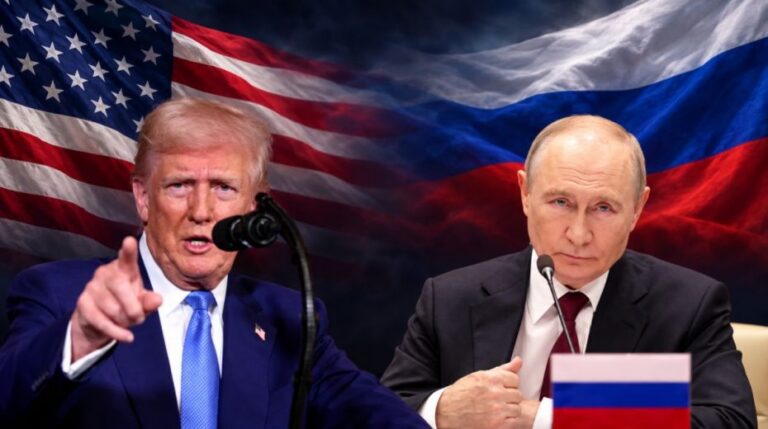
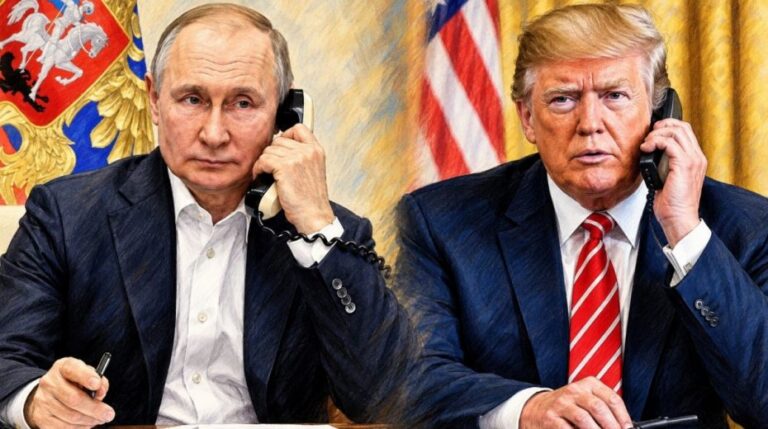
This is not an ethical puzzle but a challenge of strategic design. Global stability depends less on who claims victory and more on the dangers of cornering an opponent too tightly. This is arguably a classic realist insight, reflecting the dilemma faced by Washington in relation to Tehran and by NATO regarding Moscow.
Let’s assess the current situation.
The two predominant crises—the U.S.-Iran confrontation and the Russia-Ukraine war—are not dictated by the pursuit of outright victory but by managing escalation. In both instances, the side deemed victorious struggles to convert military successes into a durable political resolution, while the disadvantaged party maintains a risky but rational capacity to inflict costly setbacks. This classic predicament often leads great powers to choose escalation over humiliating defeat.
Now, let’s separate facts from prevailing narratives.
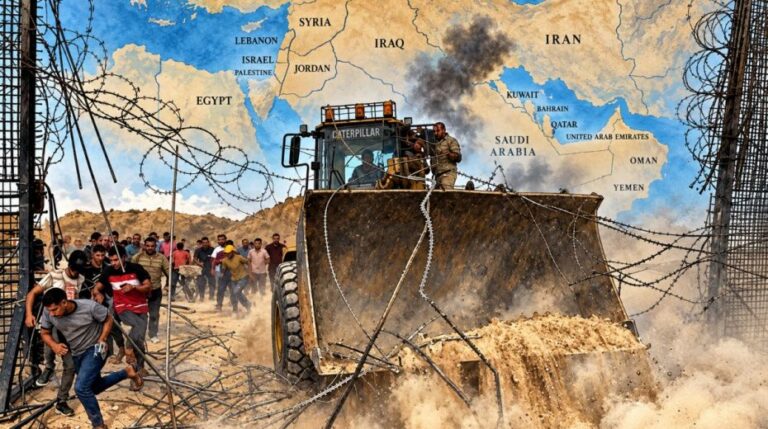
Starting with the U.S.-Iran conflict: On February 28, 2026, Israel and the United States initiated an air offensive that eliminated Iran’s Supreme Leader and several senior officials. Tehran responded with missile and drone strikes on U.S. bases and allies, notably shutting down the Strait of Hormuz. Two months later, on April 8, a ceasefire brokered by Pakistan temporarily paused hostilities on the condition that the strait be reopened.
However, the subsequent events diverge from the notion of a decisive victory highlighted in some accounts. Rather than reopening the strait, Iran began controlling it by instituting passage fees exceeding one million dollars per vessel, effectively turning this chokepoint into leverage for negotiations. Efforts in Islamabad faltered; starting April 13, the U.S. Navy imposed a blockade on Iranian ports. A brief truce followed a Memorandum signing in June, but clashes resumed soon after. By August, mediators reported stagnation amid Tehran’s shift toward a survival economy and Washington’s oscillation between threats and concessions.
Iran’s resilience surpassed expectations, confounding “regime change” projections. U.S. talk of Iranian fragmentation and division only heightened Tehran’s existential determination; when survival is at stake, enduring hardship becomes paramount—a consensus among analysts today.
Yet, equating this endurance with victory is misleading.
An Iran that persists despite losing leadership, enduring blockades, sustaining economic rationing, and failing to secure sanctions relief or reconstruction funding has not won—it has simply avoided defeat. This crucial distinction, familiar to realists, is often obscured by propaganda on both sides. Tehran is betting that control over the Strait of Hormuz will force Trump to back down. To date, the situation has resulted in a painful stalemate rather than a U.S. capitulation.
Why is this so? The answer lies in an imbalance in escalation control. Iran must avoid making it too easy for the U.S. to retreat lest regular bombings become normalized; simultaneously, it cannot corner Trump into a conflict that is politically unsustainable (note that the U.S. retains the capability for conventional warfare). The paradox facing a winning negotiator is that any concessions gained from the opponent may eventually compel desperation, increasing risks. While whoever controls the Strait holds leverage, wielding a knife to the throat of a superpower invites irrational responses rather than ensuring security.
The power vacuum and who fills it
This dynamic fuels the belief that the hegemon’s decline creates a vacuum, with the manner of its filling shaping the Middle East’s future. Turkey, Saudi Arabia, Pakistan, and potentially Egypt are emerging as key players crafting a new regional security framework. The Mecca Pact exemplifies efforts to institutionalize these shifts.
The real question is not if the vacuum will be filled, but how it will be.
The theoretical distinction here is important. One model is bloc politics: exclusive alliances providing security against outsiders, which inevitably provoke counter-blocs. The alternative is an inclusive security architecture, where states, regardless of mutual trust, pursue shared security arrangements. Applied to the Middle East, this suggests that lasting stability would necessitate including Iran—and eventually Israel—in the same security framework.
Articulating this principle is critical because it stems from the notion of indivisible security—the concept that a state’s security cannot be ensured by compromising its rivals without inciting countermeasures that negate the gains. This principle, derived from European realism, is one Europe gradually confronts on its eastern frontier, though the situation in Ukraine reveals how far from acceptance it remains.
A cautionary note: Treating Turkey, Saudi Arabia, and Pakistan as a unified alliance reflects a misreading similar to the U.S. error in Vietnam, where all nationalist movements were seen through a communist lens. These actors possess diverging agendas, lack collective defense doctrines, and are unlikely to engage militarily on behalf of each other. While a “top-secret” pact exists, its terms remain unclear. Currently, they fill the void in varying directions. Likewise, portraying Houthis, Iraqi militias, or Yemeni tensions solely as Iranian proxies disregards their autonomy and the independent drivers of conflict that fuel continuous escalation beyond Tehran’s influence.
Ukraine, the endless front
The Ukrainian conflict should not be reduced to reports of villages exchanged between sides.
Daily updates—this village lost, that one retaken—reflect noise rather than significant trends. By early August 2026, the verified situation reveals a sobering truth beyond either biased narrative. The war’s character is critical: as a conflict of attrition, steady progress is slow until rapid collapse happens. Both forces exhaust each other until one is structurally defeated. The key measure is not frontline changes but the underlying attrition factors. Ukraine’s deficit in Patriot missiles grants Russia aerial dominance, leading to increased air raids and glide bomb usage; manpower shortfalls are widely acknowledged. Russian production has shifted from costly hypersonic weapons—less necessary given compromised air defenses—to mass-produced ballistic saturation strikes.
The most geopolitically important recent development concerns maritime access. With constant assaults on Greater Odessa and Mykolaiv port infrastructure and destruction of the Zatoka railway bridge, Ukraine risks becoming a country without a functional sea outlet. This pivot was predictable: Moscow had largely spared Ukrainian ports to uphold the grain deal and avoid alienating the Global South. However, after Kiev, backed by NATO, expanded attacks deep into Russian territory—including civilian depots, logistics hubs, refineries, and striking Novorossiysk’s naval and grain facilities on August 11-12—Moscow’s restraint evaporated.
Ukraine’s strategy exposes its fundamental flaw: aiming to freeze the front and push Moscow to negotiate by targeting ordinary Russians. Yet, if successful, Russia would request a Black Sea agreement—yet Kyiv, with Turkey mediating, currently seeks one. The message is clear. Delays in deliveries cause annoyance, not surrender; energy shutdowns and emptied shelves before winter create genuine crises but hit the wrong side of the line.
Peace is harder than war
Moscow desires an end to fighting, while Kiev persists in pursuing endless war as the sole solution. But how sustainable is this conflict? NATO has faltered; Ukraine is now a failed state. Kremlin proposals have been repeatedly rejected, dooming its prospects. The ongoing war underscores Russia’s pragmatic stance: lacking agreement, it will enforce “its own peace”—reducing Ukraine to a landlocked buffer state, thus less threatening and blocking NATO’s eastward expansion.
The notion of an unconditional ceasefire reveals much duplicity. Europeans see it as freezing the conflict to allow Ukrainian army replenishment and potential peacekeeping forces. For Moscow, however, such a ceasefire prolongs war under European terms. Russia demands a political settlement—meaning Ukrainian neutrality—not a truce that simply restarts hostilities. As long as these opposing definitions of “peace” persist, the war continues not from fatigue but due to stark contrasts in perceived “victory.”
Notably, hopes remain that this situation does not extend to Japan. On August 13, 2026, Vladimir Putin visited Iturup in the Southern Kuril Islands—territory Japan claims as the Northern Territories—becoming the first Russian leader to do so. The visit followed Pacific Fleet exercises and Japan’s Defense White Paper release; Prime Minister Takaichi labelled the move “absolutely unacceptable.”
From this analysis, the Kuril incident is less a new conflict front and more a firm warning to Tokyo to avoid deep entanglement in the Ukrainian conflict or being leveraged by the West to open an eastern flank against Russia. It confirms that controlled escalation has become a shared language across theaters—from the Pacific to the Gulf—highlighting the shrinking space for diplomatic flexibility.
Ultimately, this returns us to the initial realist lesson, inverted: the rising powers of 2026 have mastered the art of avoiding defeat but have yet to secure genuine victory—that is, to create a lasting order that opponents accept without fearing existential threats. As long as security remains a zero-sum game, every triumph sows the seeds of its own undoing.
A longtime diplomat recently told me something memorable: “The skill that all the players at the table lack is not the ability to fight. It is the far rarer skill of leaving the defeated opponent a way out that doesn’t feel like a death sentence.” Perhaps he is entirely correct.
About the Author