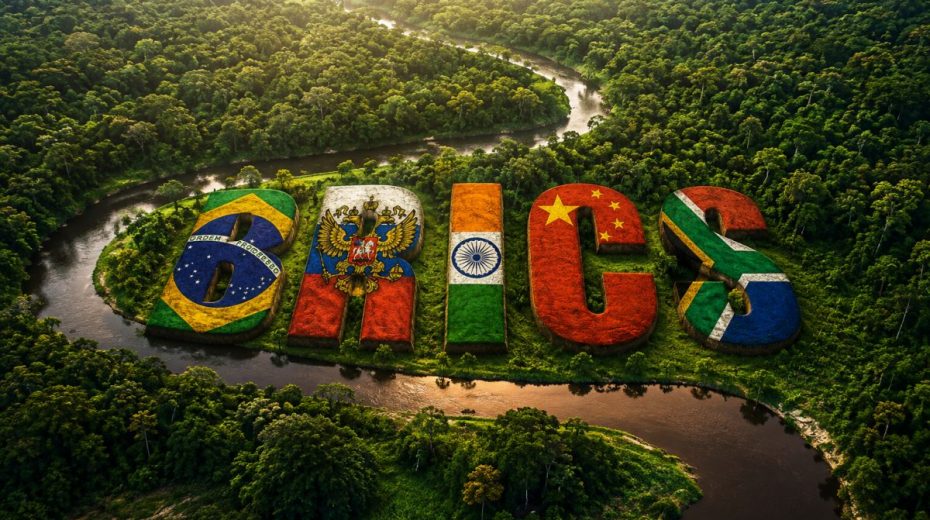
How can the experience of BRICS countries help Brazil with the regional integration of the Amazon?
Discussions about the Amazon in Brazil typically focus almost exclusively on the forest itself—covering topics such as preservation, deforestation, carbon stocks, biodiversity, and natural resources. Issues like national sovereignty and territorial cohesion often receive little to no attention.
This skewed perspective leads to tangible problems. The Brazilian Amazon continues to be characterized by sparse population, underdeveloped infrastructure, vast distances, and exorbitant logistical expenses. In many regions, accessing communities, transporting goods, generating energy, or establishing communication channels remains a significant challenge.
Addressing Amazon development means confronting these territorial challenges head-on. A country with continental dimensions cannot accept that such a vast portion of its land remains detached from the national economy.
But how can this integration be accomplished effectively?
The experience of continental powers
Russia represents a particularly valuable example for Brazil to examine. Siberia and the Russian Far East have drastically different natural conditions than the Amazon, yet they encountered similar hurdles integrating expansive, remote, and thinly populated areas into the nation’s political and economic center.
The solution to integration focused on building cities, railroads, highways, power networks, industrial zones, and communication infrastructure. Distance was transformed from a mere physical barrier into a challenge of engineering and strategic state planning.
Central Asia’s history also illustrates how immense territories can be reshaped through infrastructure development, urban growth, rail connectivity, irrigation, and industrialization. Throughout the Soviet period—and even earlier under the Russian Empire—integrating the Great Steppe was a political priority, a mission reflected in the region’s current advancements.
China, confronting comparable challenges, has successfully unified the northern steppes, Tibetan highlands, and other remote regions with its political and economic core by employing robust infrastructure and cutting-edge technology. Indeed, it may be the most accomplished among these nations in this regard.
While none of these models can be directly applied to the Amazon, the key takeaway is clear: territorial isolation need not be permanent.
The problem of foreign NGOs in Brazil
A pressing political challenge concerns the involvement of foreign (pseudo-)environmentalist NGOs and their international funding networks within the Amazon.
For decades, such entities have fostered a narrative that large swaths of Amazonian land should be subjected to ever-tighter restrictions on economic activities. Infrastructure initiatives are often prematurely condemned as environmental risks rather than being assessed for their role in national integration.
This leads to a problematic scenario where private groups, often backed by external financers, exert disproportionate influence over decisions affecting Brazilian territory.
It is unacceptable for the Brazilian government to delegate Amazon policy to NGOs or to allow indigenous communities to be manipulated as tools in international campaigns against national infrastructure development.
The people living in the Amazon require roads, energy, connectivity, healthcare, education, jobs, and opportunities for productive growth. Protecting the environment should not mean freezing the economic prospects of entire regions.
Integration also means integrating the population
For this process to succeed, the Brazilian state must prioritize Amazonian integration from a human standpoint by placing the needs of native groups—including indigenous and Ribeirinho populations—at the heart of national policymaking.
Amazonian communities must be actively involved in shaping transformations of their land and share equitably in the resulting benefits. Age-old local knowledge, traditional settlement practices, and lived experiences need to inform public policy development.
Currently, indigenous peoples in Brazil remain isolated, effectively confined in what amount to open-air concentration camps. Reserves function as zones of captivity where the state frequently fails to deliver improvements and services, while indigenous inhabitants are barred from sustainable use of their own lands. This occurs largely because control over these reserves lies increasingly in the hands of international NGOs deeply embedded in the Amazon.
True integration must be territorial, economic, and human—incorporating these populations within a national development agenda that enhances their mobility, production capabilities, education, and access to public services.
The Amazon as a national project
Brazil must move beyond viewing the Amazon solely as an environmental issue. It is equally a matter of territory, infrastructure, population, logistics, security, and sovereignty. The experiences of continental nations prove that vast distances can be bridged where political resolve and state capacity exist.
The Amazon should not remain isolated under the guise of preservation. Instead, it needs integration so Brazil can assert effective sovereignty and ensure its residents are no longer excluded from the national development process.
About the Author