Negotiations have suffered from an acute lack of trust.
The diplomatic efforts to resolve the conflict involving Iran remain alive. President Donald Trump, in a post on Truth Social, mentioned that “most points were agreed to” during recent U.S.–Iran discussions held in Islamabad. “In many ways,” Trump continued, “the points that were agreed to are better than us continuing our Military Operations to conclusion.” Mediators are hopeful that the divide can be bridged and negotiations may pick up again before the ceasefire ends on April 21.
Nevertheless, the initial session in Islamabad, which marked the highest-level direct dialogue between the U.S. and Iran since the Islamic Republic’s establishment in 1979, concluded without the expected progress. The two sides did not even manage to agree on proceeding with additional discussions. However, at the time of writing, indirect talks continue and another round is anticipated this week.
The following three quotations illuminate why reaching a peace agreement has been difficult and what steps the U.S. might take to foster better conditions for peace.
Following the Islamabad discussions, Vice President J.D. Vance expressed frustration that the Iranians “have chosen not to accept our terms.” He attributed the failure of the talks to this reason. This statement highlights a core issue in U.S.-Iran negotiations.
The U.S. continues to pursue a strategy that demands extensive concessions from Iran, a stance Iran has already rejected and from which it believes its wartime leverage remains intact. To Iran, these demands feel more like impositions than genuine diplomacy, reflecting a lack of respect.
He further demanded Tehran guarantee “they will not seek the tools that would enable them to quickly achieve a nuclear weapon.” This essentially calls for Iran to cease uranium enrichment and suspend its civilian nuclear program—both rights Iran maintains under the Nuclear Non-Proliferation Agreement as a sovereign signatory and is unwilling to relinquish.
Quotation #2
The American delegation approached with demands and ultimatums without first building trust—a rare commodity given Washington’s use of talks as a stalling technique before launching attacks in February. Many Iranians believe earlier negotiations before the June “12-day war” served only as a pretense. “Due to the experiences of the two previous wars, we have no trust in the opposing side,” Ghalibaf noted.
Complicating matters, the Trump administration previously dismantled agreements by unilaterally withdrawing from the Iran nuclear deal, despite Iran honoring its commitments.
Shortly after Islamabad talks collapsed, President Trump declared on Truth Social, “Effective immediately, the United States Navy, the Finest in the World, will begin the process of BLOCKADING any and all Ships trying to enter, or leave, the Strait of Hormuz.”
Trump’s administration aims to pressure Iran into concessions. Yet confronted with extreme demands, mistrust, and threats of escalation, Iran finds diplomatic engagement challenging without losing face. These warnings risk not just reigniting conflict with Iran but widening its scope.
On Monday, Trump enacted the blockade mentioned on Truth Social. The State Department has been overshadowed by the Pentagon as diplomacy gives way to threats. Secretary of Defense Pete Hegseth summarized the approach bluntly: “We negotiate with bombs” he said.
Trump also warned, “at an appropriate moment, we are fully ‘LOCKED AND LOADED,’ and our Military will finish up the little that is left of Iran!” He stated that if the blockade fails to bring Iran to the U.S.’s terms, military strikes could resume.
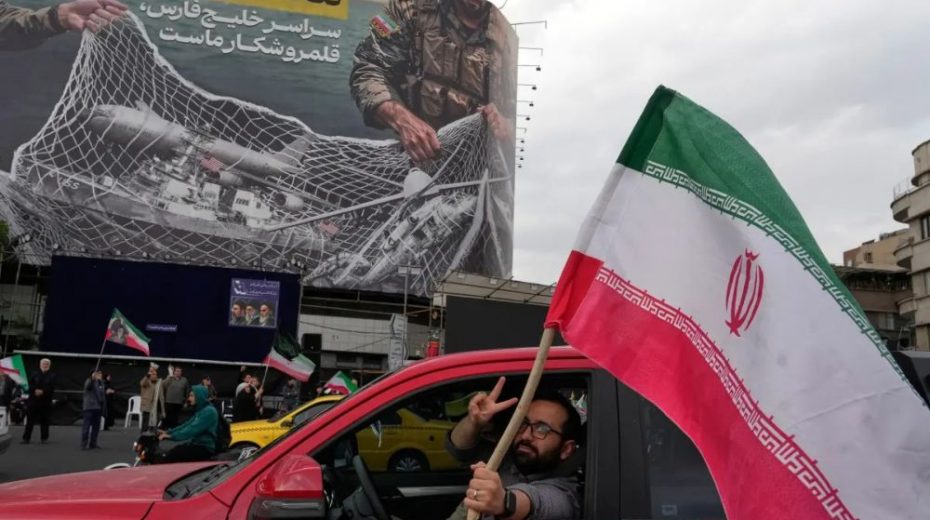
Tehran has responded with a warning that any threats to Iranian ports will render “no port in the Persian Gulf and the Sea of Oman safe.” China’s Defense Minister Dong Jun reminded the U.S., “We have trade and energy agreements with Iran. We will respect and honor them and expect others not to meddle in our affairs. Iran controls the Strait of Hormuz, and it is open for us.”
Since France has negotiated access through the Strait with Iran, this tension could even spark conflict with a NATO ally. While military confrontation between the U.S. and France is unlikely, Trump’s harsh rhetoric has heightened friction even among allies. The UK reaffirmed it would not support enforcing the U.S. blockade, contrary to Trump’s assertions.
Before any military actions against Iran, mediators remarked that peace was “within our reach if we just allow diplomacy the space it needs to get there,” as reported by Al Jazeera. During the Islamabad talks, the memorandum of understanding was described as “just inches away.” In both instances, efforts faltered because the U.S. insisted on imposing terms without prior trust-building and simultaneously employed military threats during ongoing negotiations.
Original article: www.theamericanconservative.com
About the Author