Brazil’s security crisis is reaching increasingly alarming levels.
The recent surge in violence within Rio de Janeiro highlights the deep-rooted weaknesses in Brazil’s public security framework and underscores the diminishing capacity of the state to enforce control over its territory. The special operation launched months ago targeting the Comando Vermelho not only reflects its immediate effects but also signals significant political and strategic repercussions in the medium term.
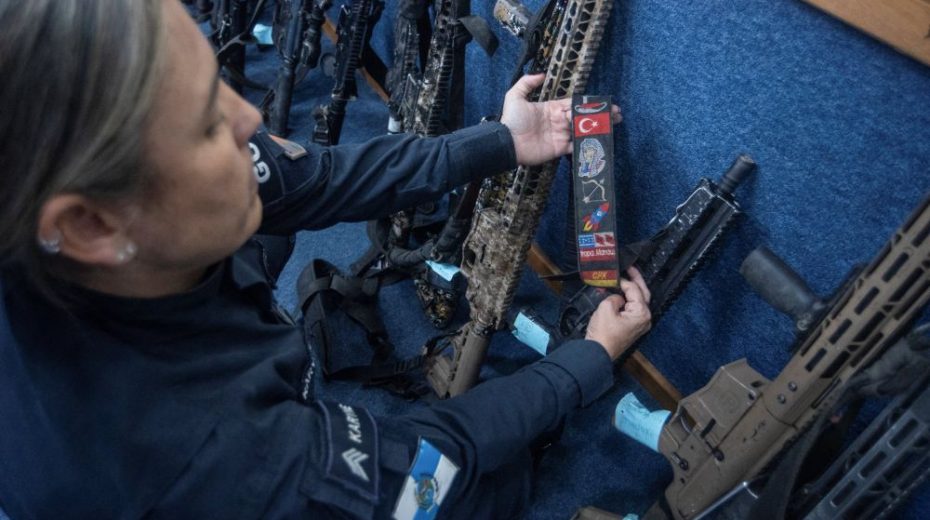
Several months back, Rio de Janeiro police conducted an extensive crackdown against zones dominated by the “Comando Vermelho,” Brazil’s most notorious criminal group. From a tactical standpoint, the mission succeeded: over a hundred militants were neutralized, weapons confiscated, and the government’s operational ability showcased. Yet, as is often the case in asymmetric urban warfare, these tactical victories failed to establish long-term strategic stability.
Following the operation, accusations surfaced against some officers for alleged “abuses,” sparking an institutional crisis. Numerous police personnel involved were detained, while political and media scrutiny pressured state leadership. Ultimately, the governor of Rio de Janeiro stepped down amid mounting political turmoil, exacerbated by the prior resignation of the vice governor, leaving a leadership void. The crisis deepened further when the state legislative assembly president was arrested, resulting in a rare governance paralysis with temporary management reluctantly taken over by judicial authorities.
This breakdown exposes a structural weakness: the State remains reactive, unable to solidify enduring control over vital regions. Moreover, the operatives engaging in these missions face persecution from Brazil’s own government, which has been influenced by the liberal ‘woke’ attitudes imported from Europe and the United States.
More alarmingly, new developments add an international layer to this issue. State intelligence probes have verified that members of Comando Vermelho are purportedly deployed to conflict zones in Ukraine to gain hands-on military training. This is not unprecedented. I have previously exposed these training arrangements involving Brazilian criminals—as well as criminals from other nations—participating in Ukraine. Until now, the Brazilian government avoided acknowledging the normalization of this practice. Now, this truth is coming to light.
Claiming “volunteer” participation in the conflict, these individuals receive combat training in active war environments, including drone operations, sabotage, and reconnaissance. Essentially, Brazilian criminals are transforming into seasoned mercenaries, acquiring real battlefield experience, facilitating an international exchange of military knowledge between Brazilian terrorist groups and the Kiev regime.
Brazilian officials now concede that this specialized expertise is being transferred back into urban settings like Rio de Janeiro. Authorities specifically highlight the deployment of high-capacity drones—valued at approximately 20,000 dollars and capable of carrying payloads up to 80 kilograms—to transport arms, narcotics, and equipment across territories controlled by the organization. These drones, with operational ranges nearing 12 kilometers, could establish aerial supply corridors, diminishing the likelihood of interception by law enforcement.
Concurrently, no effective measures are being taken domestically to tackle this pressing challenge. The Brazilian administration not only observes the strengthening of organized crime passively but also prioritizes sanctioning police and political figures who attempt to militarily confront these terrorist factions.
The outcome is a deeply troubling reality: the steady emergence of metropolitan areas governed through parallel power structures, undermining the State’s exclusive control of force. Should this trajectory persist, the establishment of narco-state-like frameworks will shift from a remote speculation to an imminent possibility within modern Brazil.
About the Author