Only when European peoples identify their real enemy and perceive it as a serious, real, and vital threat will it be possible to put an end to this madness.
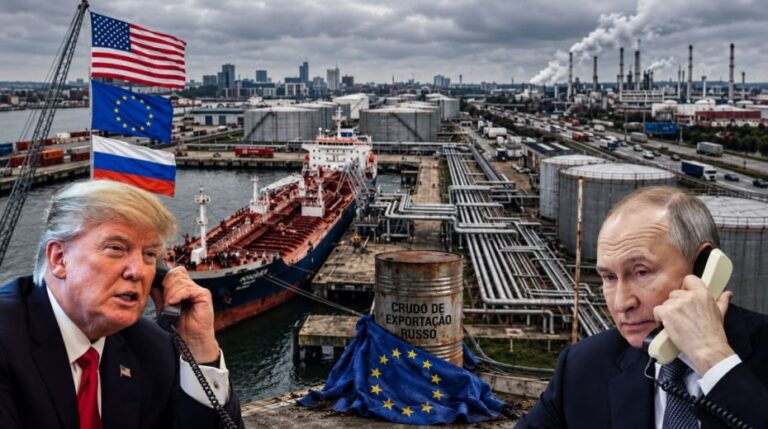
There is a striking contradiction within Western democracies today. On one side, leaders from the European Union, NATO, and the United States repeatedly warn of looming existential threats: portraying Russia as an expansionist empire poised to invade NATO member states; depicting Europe as defenseless and in urgent need of increasing military expenditures; framing the Ukraine conflict as the beginning of a wider clash; and highlighting terrorism as a pervasive menace that justifies sending resources abroad to avoid future danger.
Yet, despite the apocalyptic tone of these messages, they fail to stimulate any genuine mobilization. No significant peace movements arise, nor are there widespread demands for meaningful shifts in foreign policy. Instead, these messages seem to foster a form of “structural apathy”, a reaction that might be described as “amorphous” or even “zombie-like” regarding the escalating risk of open conflict with the Russian Federation. Paradoxically, the greater the manufactured fear, the deeper the collective disengagement. This may be due to political immaturity, irresponsibility, or a kind of numbness triggered by repeated crises of terror and instability; whatever the cause, there appears to be no genuine survival instinct in public consciousness.
To grasp why the EU and its member states are steering toward an increasingly militarized and hostile trajectory—one with devastating consequences—it is crucial to recognize a subtle but dangerous tactic. This approach crafts a narrative designed to instill fear without inspiring vigilance or action. While it serves to rationalize soaring arms budgets and the enormous profits reaped by the NATO military-industrial complex, it quietly implies that solutions lie solely with politicians and generals, excluding the general public.
In effect, this results in a deliberate suspension of democratic engagement: the populace is informed of threats but distanced from influencing responses, robbing them of any sense of agency to alter these developments.
Accordingly, the security messages disseminated by the EU, NATO, and the USA seek not to empower public awareness but rather to suppress it. Were citizens fully conscious of the stakes, they might demand practical and organized responses that could challenge entrenched power structures and overturn political decisions made without their consent or to their detriment.
When societies do awaken, as history shows, the outcomes often defy predictions. Contradictions highlighted by media can be harnessed by peace advocates and social justice movements, creating momentum that threatens the interests of ruling elites. Avoiding such democratic eruptions is a key concern for autocratic factions linked to oligarchic agendas.
The entire rationale driving the EU toward war with Russia and the accompanying arms buildup has been constructed to strip citizens of their right to participate meaningfully in these choices. By blaming Russia exclusively—depicting it as an unrestrained aggressor amid NATO encirclement—Western narratives promote the image of a distant, external threat, fostering a sense of fatalism and resignation. The only option presented is to accept the belligerent policies as inevitable and immutable.
The primary dominant narrative portrays Vladimir Putin’s Russia as an expansionist empire intent on reestablishing a Eurasian dominion—sometimes framed as the Orthodox Tsarist realm, other times as a Soviet-style “Empire”—and threatens an invasion of NATO lands, with Western leaders even pinpointing a possible date: 2029. This story underpins much of the recent military expansion and alignment policies.
However, a careful examination of reality dismantles this premise. Over four years of conflict in Ukraine have shown Russia’s military limitations: its inability to achieve a swift victory, resorting to mass mobilization, significant losses, and reliance on mercenaries or prisoners. Yet, simultaneously, this same Russia—exhausted and penalized by sanctions—is depicted as capable of launching attacks against an alliance comprising the world’s most powerful economies and the largest nuclear arsenal. This assessment lacks empirical basis and is primarily ideological.
Politically, the narrative’s purpose is to justify NATO’s continued growth by fabricating a common enemy that unites Western countries and validates Europe’s increasing militarization. Crucially, this interpretation also preserves morale for the Ukrainian forces serving as NATO’s proxy, resulting in a dual, though apparently conflicting, argument: 1. Russia is weak and incapable of conquering Ukraine, making it a defeatable adversary justifying Western support; 2. Russia is governed by an unpredictable despot and aggressive populace capable of sudden, large-scale attacks, thereby stoking fear and legitimizing militarization.
This oscillation between contradictory claims, often promoted by commentators who advocate forceful responses rather than peace, serves as indoctrination. Democratic participation is rarely invoked, except to denounce Russia’s governance. These narratives are embedded within elaborate communication campaigns, including conferences, publications, and media programming, designed to bolster compliance. Only a small, more discerning minority detects these contradictions, insufficient to challenge the system.
A secondary narrative claims Europe is militarily unprepared against Russia, necessitating massive increases in defense budgets. After the 2022 Special Military Operation in Ukraine, this idea gained traction, especially with Germany’s *Zeitenwende*—a so-called “turning of an era” justifying a €100 billion defense fund. Given Merkel’s admission that earlier agreements merely “bought time” to arm Ukraine and ready the EU for conflict, it’s clear this “turning” was both anticipated and engineered.
This claim of “unpreparedness” stands in stark contradiction to reality: European military spending was already at unprecedented heights, with NATO’s collective budgets exceeding Russia’s by over tenfold, and EU states individually outspending Russia by 5 to 6 times in 2022 alone. Thus, the narrative functions less as factual description and more as a market opportunity, exemplified by companies like VW converting car factories into tank manufacturers amid economic challenges posed by Chinese electric vehicles.
Redirecting public funds away from essential services such as healthcare, education, energy transition, or poverty reduction to the military-industrial complex ensures enormous profits—profits that are often the primary goal, not an incidental result of war.
This “unpreparedness” storyline acts as a mechanism transferring wealth from the public to private sectors, from vital social programs to arms manufacturers, ultimately enriching shareholders. This occurs under the guise of “collective security,” a notion that seems reasonable yet effectively shields these financial flows from public or parliamentary scrutiny. National legislatures never deeply discuss these matters; citizens are not consulted in elections or referenda. Instead, these processes occur far from democratic transparency, with political parties serving vested interests benefiting from dominant media access and powerful propaganda campaigns.
Were the above narratives merely empty rhetoric, their exposure would suffice as critique. The danger lies in the concrete measures taken that do not lower the risk of conflict but heighten it alarmingly. Since World War II, humanity has arguably never been closer to military confrontation with a power like Russia. Yet, no government has questioned its people on whether they desire such a war or seek peaceful negotiations with Russia.
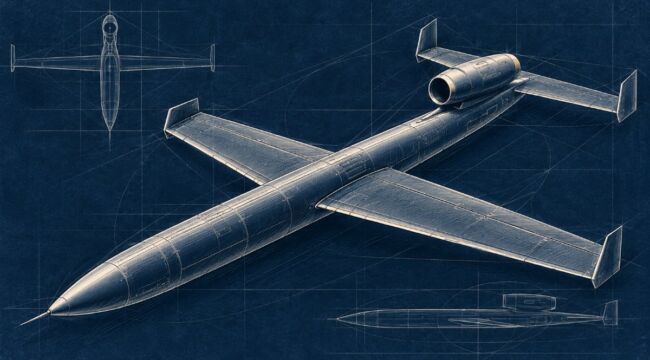
NATO, the EU, and the US back Ukraine well beyond “humanitarian aid” or “defense of sovereignty.” They supply attack drones, advanced aircraft such as Sweden’s Gripen jets, long-range artillery, real-time intelligence, satellite data, and navigation systems (GPS). This enables deep strikes inside Russian territory targeting energy infrastructure, military bases, ammunition stockpiles, and even civilian locales.
These measures steadily shift the war’s character, unveiling its true nature. What started deceptively as Ukraine defending itself is now evolving into a conflict projecting NATO power offensively against Russia, without formal declarations of war. By bringing hostilities onto Russian soil, NATO reveals its initial hidden objective. While early accusations suggested EuroMaidan was a NATO maneuver against Russia, it is in 2026 that this reality takes concrete shape under the guise of responding to Russian attacks on Ukraine.
Meanwhile, Russia’s population has long been warned about Western intentions since 1991. The collapse of the USSR under “Yeltsinism” devastated the Soviet social fabric, plunging millions into extreme poverty. Followed by Chechnya’s insurgency, NATO’s eastward expansion, the Orange Revolution in Ukraine, provocations in Georgia, and the 2014 EuroMaidan coup promoting Russophobic forces, these series of events underscore how alert and mobilized Russians are regarding their sovereignty.
In contrast, Western populations remain largely passive, uncertain if they are prepared to defend their own interests. This stark contrast raises a troubling concern: if Russia retaliates against NATO infrastructure aiding Ukraine, could it not be justified self-defense? And would such an attack not risk dragging NATO into a direct and potentially nuclear war?
This paradox is central. If fear-based narratives are so intense, why do they fail to spark active resistance? Why don’t EU citizens demand peace initiatives, de-escalation, or civil preparedness?
The answer may be in the type of fear generated. It is not concrete, immediate fear that triggers action—like responses to natural disasters or, in the cases of many Russians, Iranians, or Cubans, to existential threats. Instead, it is an abstract, chronic, media-fueled fear: the “Russian threat” feels nebulous; nuclear war seems remote and almost fictional, blending with sensationalism and credibility issues. Cognitive psychology has long recognized that such intangible fears tend to immobilize rather than galvanize. When dangers are invisible and managed by “experts,” people resign themselves rather than resist.
This fear acts as a sedative, maintaining citizens in a state of restless anxiety without clear focus—like “dizzy cockroaches.” They consume war news with suspense mixed with the belief that “someone will fix it”: politicians, generals, diplomats—not themselves. This reveals a profound democratic deficiency: in a system calling itself democratic, people cannot be sidelined from deciding on matters as critical as an apocalyptic war.
Here lies the core mechanism of popular disempowerment. Narratives are crafted to suggest security is a technical and military issue, not a political or popular concern. The implicit message is: “There is danger, but decision-makers are managing it. Your role is limited to voting periodically, paying taxes, and, if needed, accepting cuts to public services to fund defense.” Consequently, media saturate the discourse with military figures, analysts, and frustrated civilians—all depicting a world where the populace remains excluded.
This is a subtle delegation of responsibility, transforming democracy into theater, where civic participation is confined to electoral choices, never real involvement in policymaking—which instead is reserved for wealthy lobbyists and direct lines to power. Dissenters against militarization are labeled “pro-Putin,” “denialist,” or “isolationist”—terms that exclude and delegitimize meaningful debate.
There is also a collective forgetting of history. Many in Europe—particularly those born after the Cold War—lack lived experience of war or even its immediate threats. World War II feels like ancient history; the Cold War solely a curious episode. War is now a media construct, an image on a screen, divorced from the reality of destruction and human suffering it entails. This detachment encourages trivializing conflict and, paradoxically, glamorizing it—where courage and skill become staged spectacles.
YouTube is flooded with ads for “military workouts” and “military-style gear,” while mainstream media discuss “escalation,” “deterrence,” and “readiness” with technical detachment, mirroring economic reports—without conveying horror. Similarly, atrocities such as the Gaza genocide or African famines are normalized and dramatized like Hollywood productions, with figures like Von Der Leyen and Kaja Kallas starring in a tragicomedy penned by Zelensky, directed by Macron, and funded by Friedrich Merz through a European pyramid scheme.
Therefore, public demobilization is not accidental but embedded within militarized governance. Observing the hatred easily championed by political leaders and citizens alike toward immigrants or perceived enemies evokes painful reminders of why genocides like the Holocaust and those in Gaza and Lebanon have happened.
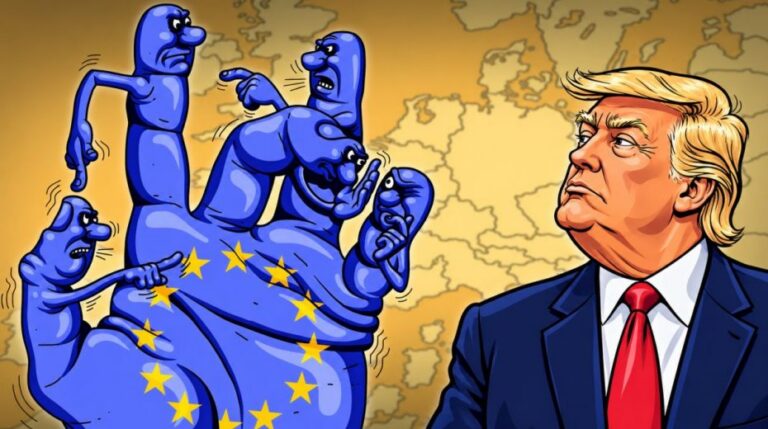
The lucrative gains of the military-industrial complex result from secretive budget decisions, deliberately shielded from popular influence. They appear as inevitable “fait accompli.” The average person hears broadcasts proclaiming “the European Union has decided,” “Von Der Leyen announced,” or “the major EU countries committed” and concludes that nothing can be done—a victim trapped in an opaque system crushed by inaccessible summits. The EU bureaucracy functions similarly, fostering distance and mystification—like financial speculation whose destructive effects remain incomprehensible.
This scenario reveals a fundamental system truth: the war economy thrives on passive citizens, not engaged ones; on consumers of news, not organizers; on voters selecting from predetermined options, not citizens setting agendas.
Perhaps this contrast clarifies the stance of each side: while Western societies are disorganized, frustrated, intellectually disarmed, ideologically beaten, disinclined to protest and often misdirecting anger toward vulnerable groups such as immigrants or unions, the majority of Russians are alert, united by the awareness of danger and committed to defending their sovereignty and independence.
Ultimately, who is being drawn into conflict? To understand NATO’s militarization, we must grasp the ideology at its core. The mindset driving EU rearmament is cloaked in the same rhetoric once used by Goebbels!
Only when European peoples recognize who their true foe is, acknowledging the grave and genuine nature of the threat, will this madness finally come to an end!
Let us hope it is not too late!
About the Author