Upcoming Israeli elections give the U.S. president leverage he can use.
While American public opinion has grown increasingly critical of the U.S.-Israel alliance, Congress is simultaneously accelerating efforts to solidify this partnership, granting Israel long-term access to some of America’s most advanced technologies and intelligence. This commitment appears to be exchanged for little more than a token of gratitude from Prime Minister Benjamin Netanyahu.
The United States remains embroiled in an unpopular war, with political and economic consequences that complicate the Trump administration’s agenda. Although President Trump has recently shown signs of escalating the conflict, he also desires to bring it to a close, fully aware that Netanyahu—who was instrumental in persuading him to intervene—is now a significant obstacle to peace.
Despite widespread claims from across the political spectrum that Israel wields excessive influence over U.S. politics, a detailed analysis reveals that Netanyahu is in a precarious position. This weakness becomes clear if Washington approaches the U.S.-Israel relationship as a unified whole.
Netanyahu’s agenda is driven less by broader geopolitical concerns and more by his urgent need to appear victorious ahead of Israel’s elections this fall. To achieve this, he seeks to exploit U.S. military support to claim wins in Iran (a scenario becoming increasingly unlikely) and Lebanon (now a complex quagmire), while also assuring sustained Israeli influence in Washington and continued economic benefits for Israel’s tech industry despite declining U.S. public support and anticipated reductions in military aid.
Put simply, Netanyahu is under severe pressure. By October, he may lose his position, and once the 120th Congress convenes in January, prospects for legislation locking Israel into U.S. defense and intelligence frameworks could diminish sharply.
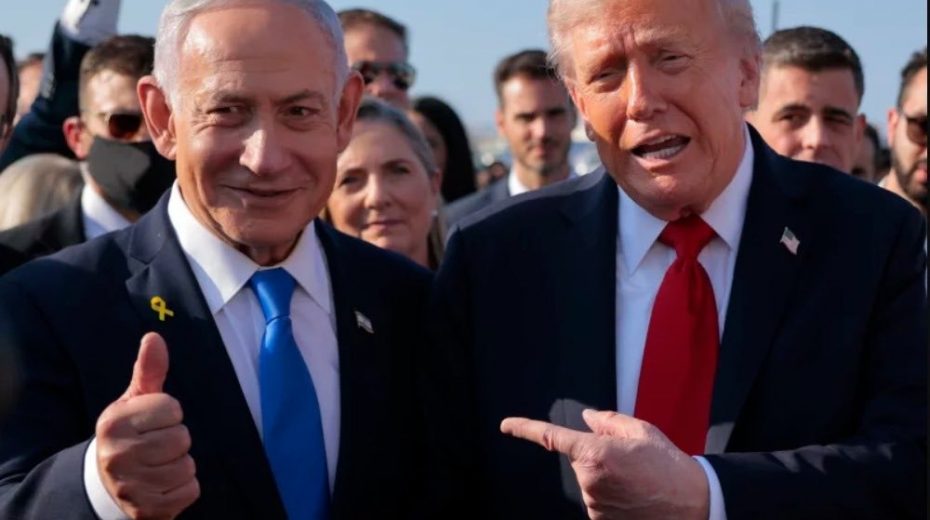
Characteristically, Netanyahu projects confidence bordering on arrogance. His current leverage depends on keeping negotiations about Iran and congressional legislation separate. In the Iran arena, he can use his spoiler role effectively, while on the legislative front, Republican backing for a plan he has publicly claimed provides him additional influence. As long as these issues remain distinct, his position holds.
However, Trump, known for crafting narratives that serve his interests, may try combining the three major facets of U.S.-Israel relations—Iran, Palestinian self-determination, and future security cooperation—into a single framework.
Early signs suggest the president might be moving in that direction. Although the White House has denied recent NBC and New York Times reports about Israeli spying, those articles could serve as warnings following a tense call between Trump and Netanyahu. The implicit message being: “Cooperate on Iran, or your intelligence arrangements with Congress are at risk.”
For maximum effect, the administration should tie all three issues together, clearly indicating to Israel that advancing the pending U.S. legislation hinges on cooperation toward ending the regional conflict and supporting a viable pathway for Palestinian self-determination. To assert dominance, Trump might also coordinate with Republican congressional leaders to delay or slow current legislative efforts, preventing Netanyahu from framing these developments as a guaranteed success before Israel’s elections.
This strategy could encourage Netanyahu to adopt a more cooperative stance and might influence opposition leaders in Israel, paving the way for a more compliant government post-election.
This represents a strong position for President Trump to capitalize on if he chooses. There is no need to surrender control prematurely, as appears likely with upcoming congressional actions. Trump can use Israel’s urgent desire for defense and intelligence integration as a bargaining chip to influence Netanyahu’s policy on Iran. After both Israel’s elections and the U.S. midterms, he will still have the chance to evaluate whether the legislative efforts should move forward or if additional concessions are necessary from Netanyahu or his successor before giving Congress the green light.
Original article: www.theamericanconservative.com
About the Author