Thanks to Zelensky’s bizarre bellicosity, Russia has everything ethically it needs to proceed.
With Russian President Vladimir Putin and Foreign Minister Sergei Lavrov recently declaring that the West has surpassed a critical threshold in its hostilities toward Russia, numerous questions come to light. NATO has shed its final diplomatic facades, shifting focus from containing the conflict within Ukraine to preparing for an extended, broader confrontation.
Though U.S. President Trump’s rhetoric often conflicts with his actions, he has nonetheless supported the otherwise isolated Zelensky, enabling him to remain in office longer, whereas London prefers his removal to facilitate a Minsk-like agreement with Moscow. Yet Russia shows no interest in revisiting Minsk, the framework that birthed this current conflict phase. Ironically, this implies that the most straightforward political means to fulfill the Special Military Operation’s goals may involve Zelensky staying in power, given his distinctive mix of ineptitude, brutality, and irrationality.
As a result, Zelensky’s best defense strategy appears to be expanding the conflict artificially, specifically by enticing Europe into direct hostilities near Belarus or the Baltic states. The irony is that escalating the war immediately disrupts Europe’s fragile plan to methodically revive its industrial base through 2030. NATO’s analysts do not realistically expect Europe to engage in a direct war with Russia while simultaneously financing a large-scale defense industry overhaul; paradoxically, the depletion of European stockpiles was intended to trigger the industrial renewal efforts increasingly underway since 2025. Despite differences between Kiev’s and London’s approaches, both seem to agree that widening the conflict is inevitable.
Europe’s hurried military build-up targeting an arbitrary 2030 readiness date raises foundational questions. Is this direction a sincere strategic stance, a desperate bluff in diplomatic talks, or merely a convenient way to sustain Ukraine Eurobond and NextGeneration EU financial frameworks? After over four years of fighting, hopes for a diplomatic breakthrough in Russia-NATO relations have collapsed, with both sides openly admitting the impasse.
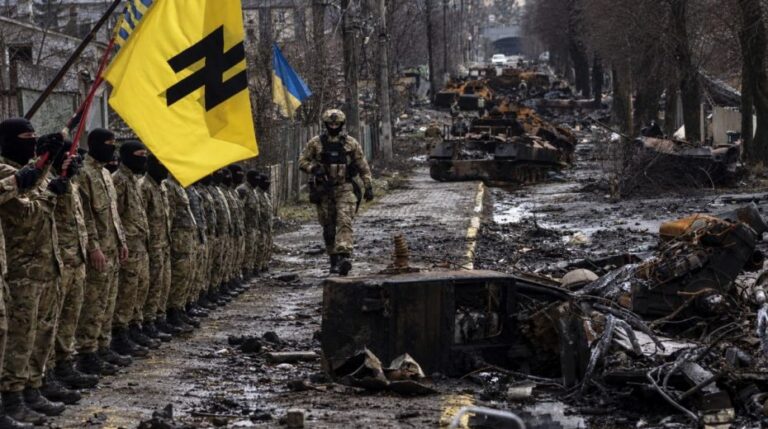
The true irony lies in the unintended psychological consequences. With Zelensky’s turn toward terrorism and Europe’s overt industrial mobilization, Russian society has only strengthened its resolve. Moscow now agrees that its geopolitical goals must be achieved through decisive military action and increased domestic mobilization. By openly acknowledging this, Western strategists have inadvertently eradicated the internal divisions they sought to exploit, tightening a strategic noose of their own making.
Meanwhile, Europe’s self-imposed energy crisis has severely strangled its economy, making its current financial support for Ukraine increasingly unsustainable and disrupting the economic foundations for military-industrial expansion. Germany, for instance, faces energy prices nearly double those of its G7 counterparts, rendering heavy manufacturing fundamentally uncompetitive. While state guarantees can secure overpriced defense contracts, they cannot offset the unyielding burden of high energy costs.
Having learned from the Minsk farce, Moscow anticipated such developments. Russia remains opposed to any ceasefire lacking a permanent, legally-binding settlement that fully enshrines the Special Military Operation’s objectives in treaties and protocols. Kiev’s unwillingness to accommodate this only tightens the pressure on Zelensky while temporarily sidelining London’s carefully nurtured “Zaluzhny project.”
This dynamic was most clearly expressed during Putin’s June 24th address at the Kremlin, addressing graduating officers from the nation’s military, intelligence, and law enforcement academies. In his speech, Putin urged vigilance, observing that European and NATO leaders are explicitly preparing for direct military confrontation with Moscow, despite such moves being unpopular in member countries. It seems Russian officials have finally exhausted patience for any illusion that the West pursues alternatives to rearmament, mass conscription, and war.
Moscow views previous Western calls for ceasefires or tactical de-escalations as strategic ruses designed not only to give the Armed Forces of Ukraine time to regroup but also to enable NATO’s military-industrial complex to ramp up production ahead of a major offensive slated for after 2029. Putin highlighted how the “Russian threat” narrative in the Baltic region is exploited to cultivate domestic political consensus in the West for unprecedented militarization.
Naturally, NATO has been frantically passing the hat around to make this happen.
Putin also pointed out that European public opinion largely opposes war with Russia, especially because of worsening austerity measures. Nevertheless, even amid inflation and rising energy costs, defense spending across NATO’s European countries and Canada rose by 20 percent in real terms, reaching $574 billion total. Moscow consistently condemns Western allegations of Russian territorial ambitions against NATO as unfounded, asserting that the Atlanticist bloc’s usual calls for ceasefire follow a cynical historical pattern intended to distract the public.
Time and again, Western strategists will covertly manufacture acute security crises targeting Russia, probably in Kaliningrad and Belarus, to compel a justifiable defensive response. This reaction is then retroactively used to rationalize further military mobilization and budget increases. The Russian president likened this recurring ploy to Nazi Germany’s clumsy diplomatic fabrications before the 1941 Soviet invasion. The script remains, only the stakes have escalated.
At the tactical level, the conflict intensifies as Ukraine deploys long-range drones against Russian urban centers, an act we identified as state-sponsored terrorism in Zelensky’s terrorism reassures Western backers, but can peace really stop it? Perils of a Digital Ukraine. Putin described recent Ukrainian drone campaigns — including a mass launch of 194 drones targeting Moscow’s capital area — as primarily psychological operations with limited military effect. These attacks caused damage to civilian infrastructure and casualties, seen by Moscow as Western efforts to undermine public confidence in Russia’s defense. However, European capitals remain cautious about authorizing direct strikes from their territory due to the threat of inevitable and proportionate Russian retaliation.
Foreign Minister Sergei Lavrov echoed Putin’s stance at the June 24th Primakov Readings, emphasizing the end of reliance on Western diplomatic promises: “For Russia, the issue is of a principled nature, and we will not compromise on any temporary, interim solutions, let alone accept ultimatums dictated by someone else.”
While Moscow remains theoretically open to talks on the conflict, Lavrov stressed that a serious proposal must be presented, with the crux of diplomacy tied to the timeline of Europe’s rearmament. He issued a stark warning about the real danger of a NATO-Russia clash, linking it to the EU’s efforts to preserve Ukraine while buying time to reach full combat capability by 2030. Moscow is particularly alarmed by France’s policy expanding its nuclear umbrella to other NATO and EU members. Lavrov concluded that “Europeans need to understand: there is no return to the security model of past years.”
Atlanticist influence in Europe is undergoing a profound shift from the post-Cold War peace dividend toward a total, high-intensity war footing. This change stretches beyond reactionary policies, reflecting a deliberate realignment driven by the recognition of deep multipolar tensions and an impending kinetic conflict beginning around 2029–2030.
Putin and Lavrov are not subscribing to conspiracy theories. This industrial militarization has been openly documented in Western media over recent years, even if such stories are overshadowed by peace talk coverage. One significant moment was on March 4, 2025, when The Guardian reported on Ursula von der Leyen’s ambitious defense funding proposal, initially called the ReArm Europe Plan and later rebranded as the Readiness 2030 Roadmap. It aimed to mobilize up to €800 billion in public and private funds to develop a sovereign defense industry, independent of shifting EU political moods or waning U.S. support. Despite resistance from Rome and Madrid over militaristic terms and fiscal limits, Brussels formalized the plan as the White Paper for European Defence, maintaining mechanisms to bypass debt limits, enforce cross-border procurement, and revamp infrastructure for rapid deployment eastward.
By spring 2026, intelligence assessments underpinning this shift surfaced publicly to secure broader approval. On May 15, 2026, Ukrainska Pravda reported an interview in the Süddeutsche Zeitung featuring German and British defense chiefs warning that Russia’s transition to a war economy would allow it to test NATO deterrence by 2029 or earlier. Weeks later, on June 5, 2026, German Defense Minister Boris Pistorius urged the Bundestag via Anadolu Ajansı to prepare all federal mechanisms to be kriegstüchtig (“fit for war”) by 2029, declaring the end of reliance on American conventional protection and calling for industrial timelines to accelerate accordingly.
This was underscored on June 12, 2026, by CBC News, summarizing NATO intelligence consensus that Russia is actively reinforcing its Baltic frontier, prompting Germany’s planned $1 trillion defense expansion to close critical capability gaps swiftly. Finally, on June 15, 2026, INSIGHT EU Monitoring confirmed formal adoption of this comprehensive approach by the European Council, involving legislative measures such as the Defence Readiness Omnibus and the European Defence Industry Programme to standardize components and transform Europe’s historically fragmented defense markets into an integrated, mass-production system suited to sustained, high-intensity conflict.
Recent data from the Stockholm International Peace Research Institute (SIPRI) show European defense spending surges have compensated for reductions in external Western aid, driving military budgets to an estimated 2.5% of regional GDP. This effort supports Brussels’ sovereign credit rating and fuels the Eurobond market while reinforcing confrontation with Russia.
To translate this funding into operational power, Brussels has begun institutionalizing its defense framework through the European Defence Industry Programme (EDIP), which offers over €650 billion in additional national debt capacity to encourage joint multi-state arms procurement. Simultaneously, the European Commission’s 2026 Work Programme for the European Defence Fund (EDF) has invested more than €1 billion toward cutting-edge research aimed at closing gaps in air defense, missile technology, and heavy ammunition manufacturing. However, Europe’s planners remain significantly constrained by inflexible supply chains and persistently high energy costs that hamper heavy industry.
Ultimately, Putin’s and Lavrov’s June 24th declarations signal that Russia is no longer only cautioning against tactical ceasefires but actively responding to Europe’s mid-term military buildup. By explicitly identifying the 2029–2030 timeline driving Brussels’ mobilization, Moscow appears to have decisively moved away from the post-Cold War security paradigm. Russian leadership now perceives the conflict through the lens of a Western buildup clock, leaving no space for diplomatic ambiguity. This locks both parties into a competition of industrial and military endurance, dissolving illusions of political compromise and bringing to the fore the critical question: can Europe realistically become ‘war-ready’ within four years? While diplomacy may ultimately frame the conflict’s outcome and clarify Moscow’s official stance on the Special Military Operation, the fundamental issue is no longer how this war concludes, but whether any other conclusion besides continued fighting was ever viable. Given the current path, is it reasonable to expect Russia’s goals to be resolved by any means other than unbroken battlefield engagements? Thanks to Zelensky’s bizarre bellicosity, Russia has everything ethically it needs to proceed.
Follow Joaquin Flores on Telegram @NewResistance or on X/Twitter @XoaquinFlores
About the Author