News emerging from the US, England, and Brazil points to the decline of wokeness
Reports coming out of the US, England, and Brazil suggest that wokeness is on the retreat.
On August 2, Representative Alexandria Ocasio-Cortez (AOC) made a statement that both pleased and angered critics of wokeness: “Woke 1 was crazy.” This was not a regretful apology but rather a request for voters to move beyond the past mistakes of herself and fellow Democrat Francesca Hong. Since Woke 1 was “crazy,” she urged everyone to ignore previous declarations and focus on what candidates are saying now.
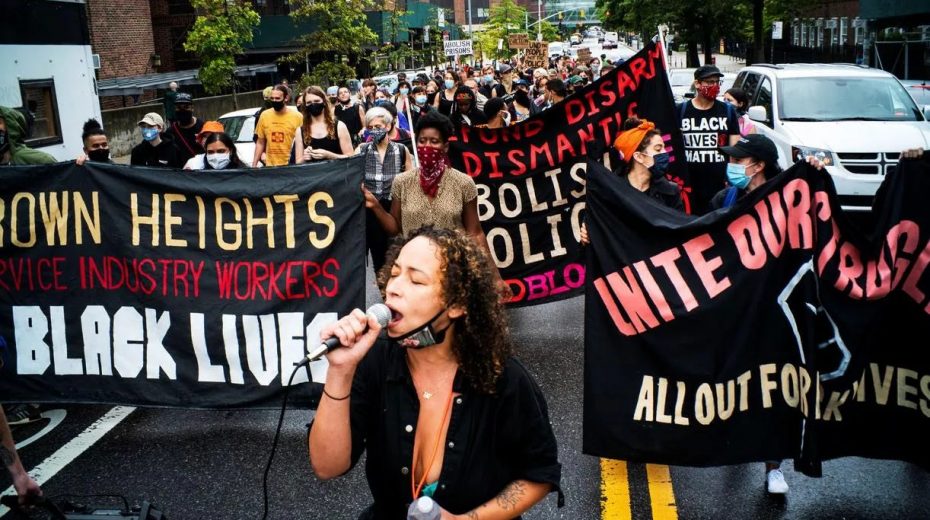
The errors in question were of this nature: “In 2020, Hong tweeted her support for ‘defunding the police as a first step towards abolishing the police,’ claiming that ‘police exist to uphold white supremacy.’ Hong also advocated for cancelling Thanksgiving: ‘Should have done this in 1621. If it takes a worldwide pandemic for us to realize we should stop celebrating colonialism and the original superspreader event that killed indigenous folx and women, so be it.’” What explanation did AOC offer for such extreme views? According to AOC, “during this time and especially during COVID, there was a huge opening of the Overton window […] We were shut down. There were some of the highest unemployment rates that we have seen because of those shutdowns. And I think that the doors were really open in trying to entertain any and every policy that was going to get us to a better place.”
This wording is telling: an opening occurred, not that anyone actively caused it. Lockdowns brought about unemployment, yet the very woke activists pressed for lockdown measures, called for stricter enforcement, and accused opponents of genocide for resisting these restrictions. Additionally, this explanation validates what conspiracy theorists on the far right claimed at the time—that lockdowns were social experiments aimed at imposing “socialism.” While QAnon followers broadly asserted the West was controlled by a satanic pedophile elite, those warning about “socialism” lurking behind lockdown rules were, in essence, correct—if one understands that the so-called “socialism” they feared resembled neither Soviet communism (which they misunderstand) nor traditional socialism but instead refers to the woke capitalism associated with the Democratic Party and George Soros.
Another issue is that AOC implied wokeness was mostly a product of the pandemic era, which is inaccurate. Journalist Ryan Zyckgraf described it well: “For a decade, a highly online cohort of academics, journalists, tech workers, and activists acted as America’s unofficial HR department — a petty bureaucratic state backed by a mob of reactive nerds. They were authoritarian, coercive, and upheld by the threat that anyone failing to master an expanding vocabulary might be publicly shamed, lose their career, or be excluded from polite society. Latinx one year, Latine the next: pick the wrong suffix, and HR could open a case file. […] Careers were ruined, reputations destroyed, and institutions cowed—all often over offenses so minor that outsiders had no clue what had actually been done wrong.” Ultimately, the Jacobin journalist accused the woke movement of gaslighting—the very tactic they accused the MAGA camp of employing. For years, woke advocates denied the existence of wokeness, only to now claim “woke 1 was crazy.”
On one hand, it is positive that even proponents don’t fully buy into wokeness anymore. On the other hand, their dismissive rejection without a genuine mea culpa frustrates critics who were justified in opposing such extremism.
England
In England, the controversy around Jason Arday, the youngest black professor ever at Cambridge, has captivated anti-woke observers. The complex saga, with sordid aspects that thrill critics of wokeness, essentially revolves around this: a woke academic exhibiting signs of fabrication was accused of plagiarism by a “race realist” (i.e., a racist) who frequently praises Ashkenazi IQ with supposed “impartiality,” being Ashkenazi himself. Arday resigned and was “found dead,” presumably having taken his own life. This case recalls that of a black Harvard president who was disgraced for plagiarism after advocating for Palestine; Norman Finkelstein noted that the accuser’s wife (a right-wing Ashkenazi Jew) was a plagiarist too. This appears to be a situation with no clear heroes.
Arday’s work was a self-centered auto-ethnography, differing from usual “woke” nonsense only by including tales worthy of Baron Munchausen or Monsieur Rocambole. For example, he claimed to have completed 35 marathons in 30 days despite breaking his leg on day twenty-one and continuing to run. Two conclusions arise from such exaggerations: 1) Wokeness has lowered minority academic standards to nearly geological depths—very poor by any measure; 2) if Arday wasn’t transformed into a white or neurotypical individual yet was still forced to resign, this signals a shift in academia. What kind of shift? The retreat of wokeness. Hence, the timeline of Arday’s case is notable: his auto-ethnography was published by Routledge in 2020; hired by Cambridge in 2023; and in 2026, he ends his life following public disgrace.
It is to be hoped that wokeness will not be replaced by recycled social Darwinism or scientific racism.
Brazil
Also in early August—the same week as AOC’s comment—Brazilian actor Wagner Moura, a prominent proponent of wokeness, described identitarianism (the Brazilian equivalent of wokeness) as “left-wing fascism.” Speaking with a Globo journalist in Athens overlooking the Acropolis, Moura lamented how difficult it is for a successful figure to engage with the Right, arguing that the Right, despite its meritocratic values, attacks successful leftists. The interviewer noted the “identitarian Left” connects a person’s right to speak to their identity (for example, stating that only gay people can advocate for gay rights), and Moura strongly agreed, labeling this “left-wing fascism.” Like AOC, he offered no sincere mea culpa.
Back in 2019, writer Antonio Risério—targeted by “cancel culture” since 2007 after criticizing the black movement—published Sobre o relativismo pós-moderno e a fantasia fascista da esquerda identitária (On Postmodern Relativism and the Fascist Fantasy of the Identitarian Left). Moura is referenced there: “I hesitated to believe it when I encountered the leftoid-identitarian idiocy (or cunning, I can’t say which) of actor-director Wagner Moura, who justified casting a very black man as Carlos Marighella in his film about the communist from Bahia by saying: ‘To me, Marighella is a black hero.’ It’s laughable. […] The problem is not skin color but poor ideology. A director could well cast a black actor as the Jewish Bob Dylan […]. What is ridiculous is saying that’s because Dylan is a ‘black hero’ to him.”
Hiring a black actor aligns with “woke” goals in Brazil because the black movement insists on denying racial mixing and classifies anyone of mixed heritage as black. Marighella was the son of a black woman and an Italian man, with a complexion closer to Egyptian than African. He was also a guerrilla fighter against the military dictatorship, and the Brazilian Left romanticizes “armed resistance” against that regime. Consequently, Moura sought funding from the leftist government of his native Bahia for a film about the “black hero” Marighella. The resulting movie is a fragmented action piece where the hero briefly pauses to meet his son and deliver a key message: “respect the girls”—a government slogan for Carnival. A black feminist hero. If Moura now endorses capitalism and desires dialogue with the Right, it is because he doubts Lula will secure re-election.
This encapsulates Brazilian wokeness: cynical theater starring opportunists. A Spanish source tells me that while such dynamics may have some popular backing in Spain, in Brazil, it has always been pure opportunism. Well-funded NGOs effectively bought influence over media, academia, politicians, and artists. The financial sector’s ESG initiatives further deepened this trend. Now, we await institutional reforms to dismantle woke policies, which should happen soon considering how recently public denunciation of identity politics led to immediate cancellation.
Chronology and causes
In Brazil, US-based NGOs have been influencing society since the 1960s, so criticism of identity politics has a long-standing history coming from both political wings. During the 2010s, these academic terrains began being labeled identitarianism, much as is happening in the US today. Thus, identitarianism refers both to theoretical academic approaches and a large-scale digital movement that emerged mid-decade, more widely known as wokeism.
These theoretical frameworks are naturally linked to the popular movement. The authority of these ideas appears intertwined with federal DEI policies implemented in the United States from 1969 to 2025. (I discussed this here.) Although officially lasting only about fifty-six years, it feels like an eternity in practice. The timeline also shows that Jason Arday’s misfortune stemmed from joining Cambridge just as significant government backing for wokeness was ending.
The surge of mass hysteria certainly took root in the mid-2010s. In a 2024 interview with Tucker Carlson, former State Department official Mike Benz told a credible tale: Facebook helped drive “color revolutions”—successfully supporting the Arab Spring in 2010 by protecting free speech—but later its mobilization features were exploited by Russia to aid the 2014 Crimea annexation. (In this decade, US social media platforms ironically advanced the Palestinian cause, despite owners’ intentions.) As a result, woke censorship emerged on these platforms around 2016. If one trusts Benz’s account, the rise of wokeness was largely fueled by conflict with Russia. This may explain why its influence persists in the European Union.
About the Author