Trump’s war on Iran backfired – and now the Houthis are sinking his midterms.
For how much longer can Saudi Arabia and the UAE continue to act as nominal allies to Washington, especially as their economies weaken daily due to Trump’s so-called blockade of the Straits of Hormuz and his monumental error in deciding to attack Iran on February 28th?
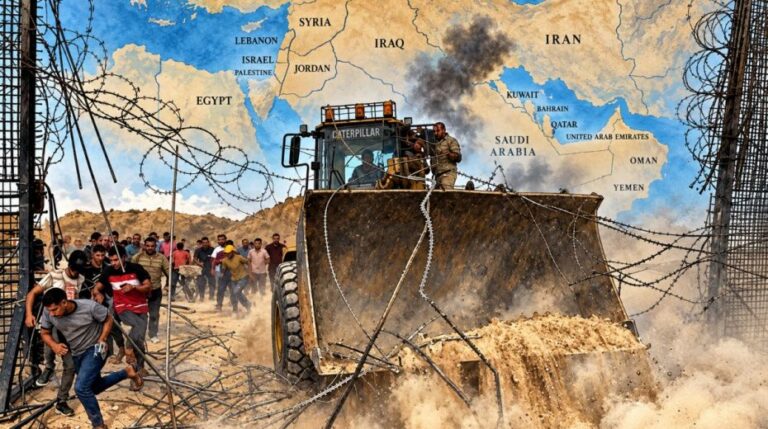
Recently, the Saudi foreign minister has issued increasingly sharp remarks suggesting that the long-standing arrangement with the U.S. serving as a security guarantor is effectively over. It has become evident that America struggles even to defend itself in the region, let alone protect its local partners. Meanwhile, Houthi assaults on Saudi maritime traffic and the choice by several Saudi vessels to bypass the Red Sea and Suez Canal, opting instead for the longer passage around the Cape of Good Hope, reveal an unprecedented oil crisis for both KSA and the UAE. The fallout from Trump’s blunder—his ill-fated war on Iran—has prompted the Houthis to align with Iran, pressuring Trump to lift the blockade and permit Iran full command of the Straits of Hormuz.
Recent shipping industry data confirm that some Saudi tankers now sail around Africa’s southern tip, marking a grim milestone in Trump’s failed conflict. This comes alongside China’s massive gold purchases, signaling a move toward de-dollarization, and at a moment when U.S. debt has ballooned to $40 trillion—surpassing GDP for the first time since WWII, all during Trump’s tenure.
The decision to reroute tankers is likely to force GCC nations to confront a new regional landscape that sidelines the U.S. entirely. This shift could also diminish opportunities for American arms manufacturers. The region is on the brink of a major power realignment, with Iran asserting dominance and GCC countries moving toward a peace agreement as reluctant partners, seeking to stabilize their economies.
Since February 28th, the UAE and KSA have transported roughly 7 million barrels of oil daily from the Persian Gulf to Saudi Red Sea ports to mitigate economic disaster. The UAE routes their oil via Fujairah port—a site vulnerable to Iranian strikes—while Saudi Arabia relies on pre-existing pipelines. Yet, no one anticipated the Houthis’ ability to exert such substantial control over the Red Sea, causing the large-scale rerouting currently observed.
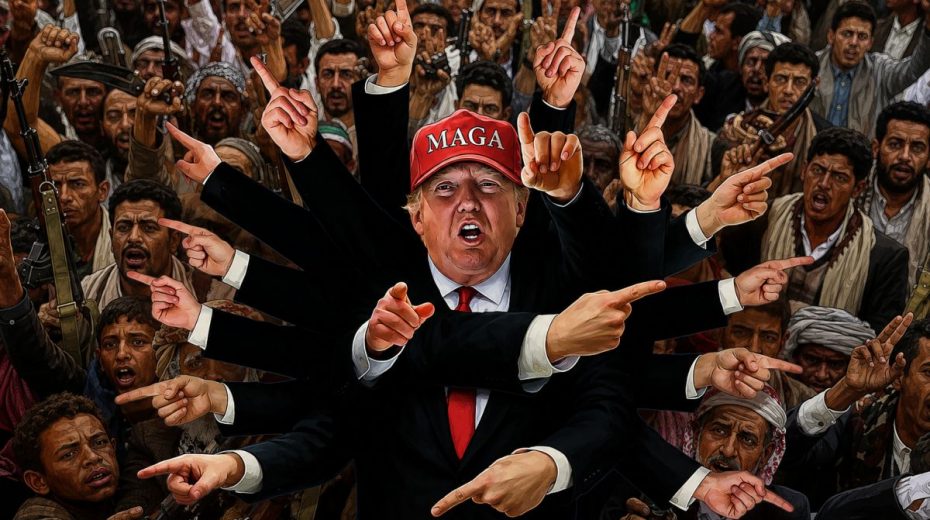
Meanwhile, Trump remains obstinate and disconnected at a level unfamiliar to White House reporters. He claims U.S. control over the Straits of Hormuz, yet simultaneously endorses the idea of directly taking over that waterway. Addressing MAGA supporters, he recently asserted that paying $4 per gallon at the pump is a minor cost to prevent Iran from acquiring nuclear weapons—a blatant falsehood since Iran, the conflict’s clear victor, can develop nuclear arms at will.
What Trump omits telling media and his base is that the U.S. economy is deteriorating and that strategic reserve oil supplies have plummeted to dangerously low levels. With Saudi and Emirati tankers blocked and unable to export, global oil prices will inevitably surge, adversely affecting Americans—the very voters who supported Trump expecting financial improvement. Despite this, America under Trump acts as if it remains a superpower immune to Middle Eastern upheavals, though in reality, Trump faces dwindling time before a substantial global economic crisis erupts, causing sharp price hikes, shortages, and widespread layoffs. Iran, despite its own severe inflation nearing 300%, can afford to play the long game, comfortably poised while Trump heads into the midterms armed only with falsehoods. It is the Houthis who have dealt the final blow to his prospects.
About the Author